pronounce
Explanation
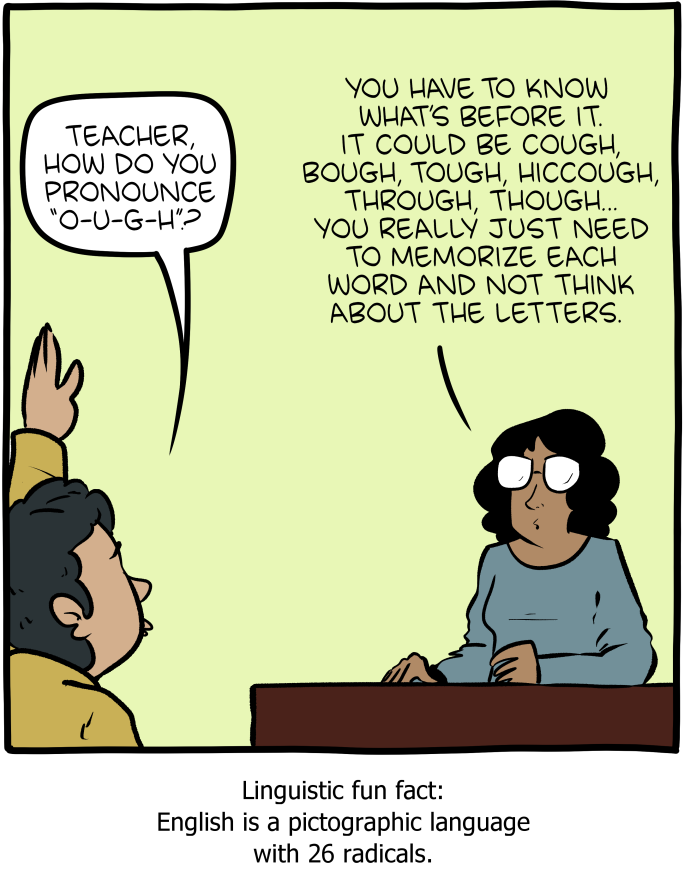
This comic shows a student asking a teacher: "Teacher, how do you pronounce 'O-U-G-H'?" The teacher responds with a lengthy explanation: "You have to know what's before it. It could be cough, bough, tough, hiccough, through, though... you really just need to memorize each word and not think about the letters."
The caption reads: "Linguistic fun fact: English is a pictographic language with 26 radicals."
The joke works on two levels. On the surface, it highlights the famously chaotic spelling-to-pronunciation relationship in English, where the letter combination "-ough" can be pronounced at least six different ways (as in cough, bough, tough, hiccough, through, and though). The teacher's advice to "just memorize each word and not think about the letters" is both practical and a damning admission that English spelling follows no reliable phonetic rules.
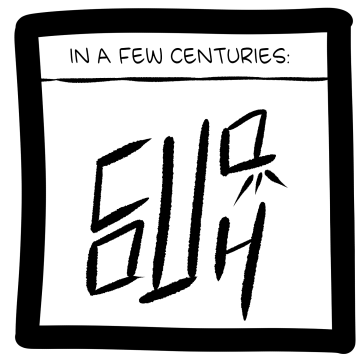
The real punchline is the caption, which makes a clever comparison to Chinese and Japanese writing systems. Pictographic languages like Chinese use characters (composed of smaller elements called radicals) that must be memorized individually -- you can't simply "sound out" an unfamiliar character the way you theoretically can with an alphabetic language. The joke is that English, despite technically being an alphabetic language with only 26 letters, functions in practice the same way: you have to memorize how each word looks and is pronounced as a complete unit, because the letters themselves are unreliable guides. Calling the 26 letters "radicals" reframes the entire English alphabet as merely the component strokes of what is essentially a pictographic system. It's a linguistically literate joke that punctures the assumption that alphabetic writing systems are inherently more logical or systematic than character-based ones.