real-life-3
Explanation
The Joke
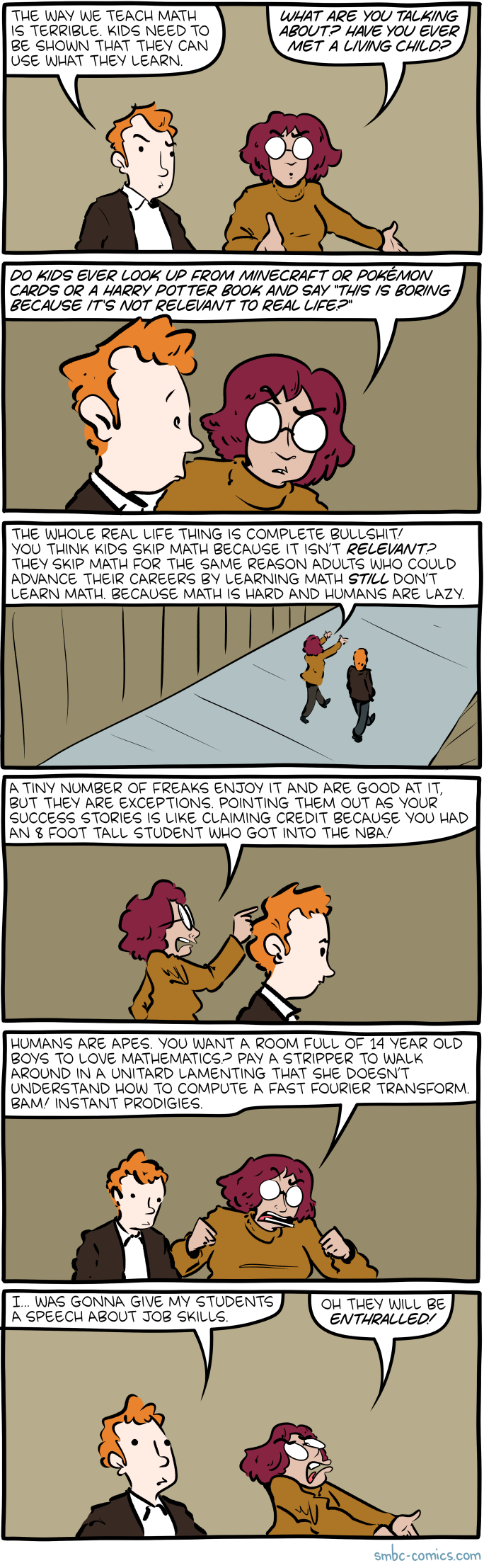
A character argues that the way we teach math is terrible because students need to be shown that math is relevant to real life. Another person pushes back, asking whether kids ever look at Minecraft or Pokemon cards and complain that these are boring because they aren't relevant to real life. The skeptic points out that the "make it relevant" crowd ignores the real issue: kids skip math for game-design and YouTube careers not because math isn't presented as relevant, but because math is hard and learning is hard, and a tiny number of people who enjoy it and are good at it get credited as success stories. The comic ends with the first person planning to give their students a speech about joy — and the other person predicting the students will just ask about job prospects.
The Humor
The comic systematically dismantles the popular educational philosophy that math just needs to be made "relevant to real life" to engage students. The counterargument is sharp: children voluntarily master enormously complex systems (Pokemon type charts, Minecraft redstone logic) without anyone ever proving these are "relevant to real life." The issue isn't relevance — it's that math is genuinely difficult, and most people would rather do easier things. The final panel delivers the coup de grace: even a sincere attempt to inspire students with the intrinsic joy of mathematics will be met with the purely instrumental question of whether it leads to a good job.
Broader Context
SMBC regularly engages with education policy and the philosophy of learning. Weinersmith, who spent time in academia, frequently pushes back against feel-good educational platitudes. This comic represents a recurring SMBC theme: the uncomfortable truth that some valuable things are just hard, and no amount of pedagogical reframing changes that fundamental reality. It also critiques survivorship bias in educational success stories — the students who succeed in innovative math programs may have been the ones who would have succeeded regardless.