romance

Explanation
The Joke
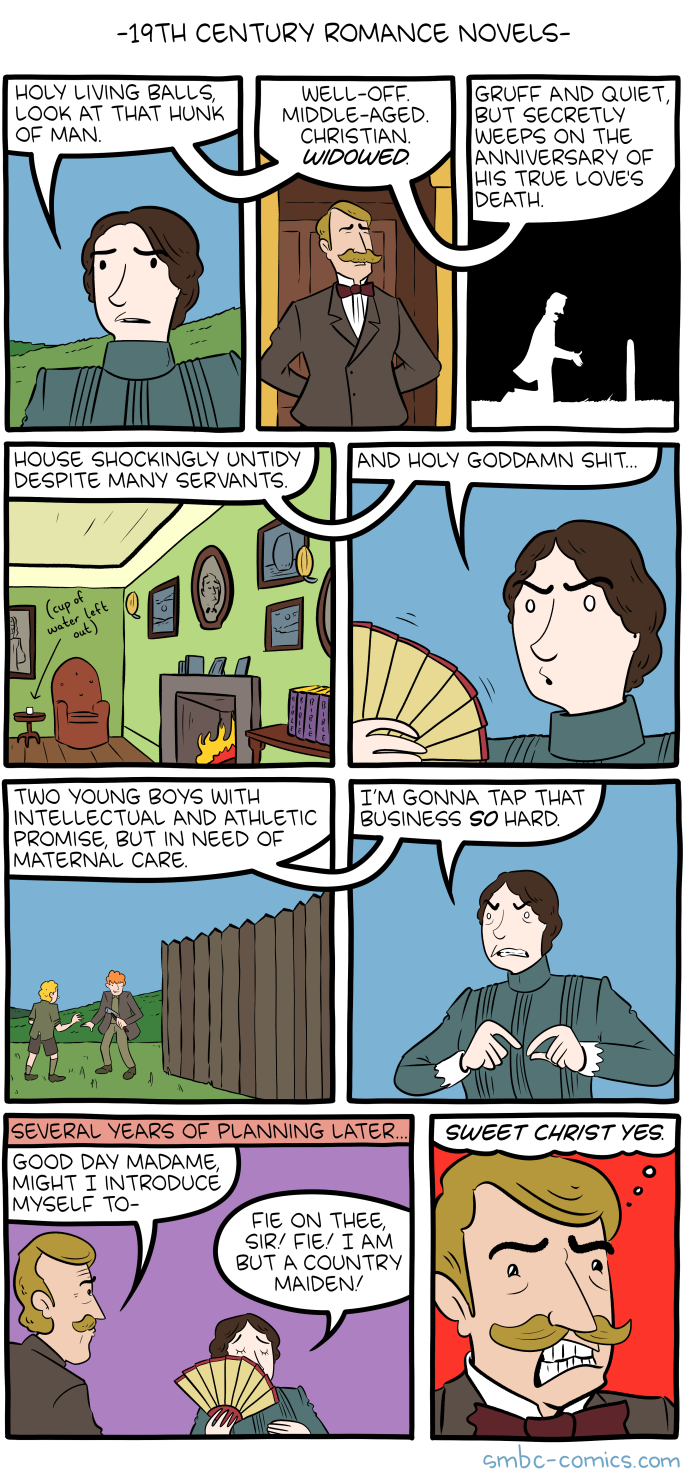
The comic is titled "19th Century Romance Novels" and presents a series of panels parodying the tropes of period romance fiction. Each panel introduces a character archetype in the exaggerated style of the genre, but with increasingly modern and blunt commentary undercutting the romantic framing.
The first panel shows a woman exclaiming "Holy living balls, look at that man!" in decidedly un-Victorian language. Subsequent panels cycle through classic romance novel archetypes: the brooding gentleman who is "quiet and brooding" and "keeps on the ragged edge of his true love's reach," a woman who enters "shockingly unescorted" (scandalous by period standards), a young man with "intellectual and athletic prowess" seeking a woman of "maternal care," and finally a man introducing himself only to be told he is "on time... but a country parson" -- apparently the least desirable category. The final panel shows someone exclaiming "Gasp! Carpet yes!" as though this is the most exciting revelation of all.
The Humor
The humor operates through anachronistic juxtaposition -- placing crass modern sensibilities inside the stiff conventions of 19th-century romance. The characters use language and attitudes that would be completely out of place in a Jane Austen or Bronte novel ("Holy living balls," "Holy goddamn gait"), which highlights how absurd the underlying desires of romance novel characters would sound if stated plainly. The comic also satirizes the genre's obsession with social status (the parson being dismissed purely for his occupation) and its tendency to dress up physical attraction in elaborate euphemism. The rapid-fire panel structure mimics the breathless pacing of romance novels while deflating each trope with blunt modern honesty.
References
The comic parodies conventions from 19th-century romance fiction, particularly the works of Jane Austen, the Bronte sisters, and similar authors of the Regency and Victorian periods. The tropes referenced include the brooding love interest, the "improper" independent woman, and the rigid class-consciousness that determines romantic eligibility.