santa
Explanation
The Joke
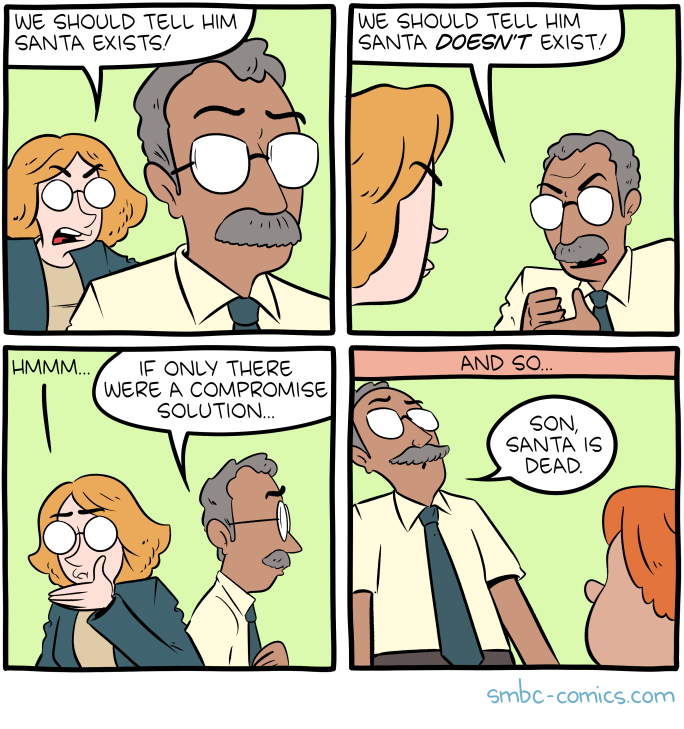
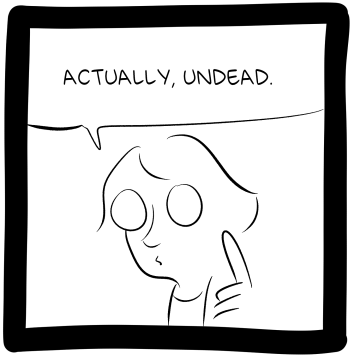
The comic presents a parenting dilemma about Santa Claus. In the first panel, two parents debate: one says "We should tell him Santa exists" while the other counters "We should tell him Santa doesn't exist." A woman then laments "If only there were a compromise solution..." In the final panel, a parent tells their child "God Santa is dead," combining the two approaches in the worst possible way.
The "compromise" manages to be worse than either option. Instead of choosing between telling the child Santa is real or telling the child Santa is not real, the parents split the difference by telling the child that Santa existed but is now dead -- arguably the most traumatizing option available. The phrasing "God Santa is dead" also evokes Nietzsche's famous declaration "God is dead," layering philosophical existential dread onto a children's holiday myth.
The Humor
The comedy comes from the false logic of compromise. In many debates, a middle-ground position is seen as reasonable, but this comic demonstrates that splitting the difference between two positions can produce an outcome far worse than either extreme. Telling a child Santa is dead combines the magical thinking of believing in Santa with the grief of loss -- the child gets none of the joy and all of the trauma. The Nietzschean echo adds an extra absurdist layer, as if the parents are delivering existentialist philosophy to a small child at Christmas.
References
The phrase "God is dead" (German: "Gott ist tot") comes from Friedrich Nietzsche's 1882 work "The Gay Science" and his 1883 novel "Thus Spoke Zarathustra." The comic merges this with the perennial parenting debate about whether to perpetuate the Santa Claus myth, a topic that generates genuine disagreement among parents and child psychologists.