scam
Explanation
The Joke
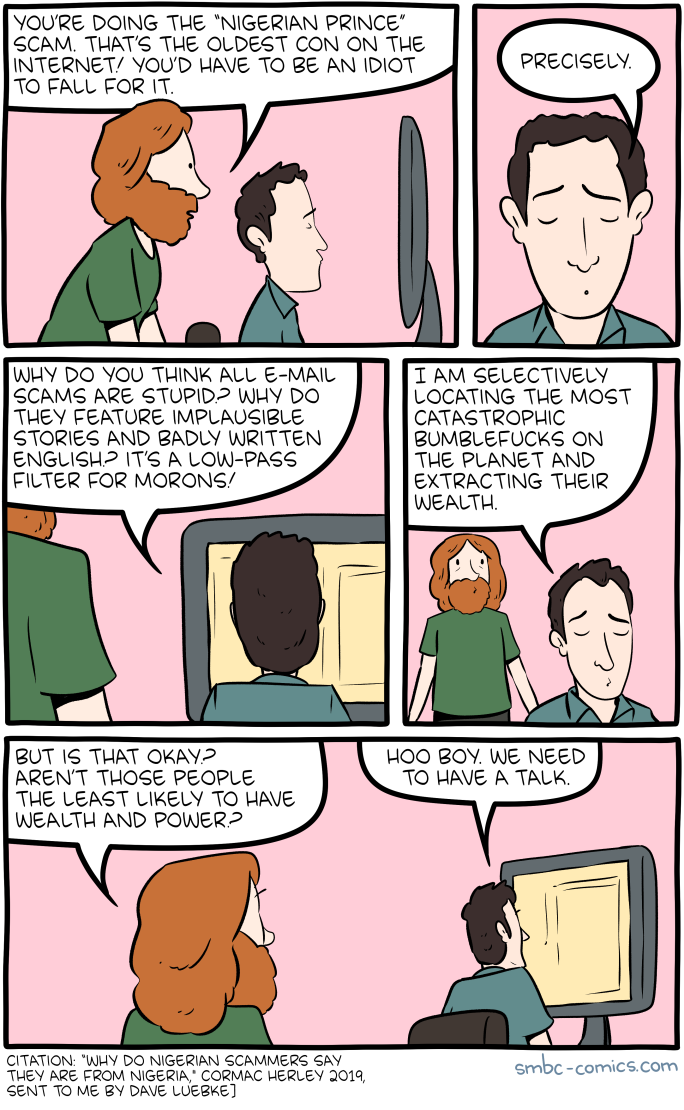
The comic depicts a conversation about the classic "Nigerian Prince" email scam. In the first panel, someone points out that this scam is run over the internet, and you'd have to be gullible to fall for it. A woman responds "Precisely!" In the second panel, she explains the reasoning: scam emails are intentionally made to look implausible, with features like misspellings, outlandish claims, and poor formatting. This is deliberate because it functions as a "low-pass filter for morons" -- only the most gullible people will respond, making the scammer's job easier since they won't waste time on skeptical targets.
In the third panel comes the twist: the man asks if this means the scammers are specifically targeting the people least likely to have wealth and power (since gullibility and success don't typically correlate). The final panel shows the scammer from Nigeria looking dejected, holding up what appears to be a certificate, with the punchline "You know, we need to rethink this" -- realizing the fundamental flaw in their business model.
The Humor
The humor works on multiple levels. First, it presents the well-known real insight that Nigerian Prince scams use bad grammar and absurd premises intentionally as a filtering mechanism (this is actually a documented strategy). But then it takes this clever observation to its logical conclusion: if you're specifically filtering for the most gullible people, you're also filtering for the people least likely to have significant money to steal. The scammers have optimized themselves into a corner -- they've perfected the art of finding marks who are easy to fool but have nothing worth taking.
References
The "Nigerian Prince" or "419 scam" (named after the section of the Nigerian criminal code it violates) is one of the oldest and most well-known internet scams. A 2012 Microsoft Research paper by Cormac Herley titled "Why Do Nigerian Scammers Say They Are from Nigeria?" formally analyzed why these emails are intentionally implausible, confirming the filtering hypothesis presented in the comic.