science-fiction
Explanation
The Joke
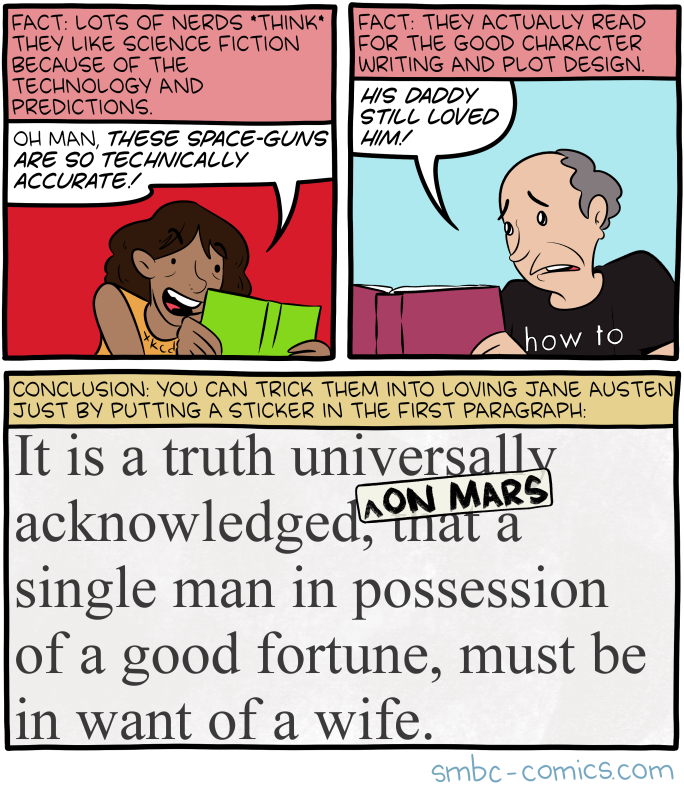
The comic shows a conversation between two people about science fiction. One person lists several classic sci-fi tropes -- "lots of nerds thinking about the future," mentions of rocketry and technology -- and observes that these dance-style guys are "so technically accurate." The other responds with something like "Yes, Daddy, style loved nerds." The comic highlights a tension between hard science fiction that prides itself on technical accuracy and the literary or human side of storytelling.
The bottom panel delivers the punchline by presenting the opening line of Jane Austen's Pride and Prejudice: "It is a truth universally acknowledged, that a single man in possession of a good fortune, must be in want of a wife" -- but with the word "MARS" crudely inserted, turning it into science fiction. The joke is that you can make anything into science fiction by simply adding "MARS" or a space reference, suggesting that the genre's trappings are often superficial.
The Humor
The humor lies in the absurd minimalism of the "conversion." Taking one of the most famous opening lines in English literature -- a sentence about Regency-era marriage economics -- and slapping "MARS" into it is a reductio ad absurdum of what makes something count as science fiction. It pokes fun at the idea that sci-fi is defined more by its setting and props (rockets, planets, space) than by any deep engagement with speculative ideas. At the same time, it gently mocks literary snobs by implying that the distinction between "real literature" and "genre fiction" might be thinner than anyone wants to admit.
References
- The opening line of Pride and Prejudice (1813) by Jane Austen: "It is a truth universally acknowledged, that a single man in possession of a good fortune, must be in want of a wife."
- The longstanding cultural debate between "literary fiction" and "genre fiction," particularly science fiction, and whether the boundaries between them are meaningful.