sociology
Explanation
The Joke
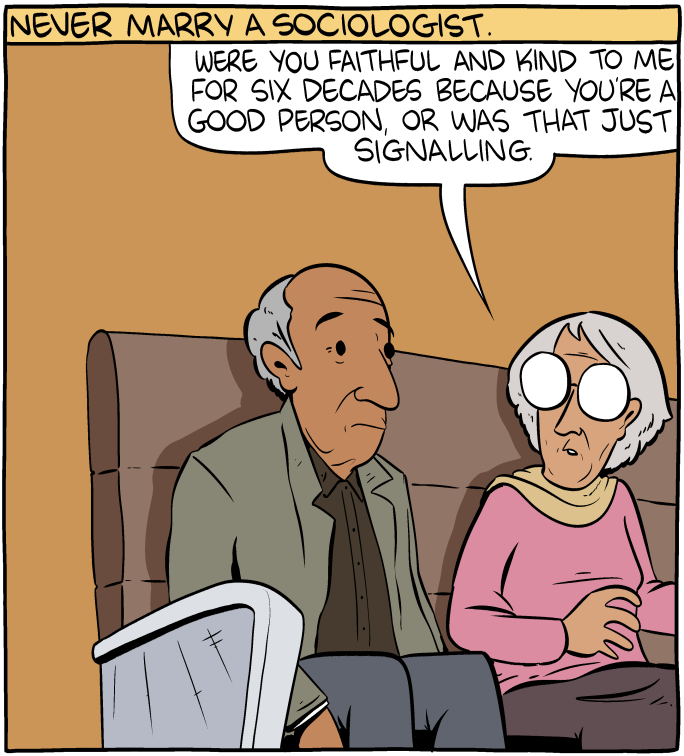
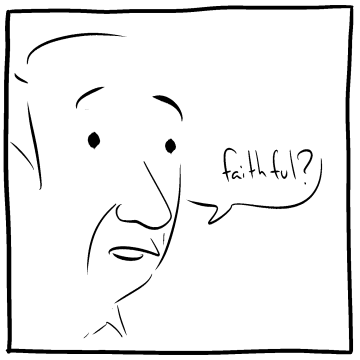
The comic is titled "Never Marry a Sociologist" and shows an elderly couple sitting together. The wife, a sociologist, turns to her husband and asks whether he was faithful and kind to her for six decades because he is genuinely a good person, or whether his behavior was "just signalling." The husband looks visibly uncomfortable and annoyed by the question.
The humor comes from the wife applying sociological and evolutionary psychology concepts to her own marriage after sixty years together. In academic discourse, "signalling" refers to the idea that people perform virtuous behaviors not out of genuine goodness but to advertise desirable traits to others -- a concept drawn from signalling theory in sociology, economics, and evolutionary biology. The wife is essentially questioning whether their entire decades-long relationship was authentic or just an elaborate performance.
The Humor
The joke works on multiple levels. First, there is the absurdity of a woman questioning her husband's sincerity after sixty years of apparent devotion -- at that point, it hardly matters whether the kindness was "genuine" or "signalling," since the practical result was the same. Second, it satirizes a certain kind of academic overthinking where intellectual frameworks are applied so aggressively that they undermine the very human experiences they are meant to explain. The title's warning -- "Never Marry a Sociologist" -- frames the whole thing as a cautionary tale about living with someone who cannot turn off their analytical lens, even in the most intimate of settings.
References
- Signalling theory: Originally developed in economics by Michael Spence and in biology by Amotz Zahavi, signalling theory examines how individuals communicate information about themselves through costly or observable behaviors. In sociology, it is often applied to virtue signalling and social status displays.