sui-generis

Explanation
The Joke
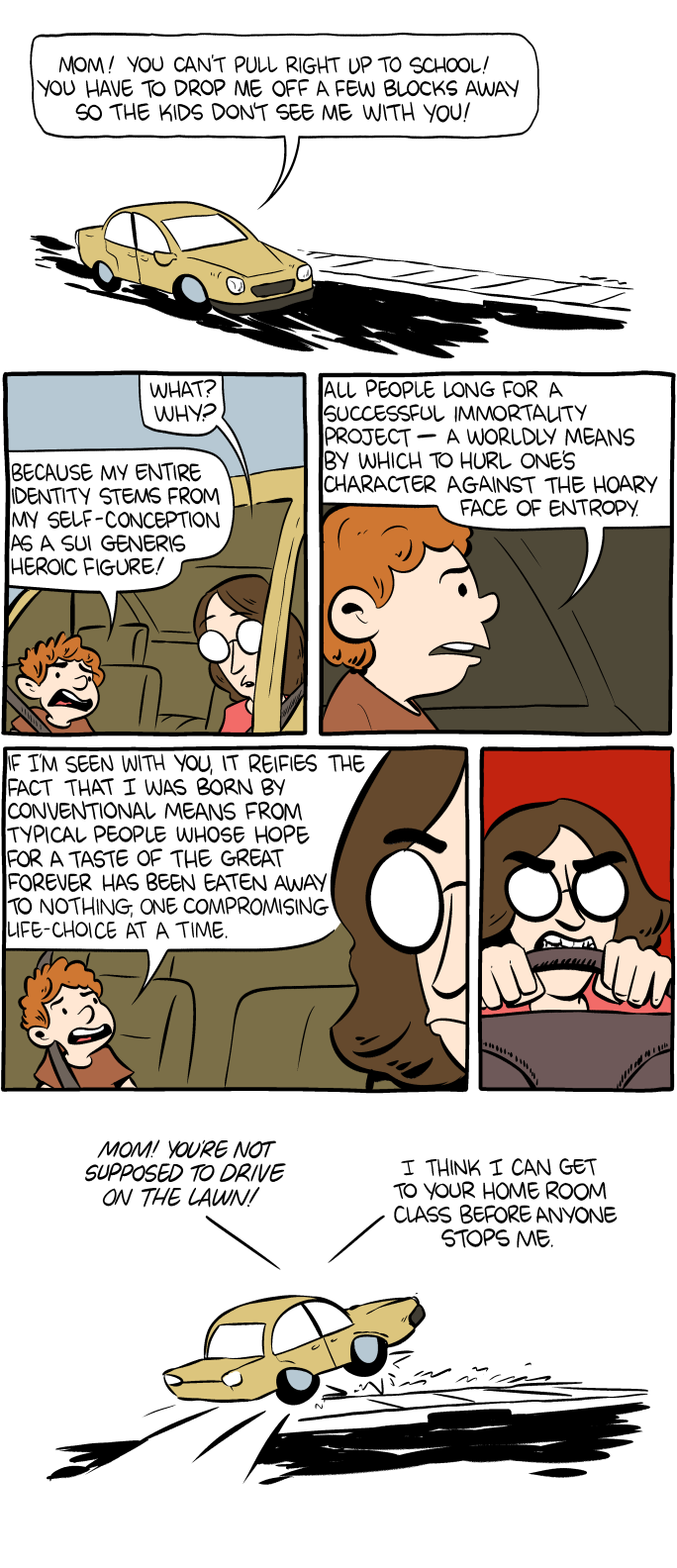
A teenager in a car tells their parent that they cannot pull right up to the school -- they need to be dropped off a few blocks away so the other kids do not see them together. The parent asks why, and the teenager launches into an elaborate, grandiose explanation: their entire identity and self-conception is built around being a unique, singular heroic figure. They claim to be striving for "a successful, immortality-worthy life in a world heading by nature to ruin" and fighting against "the heavy tide of entropy itself." Being seen with a parent would undermine this carefully constructed image by revealing that they are, in fact, just a regular kid who gets driven to school.
The parent, rather than being offended, takes this as a challenge. In the next panel, the car is shown speeding recklessly, and the parent declares they think they can get all the way to the teenager's homeroom class if nothing stops them. The teen protests that the parent is not supposed to drive on the lawn.
The Humor
The comedy operates on the universal experience of teenage embarrassment about being seen with parents, but elevates it to absurd philosophical heights. Instead of simply saying "it is embarrassing," the teenager frames their desire for independence in the language of existential philosophy and heroic mythology -- they are sui generis (one of a kind, unique), and being associated with mundane family life threatens their carefully crafted self-image. The Latin title "sui generis" perfectly captures teenage self-importance.
The parent's response is the perfect comedic counterpoint: rather than engaging with the teenager's philosophical pretensions, they simply choose to make things maximally embarrassing by driving directly onto the school lawn toward the homeroom. It captures the eternal parent-child dynamic where the more seriously a teenager takes themselves, the more irresistible it becomes for a parent to deflate that seriousness.
References
"Sui generis" is a Latin term meaning "of its own kind" or "unique in its characteristics." It is used in law, philosophy, and general discourse to describe something that cannot be categorized with anything else. The teenager's monologue references entropy (the second law of thermodynamics, the tendency of systems toward disorder), framing their adolescent identity crisis in the language of physics and existential philosophy.