teleporter-2
Explanation
The Joke
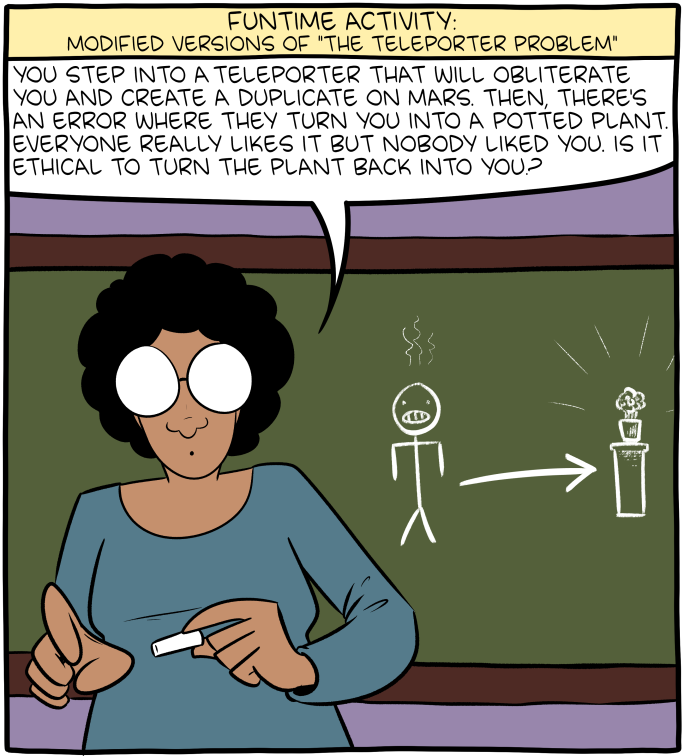
The comic is presented as a "Funtime Activity: Modified Versions of 'The Teleporter Problem.'" It describes a scenario: you step into a teleporter that will obliterate you and create a duplicate on Mars. Then, there is an error where they turn you into a potted plant. Everyone really likes the plant, but nobody liked you. The question posed is: "Is it ethical to turn the plant back into you?"
This is a parody of the classic teleporter thought experiment in philosophy of mind (also known as the "transportor problem" or related to Parfit's work on personal identity). The standard version asks whether the person who steps out of the teleporter on Mars is "really" you, given that the original was destroyed. This modified version adds absurd complications: not only are you destroyed and duplicated, but the duplicate is a plant, and the plant is more popular than you were. The ethical question becomes hilariously loaded because the "right" answer (restore the human) conflicts with the utilitarian observation that the plant brings more happiness to the world than the person did.
The Humor
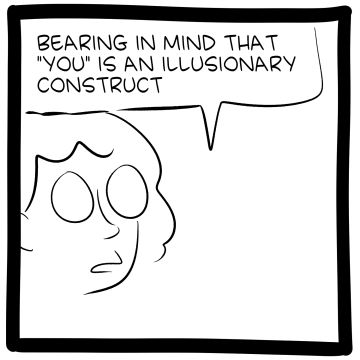
The humor comes from the collision between serious philosophy and playground absurdity. The teleporter problem is a genuine topic of debate in philosophy and physics, but adding a potted plant and social rejection turns it into something that cannot be discussed with a straight face. The real sting is the aside that "everyone really likes it but nobody liked you" -- the philosophical question about personal identity is hijacked by the much more painful question of whether the universe is simply better off without you. It forces the reader to confront an uncomfortable possibility wrapped in a silly hypothetical.
References
The teleporter problem is closely associated with philosopher Derek Parfit and his work "Reasons and Persons" (1984), which explores questions of personal identity through thought experiments involving teleportation, duplication, and fission. The core question is whether continuity of consciousness, physical continuity, or something else constitutes personal identity.