the-event
Explanation
The Joke
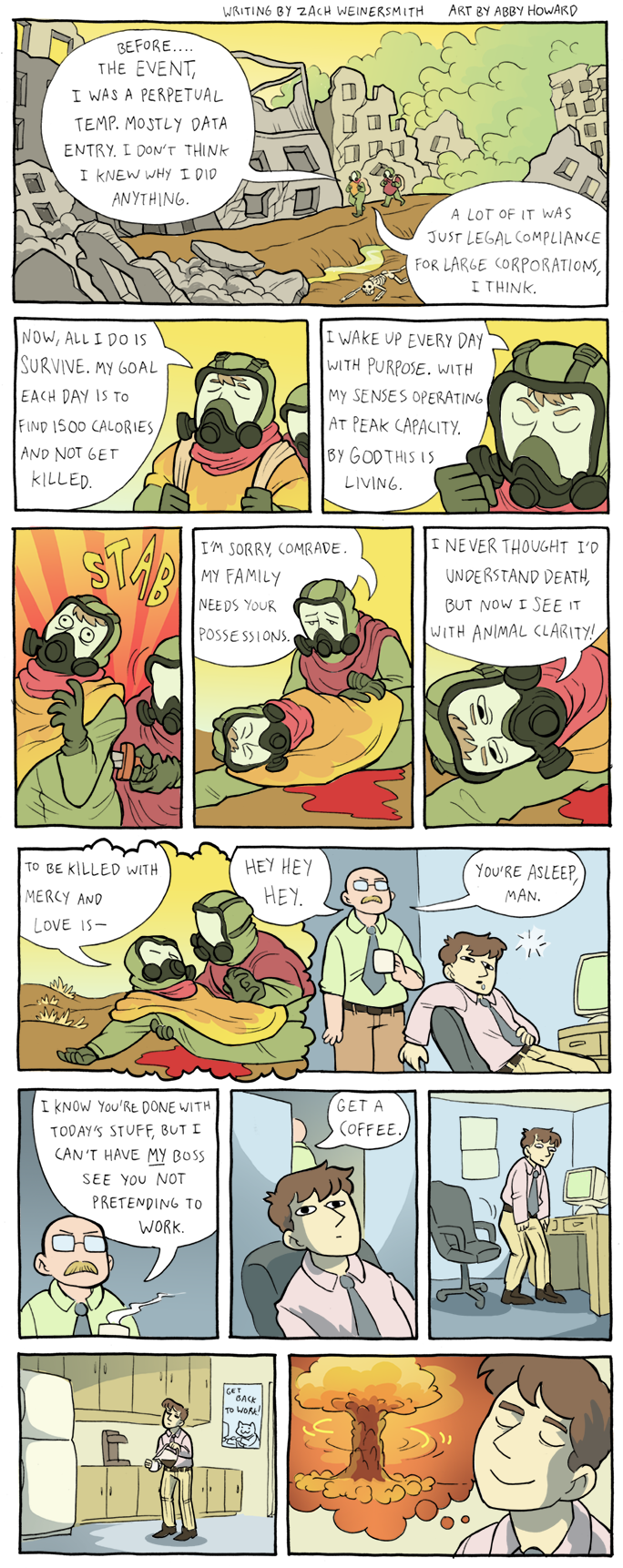
The comic is titled "The Event" and depicts a post-apocalyptic scenario in the style of serious literary or cinematic post-apocalypse narratives. A bearded survivor narrates his experience: before "the event," he was a perpetual temp, mostly doing data entry, with no real sense of purpose. Now, after civilization has collapsed, he finds meaning -- he wakes up every day with purpose, his senses are sharpened, he understands death with "animal clarity," and he wants to "be killed with mercy and love."
Another survivor interrupts his philosophical reverie with "Hey hey hey -- you're jolly, man!" Then a final scene shows someone at an office telling the survivor, "I know you're done with today's stuff, but I can't have you out pretending to work" while another says "Get a coffee." The last panels show a figure looking at a nuclear explosion, juxtaposing the mundane office world with total annihilation.
The Humor
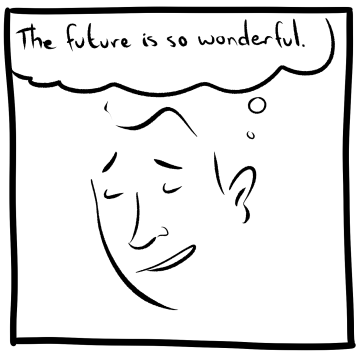
The comic satirizes the romanticization of apocalypse scenarios. The survivor's monologue is a pitch-perfect parody of post-apocalyptic fiction (think "The Road" by Cormac McCarthy), where characters find spiritual awakening through suffering. The joke is that this man's pre-apocalypse life was so soul-crushingly boring -- temp work, data entry, no purpose -- that the literal end of civilization is an improvement for him. The humor cuts in multiple directions: it mocks both the bleakness of modern office work and the absurd romanticism of survival fiction. The final panels, showing the banal office contrasted with a nuclear mushroom cloud, drive home the point that for some people, the apocalypse is just a more honest version of the meaninglessness they already lived with.
References
The comic's title, visual style, and narrative tone reference post-apocalyptic literary and film works such as Cormac McCarthy's "The Road" (2006) and similar survival narratives. The art style in the post-apocalyptic panels is credited to a guest artist (noted as "Art by [name]" in the top corner), which is unusual for SMBC and adds to the genre-pastiche quality.