the-future-2

Explanation
The Joke
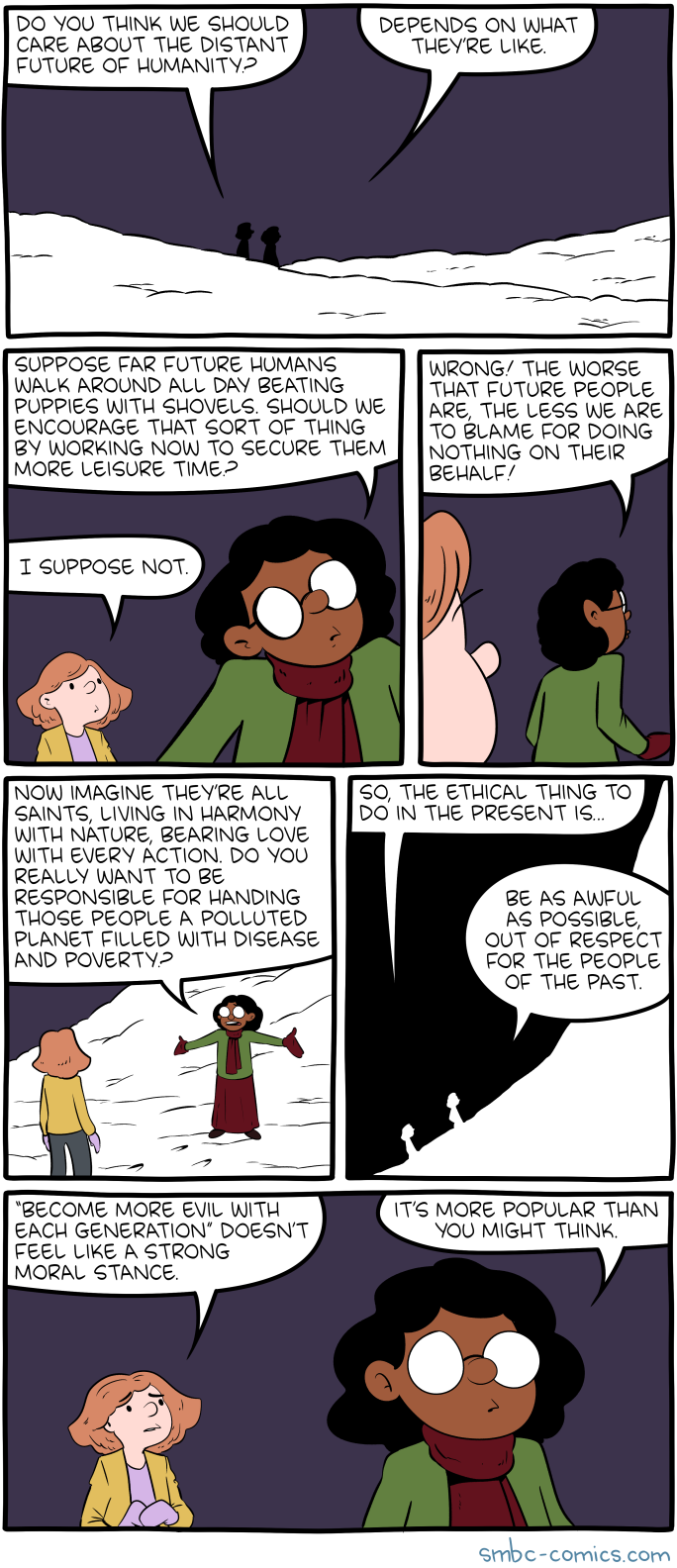
The comic presents a philosophical thought experiment about whether we should care about the distant future of humanity. Two people discuss it in stages. First, they consider a nice future: humanity goes to the stars, cures cancer, plays with puppies. Should we work toward that by sacrificing some leisure time? "I suppose not," the other person admits. Then the argument shifts: imagine they've all become saints, interconnected in harmony, and every action you take now is responsible for whether those trillions of future people live in paradise or squalor. The respondent starts to feel the weight of responsibility.
But then comes the twist. The first person reveals this isn't some fringe philosophical position. The interlocutor asks what the ethical stance is, and the answer is: "Be as awful as possible, to reduce the chance you're responsible for the people of the future." The reasoning is that the more advanced humanity becomes, the less we are to blame for our failings because people can handle things on their own — so by making things worse now, you reduce your moral liability. Each generation doesn't become more ethical; it "becomes more evil" because the argument works in reverse. If you believe your actions affect trillions of future lives, one way to escape that crushing moral burden is to simply ensure the future never happens by being terrible. The joke is that this dark inversion of longtermist ethics is presented as an increasingly popular real stance: "It's more popular than you might think."
The Humor
The comic satirizes longtermism — the philosophical view (associated with effective altruism) that we have enormous moral obligations to future generations. Weinersmith takes the logic of longtermism and shows how it can be inverted: if the moral weight of future trillions is too heavy, one rational response is to simply opt for civilizational collapse to avoid the responsibility. The humor comes from the deadpan escalation from idealistic futurism to gleeful nihilism, and from the suggestion that this inverted philosophy is "more popular than you might think" — implying that many people's apparent selfishness and short-sightedness might actually be a coherent (if horrifying) philosophical position.
References
- Longtermism: A philosophical and ethical stance holding that positively influencing the long-term future is a key moral priority of our time, prominently associated with philosophers like William MacAskill and organizations within the effective altruism movement.
- Population ethics: The branch of philosophy concerned with the moral status of potential future people and our obligations toward them.