the-top
Explanation
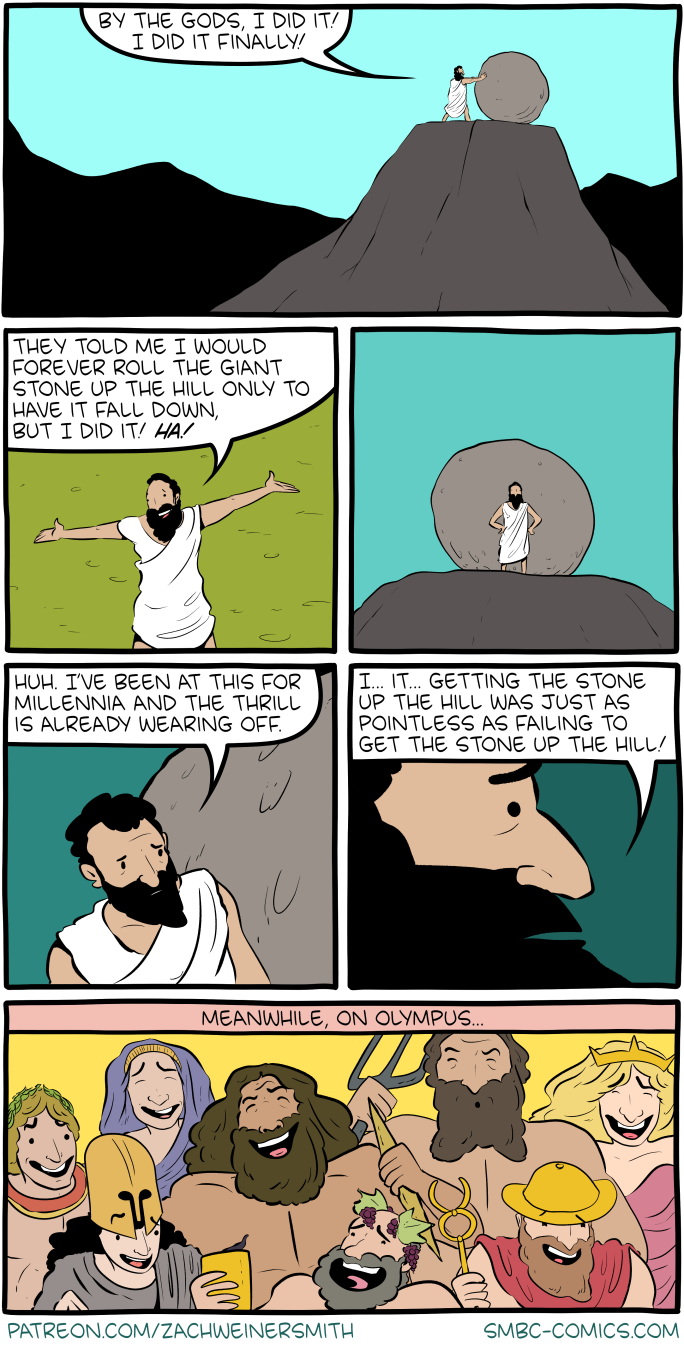
This comic reimagines the myth of Sisyphus. In Greek mythology, Sisyphus was condemned by the gods to roll a boulder up a hill for eternity, only to have it roll back down each time. In this version, Sisyphus finally succeeds -- he gets the boulder to the top and celebrates triumphantly, declaring he has done it after being told he would roll it forever only to watch it fall.
However, the twist comes when an observer points out that after millennia of pushing the stone up the hill, "the hill is already wearing away" -- meaning the hill has eroded over time. Getting the stone to the top was inevitable, not heroic. It was just geological erosion, not triumph of will. Then the scene cuts to onlookers below who remark "Meanwhile, on Olympus..." suggesting the gods have been watching with amusement or indifference.
The comic undercuts the existentialist reading of the Sisyphus myth (where the struggle itself gives life meaning, as Albert Camus argued) by introducing a mundane physical explanation. Sisyphus didn't overcome his punishment through perseverance or heroic will -- the hill just got shorter over geological time. It deflates both the mythic tragedy and the philosophical meaning by pointing out that given enough time, even an eternal punishment has a boring, physical resolution.