The Wolfman

Explanation
The Joke
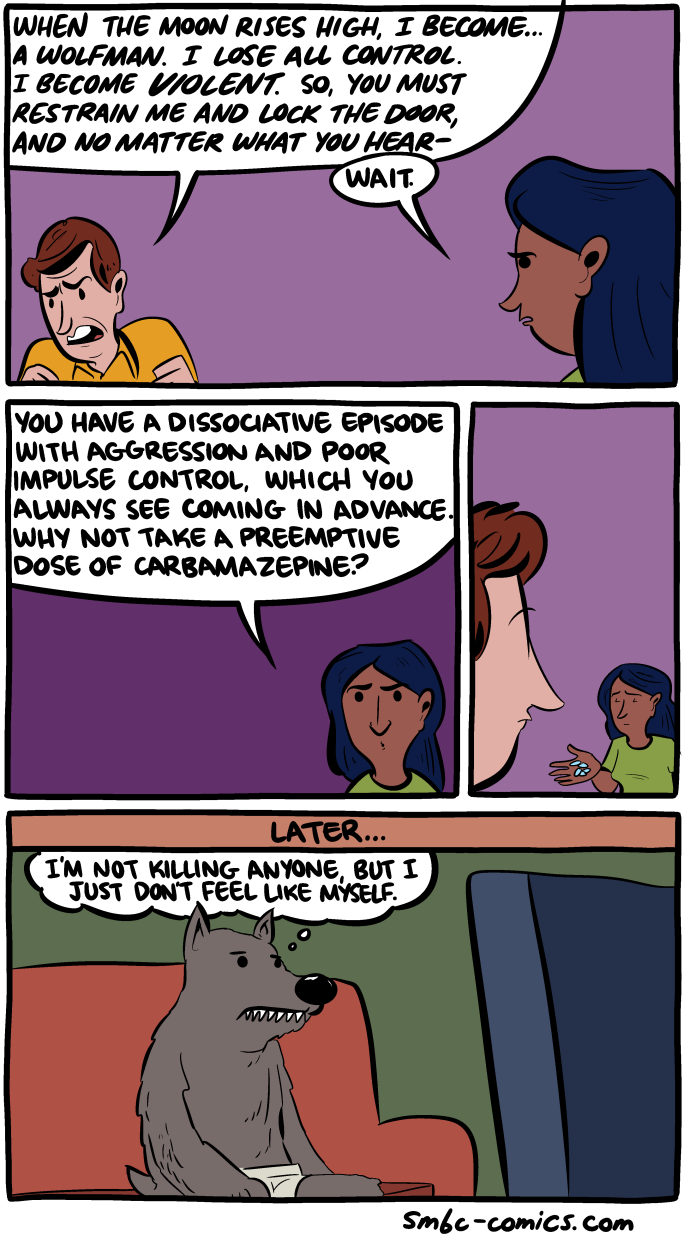
A man dramatically warns a woman that when the moon rises high, he becomes a werewolf -- he loses all control, becomes violent, and she must restrain him no matter what. But rather than playing along with the classic horror movie setup, the woman immediately recognizes his symptoms as a dissociative disorder with aggression and poor impulse control that he can predict in advance. She suggests he simply take a preemptive dose of carbamazepine (a mood-stabilizing medication). In the final panel, labeled "Later," the wolfman is shown in his wolf form sitting calmly but looking dejected, saying he is not killing anyone but does not feel like himself.
The Humor
The comic takes the classic werewolf horror trope and deflates it by applying modern psychiatric medicine. Instead of treating the werewolf transformation as a supernatural curse requiring chains and silver bullets, the woman treats it as a treatable medical condition. The punchline in the final panel captures a common complaint about mood-stabilizing medications: patients often report that while the drugs control their extreme behaviors, they feel emotionally flattened or unlike themselves. The wolfman has traded violent rampages for existential malaise -- a very human (and very modern) trade-off.
References
- The Wolfman: A classic Universal Monsters character (1941 film), in which a man transforms into a werewolf under the full moon.
- Carbamazepine: A real anticonvulsant and mood-stabilizing drug used to treat bipolar disorder, epilepsy, and impulse control disorders. Side effects can include emotional blunting.