theory-of-awful-tv
Explanation
The Joke
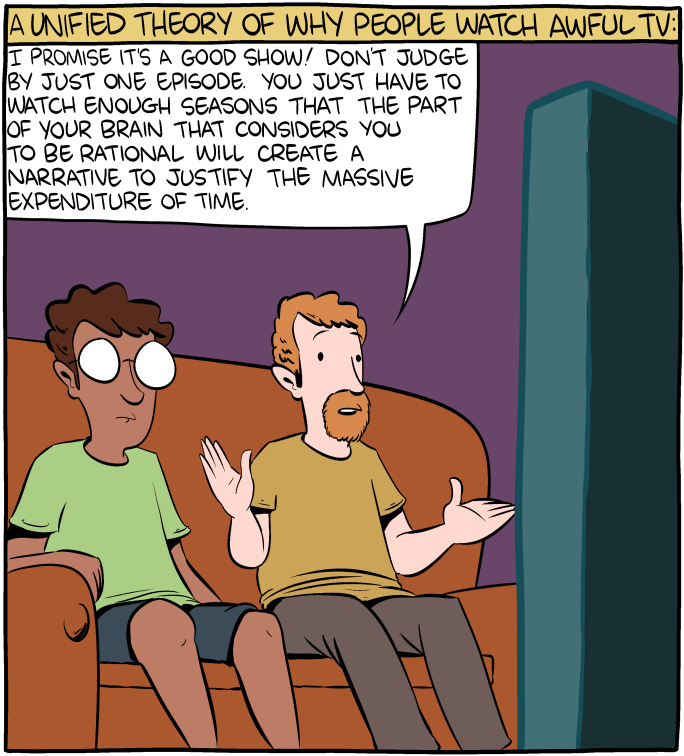
The comic is titled "A Unified Theory of Why People Watch Awful TV." Two men sit on a couch in front of a television. One enthusiastically tells the other: "I promise it is a good show! Don't judge by just one episode. You just have to watch enough seasons that the part of your brain that considers you to be rational will create a narrative to justify the massive expenditure of time."
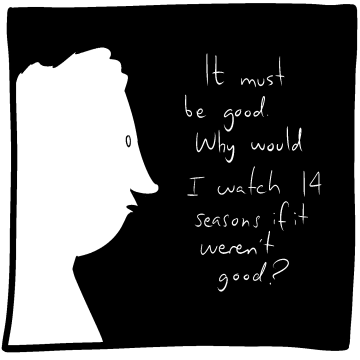
The joke is that the person recommending the show is inadvertently revealing the real psychological mechanism behind why people claim to enjoy mediocre television. Rather than the show actually getting better, what happens is that after investing enough time, the viewer's brain rationalizes the sunk cost by convincing itself the show must be good -- otherwise, why would a rational person have spent so many hours watching it?
The Humor
The humor works on multiple levels. On the surface, it is a funny and recognizable parody of the common defense people make of shows that have rough starts: "You just have to give it time!" But the deeper joke is a surprisingly incisive psychological observation about cognitive dissonance and the sunk cost fallacy. When we invest significant time into something, our brains resist the conclusion that the time was wasted, so they retroactively construct reasons why the investment was worthwhile. The comic is funny because the speaker is completely unaware that his sales pitch is actually a devastating critique of his own taste -- he is essentially saying "watch enough of it that your brain tricks you into liking it," and presenting this as a positive recommendation.
References
The comic references the sunk cost fallacy, a well-documented cognitive bias in behavioral economics where people continue investing in something because of the resources already spent, rather than evaluating the current merits. It also relates to cognitive dissonance theory (Leon Festinger, 1957), which describes the mental discomfort people feel when holding contradictory beliefs -- such as "I am a rational person" and "I spent 60 hours watching a bad TV show" -- and the mental gymnastics they perform to resolve that conflict.