this-town
.png)
Explanation
The Joke
The comic is set in a Western frontier town. A cowboy announces a plan: "This town ain't big enough for the both of us. In order to accommodate us, we can both finance our own development proposals. Whether I estimate we need to triple the number of buildings..." He continues with detailed urban planning jargon about revitalizing the downtown area through transit-heavy density, mixed residential-commercial public infrastructure. His partner agrees they only need to double the population.
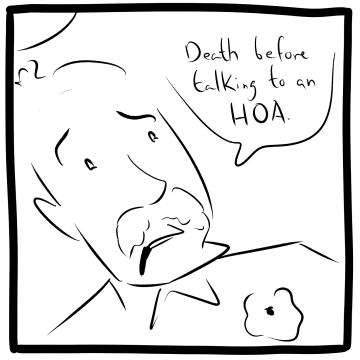
When they approach the county highway board to get approval, the bureaucrat tells them that in order to consider rezoning the proposal, they need to file paperwork, get signatures from the local population including living or dead shareholders. The final panel shows the dejected cowboys with a simple "And so..." -- implying the town never grew because of bureaucratic red tape.
The Humor
The comic takes the classic Western movie line "This town ain't big enough for the both of us" -- normally a prelude to a gunfight -- and interprets it completely literally. Instead of drawing pistols, the two cowboys try to solve the problem through municipal urban planning and zoning regulations. The joke escalates as their reasonable development proposals get buried in exactly the kind of bureaucratic process that plagues real-world urban development. The punchline is that the stereotypical Old West problem of small frontier towns never actually gets solved, not because of outlaws and gunfights, but because of the same zoning board dysfunction that prevents development in modern cities. It is a pointed satire of NIMBYism and housing policy dressed up in cowboy hats.
References
"This town ain't big enough for the both of us" is an iconic line from Western films, though its exact origin is debated. It has appeared in numerous Westerns and became a cultural shorthand for a confrontation that can only be resolved by one party leaving or dying. The comic's treatment of urban planning and zoning battles reflects ongoing real-world debates about housing density, particularly the YIMBY (Yes In My Back Yard) versus NIMBY (Not In My Back Yard) movements in American cities.