times-have-changed
Explanation
The Joke
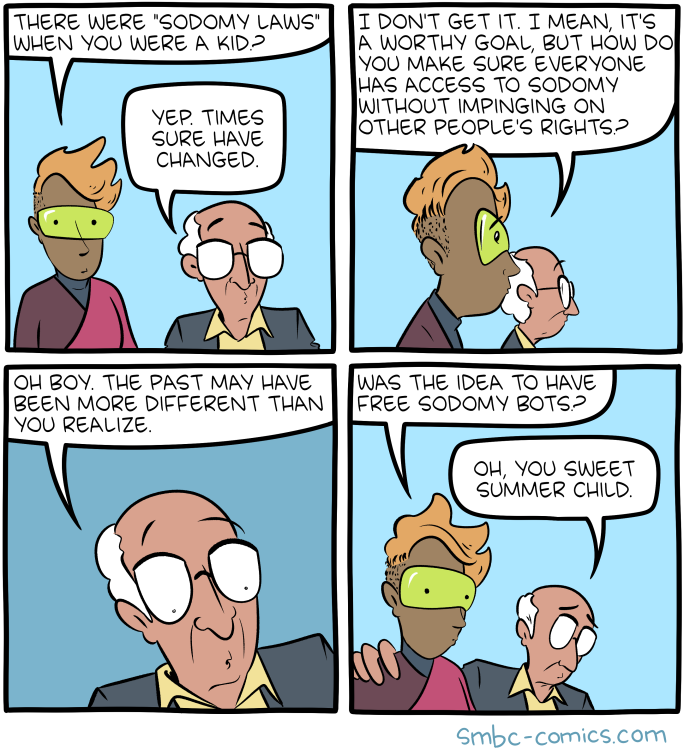
The comic depicts a conversation about the phrase "good old days," where one character nostalgically invokes the past. Another character pushes back, pointing out that when you say "good old days," you need to make sure everyone's rights were actually respected back then — not just the rights of certain privileged groups. The first character defensively responds that the past may have been more different than they realize, and the other character sarcastically suggests the idea of "free, godly bots" (or similar absurd nostalgia). The punchline lands when the nostalgic character is called a "quiet orange cat" — a non sequitur deflection that underscores how people dodge uncomfortable truths about the past.
More precisely, the comic satirizes the common tendency to romanticize previous eras while ignoring that those "good old days" were only good for a select group of people. When pressed on whether the past was truly better for everyone — including minorities, women, and other marginalized groups — the nostalgic person becomes flustered and deflects rather than engaging with the point.
The Humor
The humor comes from the familiar social dynamic where someone waxes nostalgic about the past and then gets called out for forgetting that the "good old days" involved significant injustices. The escalating discomfort of the nostalgic character, combined with the absurd deflections, highlights how shallow and self-serving nostalgia often is. Weiner frequently uses this format of taking a common social platitude and exposing its logical or moral contradictions.