tolkien
Explanation
The Joke
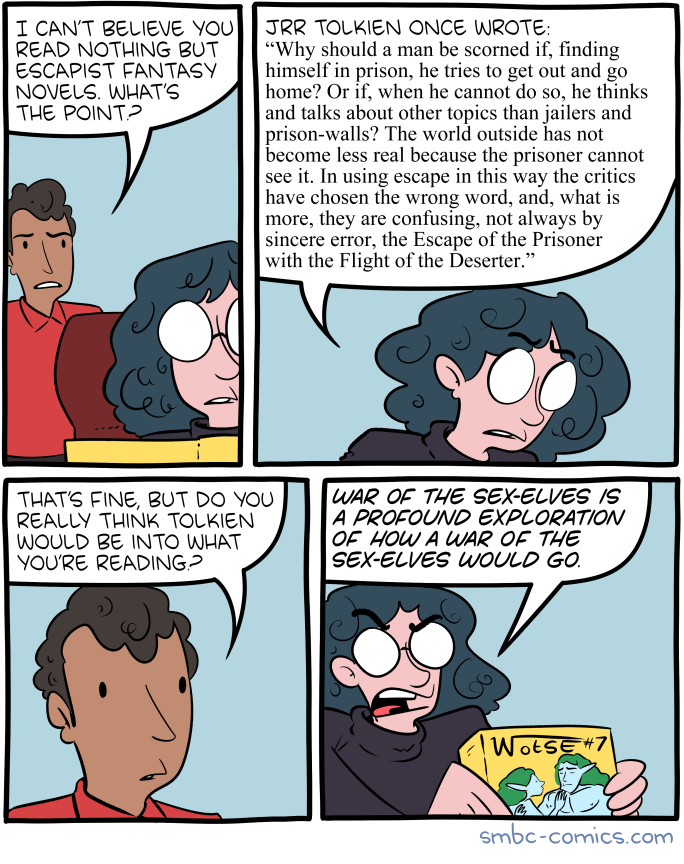
The comic opens with a character quoting J.R.R. Tolkien's famous defense of escapist literature. Tolkien once argued that the only people who object to "escape" in fiction are jailers — meaning that criticizing fantasy for being escapist is like criticizing a prisoner for wanting to leave their cell. The character faithfully recites this well-known passage about how escape in literature is not the same as desertion, and that the real world's problems don't invalidate the desire to imagine something better.
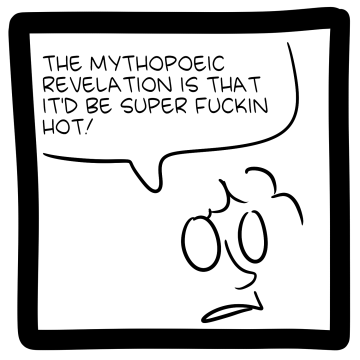
However, the other character then asks whether the person quoting Tolkien really thinks this is what Tolkien had in mind when he wrote that — because the "escapist fantasy" the first character is actually reading appears to be something far less noble or literary than Tolkien's own works. The implication is that the reader is using Tolkien's high-minded defense of imaginative literature to justify reading something decidedly lowbrow, trashy, or self-indulgent, which is a humorous misapplication of the original argument.
The Humor
The comedy lies in the gap between the lofty intellectual defense and the mundane reality of what's being defended. Tolkien was writing about the power of myth, fairy-stories, and imaginative world-building to uplift the human spirit. Using that same argument to justify reading pulpy genre fiction (or worse) is a classic bait-and-switch. It's a relatable joke for anyone who has ever used a sophisticated-sounding justification for an entirely unsophisticated guilty pleasure.
References
The Tolkien quote paraphrased in the comic comes from his 1947 essay "On Fairy-Stories," in which he distinguishes between the "Escape of the Prisoner" and the "Flight of the Deserter," arguing that critics who sneer at escapism in literature are confusing the two.