transcendence
Explanation
The Joke
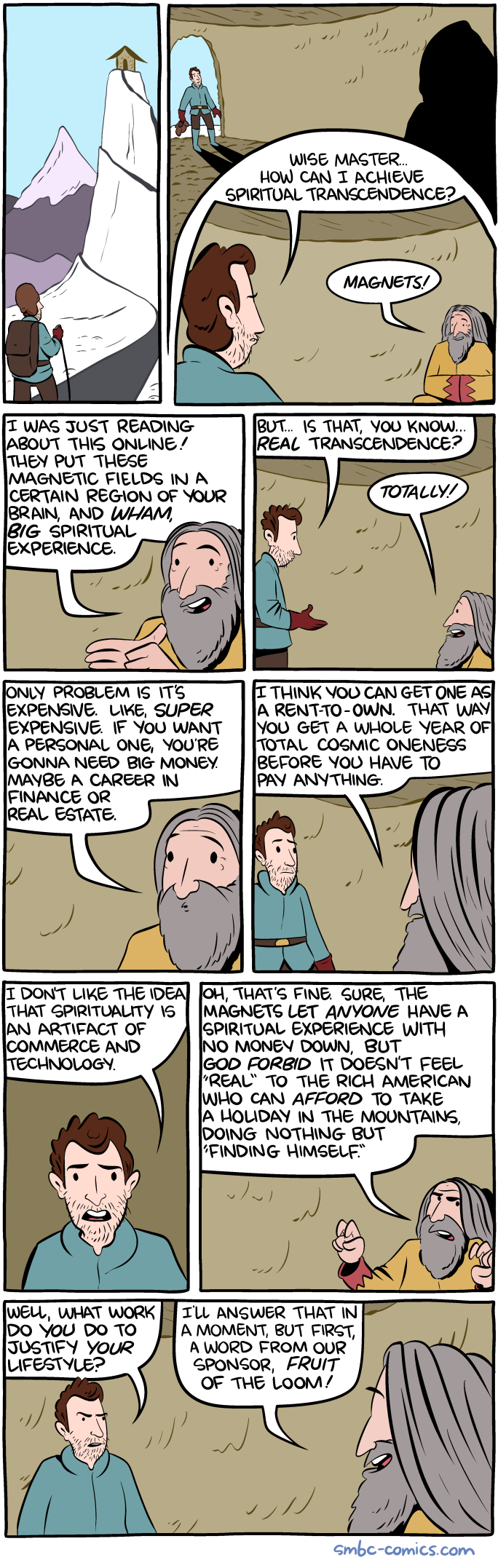
A seeker climbs a mountain to ask a wise master how to achieve spiritual transcendence. The master''s answer is simply: "Magnets!" When the seeker questions this, asking if this is real transcendence, the master enthusiastically confirms it is, explaining that placing magnets on a certain region of the brain can simulate a spiritual experience.
The conversation then devolves as the master reveals these magnets are expensive, suggests the seeker might need a career in real estate to afford a personal one, but notes you can rent one -- though only for a limited number of uses before you have to pay anything. The seeker objects that this makes spirituality sound indistinguishable from commerce and technology. The master counters that the magnets let anyone have a free trial with no money down, making transcendence feel "real" -- like "the rich American goes for a holiday in the mountains, doing nothing but finding himself."
The final panels reveal the full absurdity: the seeker asks what the master does for a living, and the master deflects, promising to answer after a word from their sponsor, "Fruit of the Mind." The master has turned the mountaintop guru archetype into an infomercial pitchman.
The Humor
The comic satirizes the commercialization of spirituality and the tension between genuine transcendence and modern consumer culture. The classic trope of seeking a wise hermit on a mountaintop is completely undercut when the "wisdom" turns out to be a product pitch. The humor escalates as each supposedly spiritual answer becomes more transparently a sales tactic -- free trials, rental plans, and finally an explicit sponsorship deal. The joke also pokes fun at transcranial magnetic stimulation (TMS) research, which has indeed shown that stimulating certain brain regions can produce experiences that feel spiritual, raising uncomfortable questions about whether mystical experiences are "real" or just neurological phenomena.
References
The comic references transcranial magnetic stimulation (TMS), a real neuroscience technique. Researcher Michael Persinger famously used a device nicknamed the "God Helmet" to stimulate the temporal lobes, with some subjects reporting mystical or spiritual experiences. The comic also satirizes the broader trend of wellness and spirituality industries marketing products like meditation apps, retreats, and brain-stimulation devices as paths to enlightenment.