Trough
Explanation
The Joke
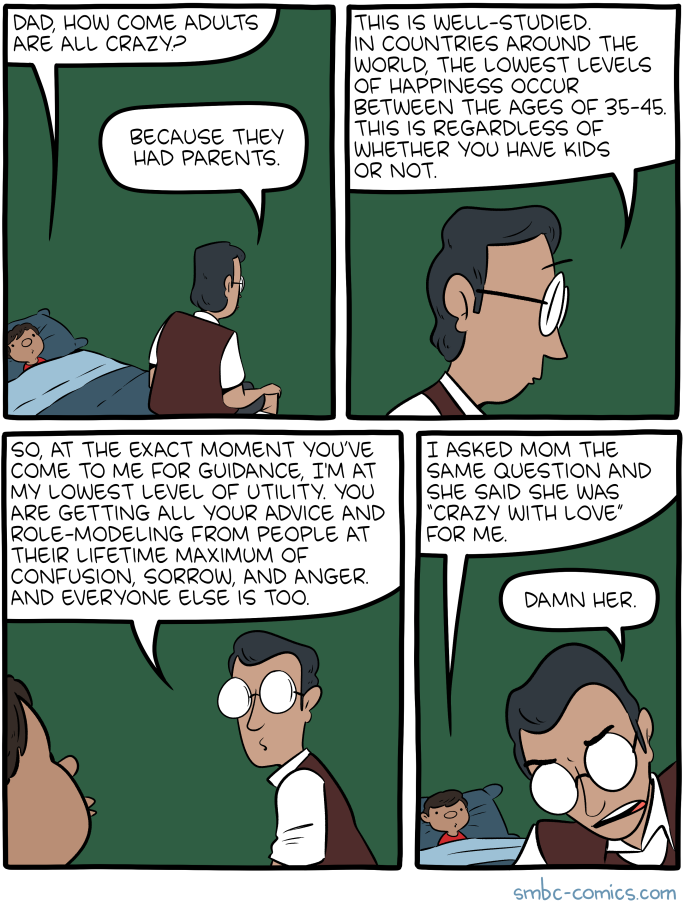
A child asks a parent, "Dad, how come adults are all crazy?" The parent responds simply, "Because they had parents." The comic then explains that this is well-studied: the craziness peaks around the toddler years (the "trough" from the title), representing the lowest levels of happiness and highest levels of stress for parents. This is true regardless of how many kids you have.
In the lower panels, a professor-like figure explains the mechanism: at the exact moment you've come to terms with your own mortality, gained some level of stability, and are getting along with your parents and no longer wrestling with the confusion, jealousy, and anger from your youth -- you have a child who asks the same existential questions all over again, but this time demands answers you still don't have. The figure notes that the child "drags you back, but now saturated with love for someone you can't protect." The final panel shows the parent's defeated response: "Damn her."
The Humor
The comedy operates through a darkly honest portrayal of parenthood. The initial setup -- "why are adults crazy?" / "because they had parents" -- works as a simple joke, but the comic deepens it into something more poignant. The real humor comes from the accurate description of the parenting paradox: you spend your whole life getting your emotional house in order, and just when you've achieved some equilibrium, a child arrives to tear it all apart again by forcing you to relive every existential crisis vicariously. The "damn her" at the end is funny because it simultaneously expresses love and exasperation -- the parent is cursing the very child they adore for making them feel things they'd finally learned to manage.
References
The title "Trough" refers to the well-documented U-shaped curve of happiness across the lifespan, which shows a notable dip (trough) during the years of active parenting, particularly with young children. Research by economists like David Blanchflower and Andrew Oswald has consistently found that parental happiness drops during the child-rearing years before recovering later in life. The comic also touches on themes from developmental psychology about intergenerational transmission of anxiety and existential questioning.