unpaid-internship-loophole
Explanation
The Joke
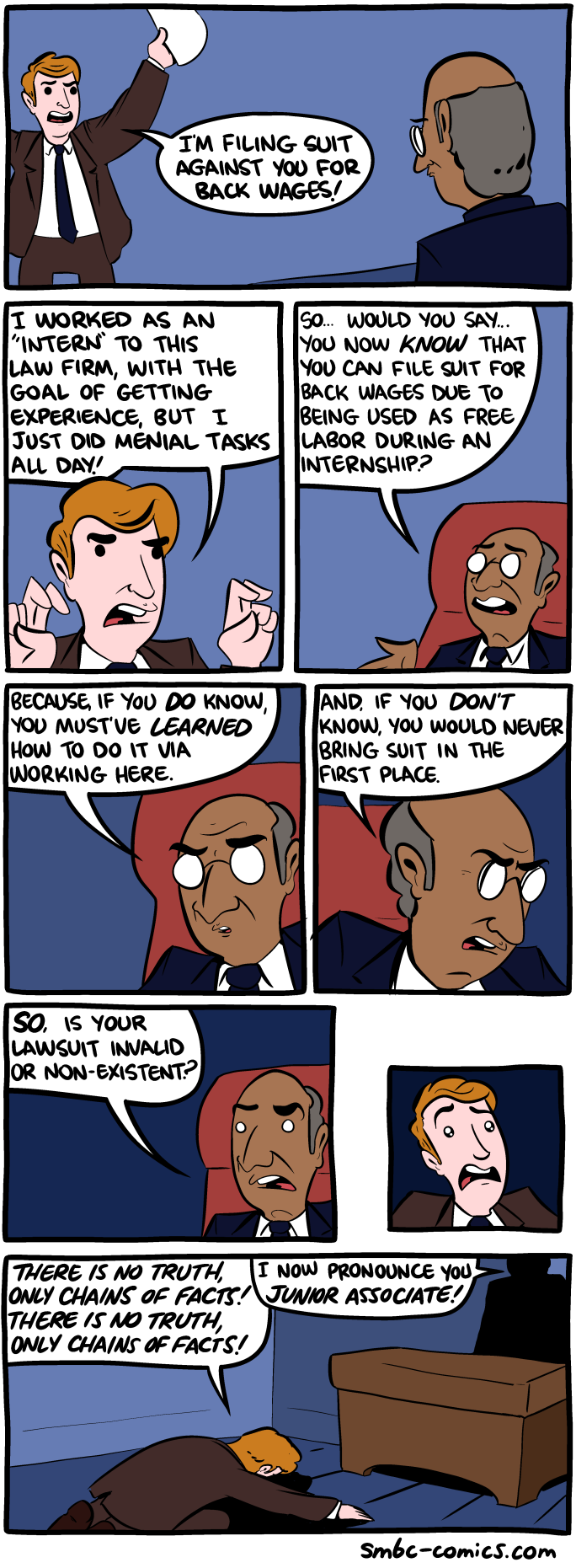
A former unpaid intern sues a law firm for back wages. The lawyer at the firm points out a catch-22: if the intern learned enough to know they could sue for back wages, then they must have gained valuable legal experience (meaning it was a legitimate educational internship). But if they didn't learn anything, they would never have known to sue in the first place. Impressed by this reasoning, the firm promotes the intern to "Junior Associate," declaring "There is no truth, only chains of facts!"
The Humor
The comic satirizes both unpaid internships and the legal profession. The lawyer's argument is a perfect example of lawyerly sophistry -- it sounds logically airtight but is actually a cynical trick. The firm exploits the intern's labor, then uses the very knowledge the intern gained (about labor law) as evidence that the internship was educational and therefore legally valid. It's a self-sealing argument that can never be defeated.
The punchline -- promoting the intern to Junior Associate -- works because the firm recognizes that this person has now demonstrated exactly the kind of morally flexible, rhetorically slippery reasoning that makes for a successful lawyer. The line "There is no truth, only chains of facts" is a darkly funny mission statement for the legal profession, suggesting that lawyers don't seek truth but rather arrange facts into whatever narrative serves their client.
The comic also comments on the real-world controversy around unpaid internships, where companies often exploit young workers under the guise of "educational experience."
References
U.S. labor law generally requires that unpaid internships primarily benefit the intern educationally. Several high-profile lawsuits in the 2010s challenged unpaid internship practices, including cases against major media and entertainment companies.