why-do-you-want-to-work-here
Explanation
The Joke
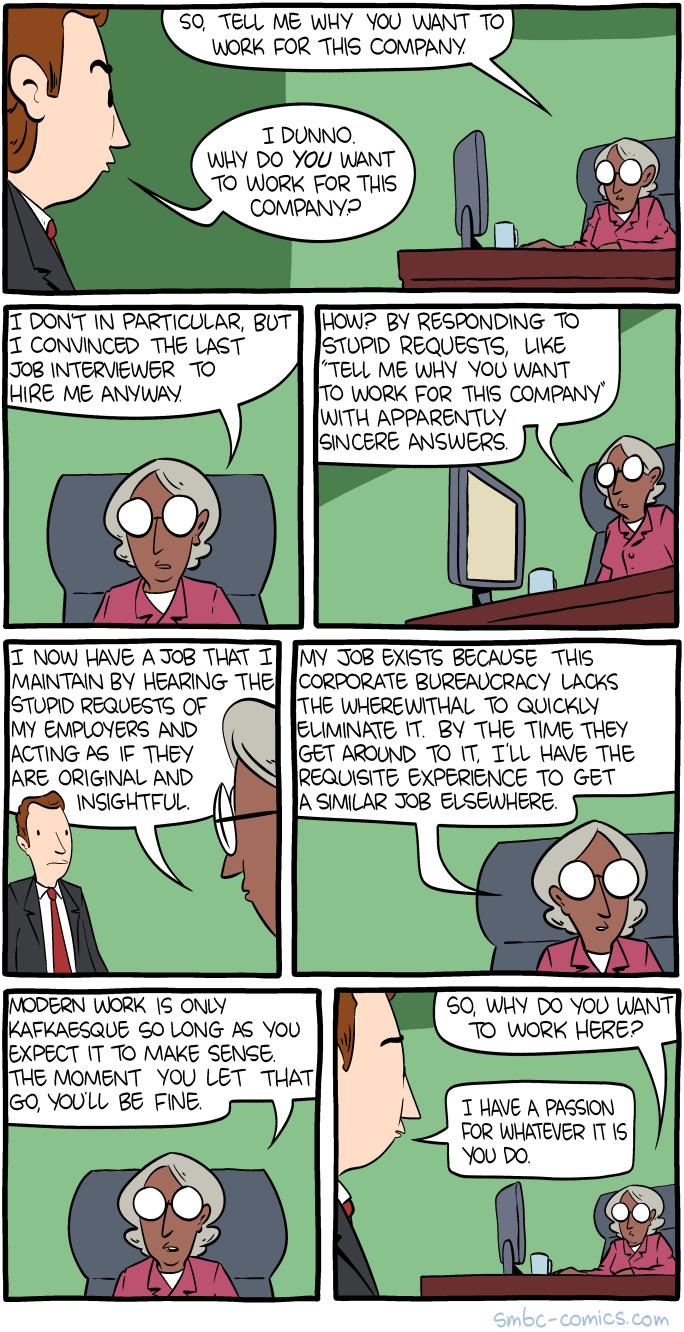
The comic depicts a job interview where the interviewer asks the classic question, "So, tell me why you want to work for this company?" The interviewee, an older woman with glasses, turns the question around by asking, "I dunno. Why do you want to work for this company?" The interviewer admits she does not work there for any particular reason -- she simply convinced the last job interviewer to hire her anyway.
In the next panels, both characters break the fourth wall of corporate pretense. The interviewer explains that she maintains her job by "hearing the stupid requests of my employers and acting as if they are original and insightful." The interviewee responds in kind, noting that her job as an interviewer only exists because corporate bureaucracy is too slow to eliminate it, and by the time they get around to it, she will have enough experience to get a similar job elsewhere.
The final panel shows the interviewee back in the hot seat, asked "So, why do you want to work here?" She replies with perfect corporate insincerity: "I have a passion for whatever it is you do."
The Humor
The humor lies in the brutal honesty about the absurdity of job interviews and corporate culture. The question "Why do you want to work here?" is one of the most universally dreaded interview questions because everyone knows the real answer is usually "I need money" or "you were hiring," yet candidates are expected to perform enthusiasm and passion. The comic escalates by having both participants openly acknowledge that the entire corporate ecosystem runs on mutual pretense -- the interviewer pretends her job matters, the bureaucracy is too slow to notice, and everyone plays along because the alternative is confronting the Kafkaesque nature of modern work.
The punchline -- "I have a passion for whatever it is you do" -- is the perfect distillation of every hollow interview answer ever given, stripped of even the minimal effort of looking up what the company does. The penultimate panel''s advice that "modern work is only Kafkaesque so long as you expect it to make sense" is a darkly comic thesis statement for the whole strip.
References
The comic references Franz Kafka, the early 20th-century author known for depicting absurd, labyrinthine bureaucracies in works like The Trial and The Castle. The term "Kafkaesque" has come to describe situations characterized by surreal, nightmarish complexity and illogical institutional processes -- a fitting description of the modern job interview ritual.