Wise
Explanation
The Joke
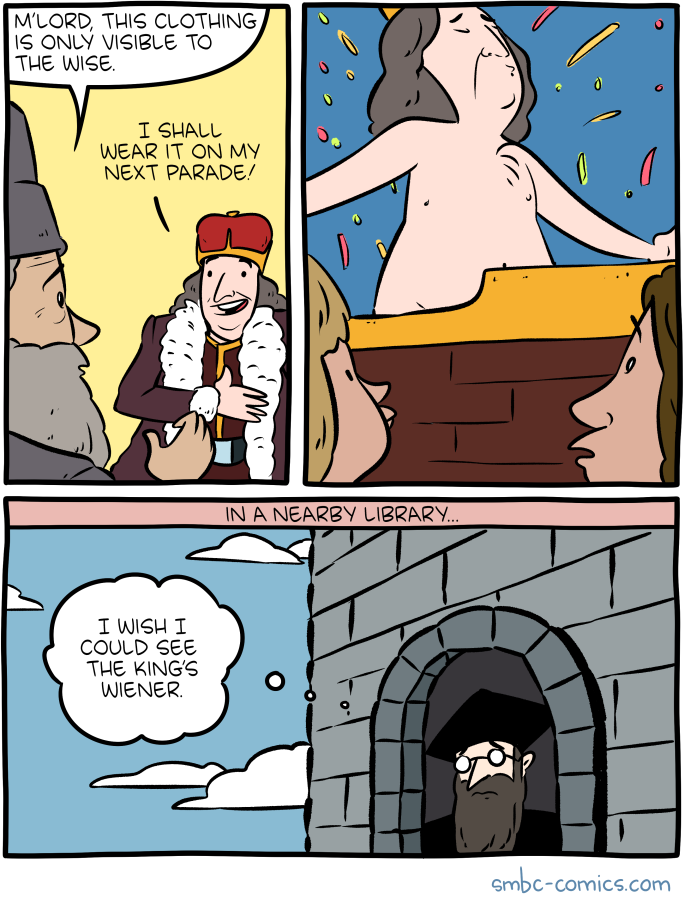
The comic retells the classic fable of "The Emperor's New Clothes." A courtier informs the emperor that his new clothing is only visible to the wise. The emperor, not wanting to appear foolish, declares he shall wear it on his next parade. In the next panel, the emperor is shown parading naked before the public. But instead of the traditional ending where a child calls out the emperor's nudity, a person in the crowd observes from a castle window: "I wish I could see his wiener" -- implying that they too are playing along with the fiction that the clothes exist and are merely blocking the view, or alternatively, that they are straightforwardly admitting they want to see the emperor naked.
The Humor
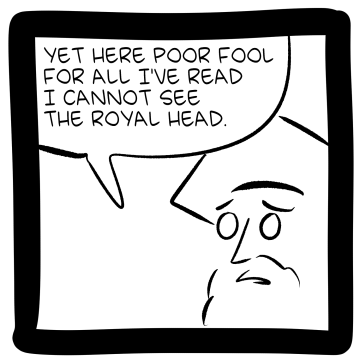
The humor subverts the well-known moral of "The Emperor's New Clothes," where the point is usually about the courage to speak truth to power. Instead of anyone calling out the obvious nudity, the comic takes the scenario in a completely unexpected and crude direction. The observer's comment is funny because it is ambiguous -- it could mean they genuinely believe in the invisible clothes and wish they could see through them, or it could be a brazen admission that has nothing to do with the clothes at all. Either interpretation is absurd and undercuts the fable's original dignity.
References
"The Emperor's New Clothes" is a fairy tale by Hans Christian Andersen, first published in 1837. In the original story, two swindlers convince the emperor they have made him magnificent clothes that are invisible to anyone who is stupid or unfit for their position. Everyone pretends to see the clothes until a child blurts out the truth.