2014-04-04
Explanation
The Joke
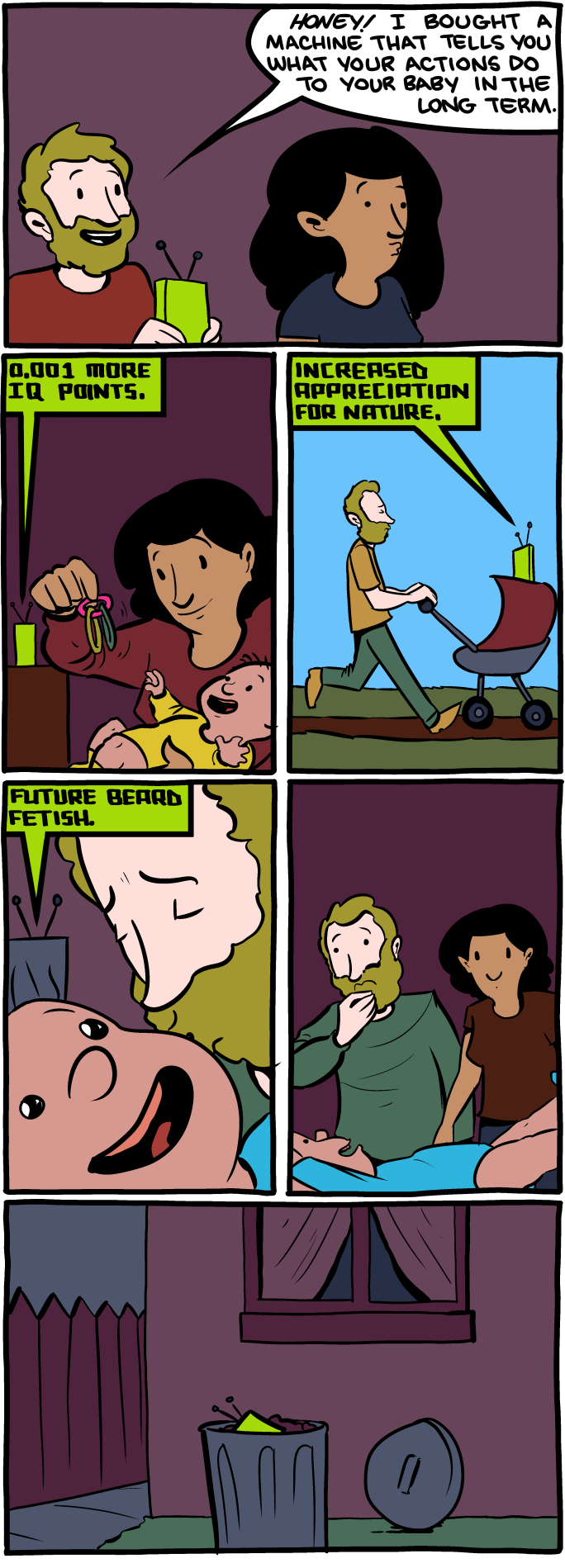
A couple is shown with their baby. One parent announces: "Honey! I bought a machine that tells you what your actions do to your baby in the long term." They then proceed to test various parenting actions, and the machine displays the long-term consequences:
- Reading to the baby: "0.001 more IQ points."
- Taking the baby for a walk in a stroller: "Increased appreciation for nature."
- A parent with a beard holding the baby near a window: "Future beard fetish."
In the final panel, the couple is seen standing near the trash can, presumably having thrown the machine away, not wanting to know any more.
The Humor
The joke operates on escalation. The first two results from the machine are benign and expected -- reading to a child provides a tiny cognitive boost, and nature walks build appreciation for the outdoors. These are the kinds of reassuring facts parents want to hear. But the third result -- that the baby will develop a "beard fetish" from seeing a bearded parent -- is an unexpected and uncomfortable revelation about how random, minor experiences shape a child's future psychology in ways parents never intended.
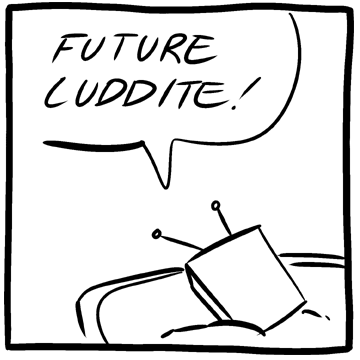
The humor comes from the uncomfortable truth that parenting involves countless tiny, uncontrollable influences on a child's development, and if you could actually see all the long-term consequences of your actions, you probably wouldn't want to know. The couple throwing the machine away is the natural response to realizing that total knowledge of your parenting impact would be more anxiety-inducing than helpful.