modern-epic

Explanation
The Joke
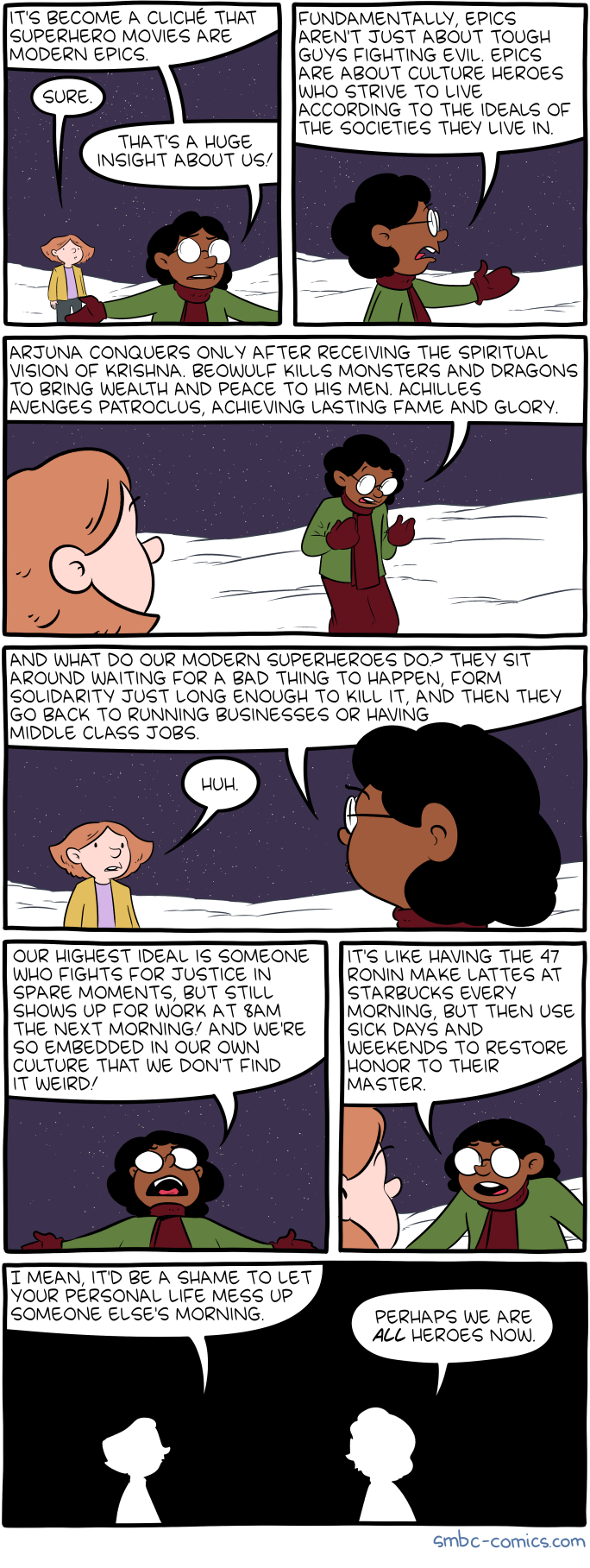
The comic is an extended meditation on how modern superhero movies compare to classical epic literature. A character in bed observes that it has become a cliche that superhero movies are our modern epics, and argues this is actually a "huge insight about us." The comic then contrasts the structure of ancient epics with modern ones.
In classical epics like the story of Arjuna (from the Mahabharata), the hero conquers only after receiving spiritual wisdom, slays monsters and demons, pursues patriotic glory, and achieves lasting fame. By contrast, modern superheroes just sit around until a giant threat appears, form a team with minimal solidarity just long enough to kill it, and then go back to their individual franchises -- "middle class jobs."
The character then critiques modern superhero narratives further: our heroes do have grand moments, but they are still fundamentally mundane. They are "still stargazing every evening, still hoping for rain," and still beholden to corporate structures (directors, studio mandates). Another character asks what it would mean to be a genuine hero today, and the response is darkly ironic: "Perhaps we are heroes now" -- the joke being that modern "heroism" has been reduced to something thoroughly ordinary and unheroic.
The Humor
The humor is more intellectual and satirical than laugh-out-loud funny. The comic works by taking the common pop-culture observation ("superhero movies are our modern mythology") and pushing it to its uncomfortable conclusion: if these are our epics, what does that say about us? The Mahabharata's Arjuna achieves spiritual transcendence; the Avengers save the world and then go back to branding deals. The final panel's "perhaps we are heroes now" lands as both a sincere observation and a devastating critique -- we live in an age where heroism has been flattened into franchise management and middle-class aspiration.
References
Arjuna is one of the central heroes of the Mahabharata, the ancient Indian epic. Before the great battle of Kurukshetra, Arjuna receives spiritual guidance from the god Krishna in the Bhagavad Gita, one of the most important texts in Hindu philosophy. The comic contrasts this deep spiritual journey with the comparatively shallow character arcs of modern superhero films. The references to "middle class jobs," directors, and franchise structures are pointed commentary on the Marvel Cinematic Universe and similar superhero film franchises.