singed
Explanation
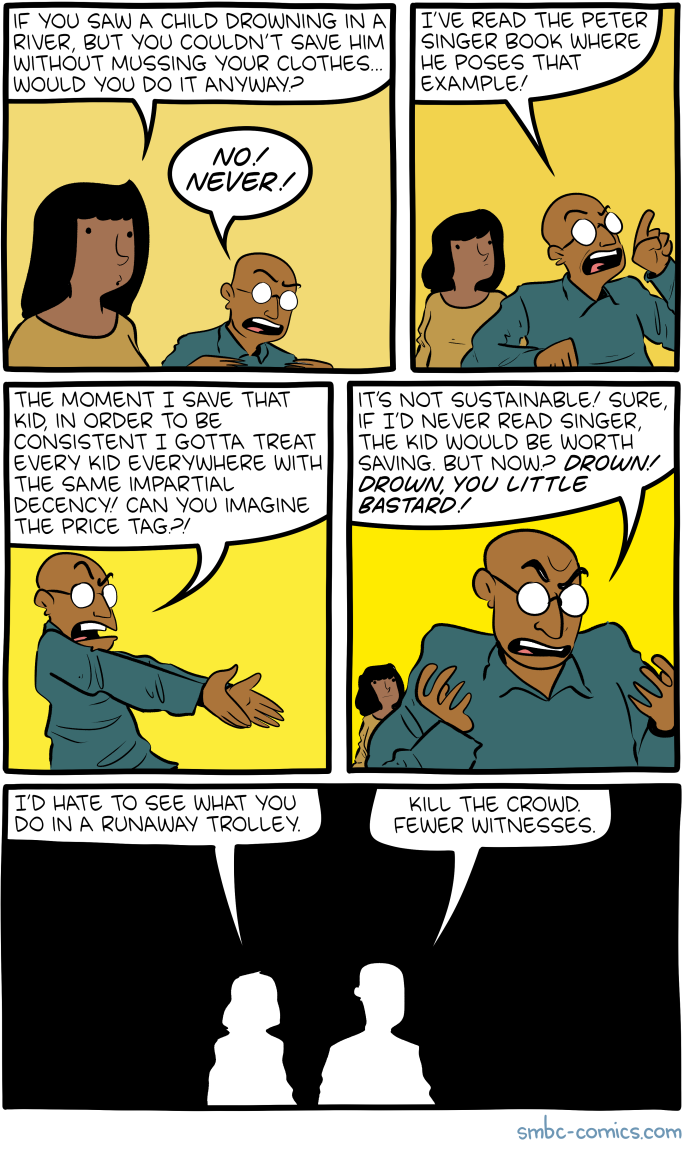
This comic takes a moral philosophy thought experiment and pushes it to an absurd extreme, exposing the gap between stated ethical principles and actual behavior.
The setup presents a variation on a classic ethical dilemma: "If you saw a child drowning in a pool, but you couldn't save her without ruining your clothes, would you do it anyway?" The person emphatically responds: "No! Never!" -- wait, actually they say the opposite: "No! Never!" meaning they would never let the child drown. They'd save the child regardless of their clothes.
The questioner then springs the trap: "The moment I said that, you committed yourself. In order to be morally consistent, you must treat every kid everywhere with the same immediacy, drowning you imagine." This is a direct reference to philosopher Peter Singer's famous "drowning child" argument, which contends that if you would save a drowning child at trivial personal cost, you are morally obligated to donate money to save children dying of preventable causes in developing countries, since the moral principle is the same.
The person being questioned reacts with horror: "It's not sustainable! I guess I'd never read Singer, I was happy just doing some good, but now I gradually drown, you little bastard!" The implication is that full moral consistency with Singer's argument would require giving away virtually everything you own, effectively "drowning" yourself.
The final panels show escalating reactions: "I'd hate to see what you do at a runaway trolley" (referencing the trolley problem) and "Kill the crowd, fewer witnesses" -- suggesting that once you start applying rigorous moral philosophy to everyday life, the conclusions become increasingly extreme and unlivable. The comic satirizes how moral philosophy can transform a simple good impulse into a paralyzing, all-consuming obligation.