the-future-of-work

Explanation
The Joke
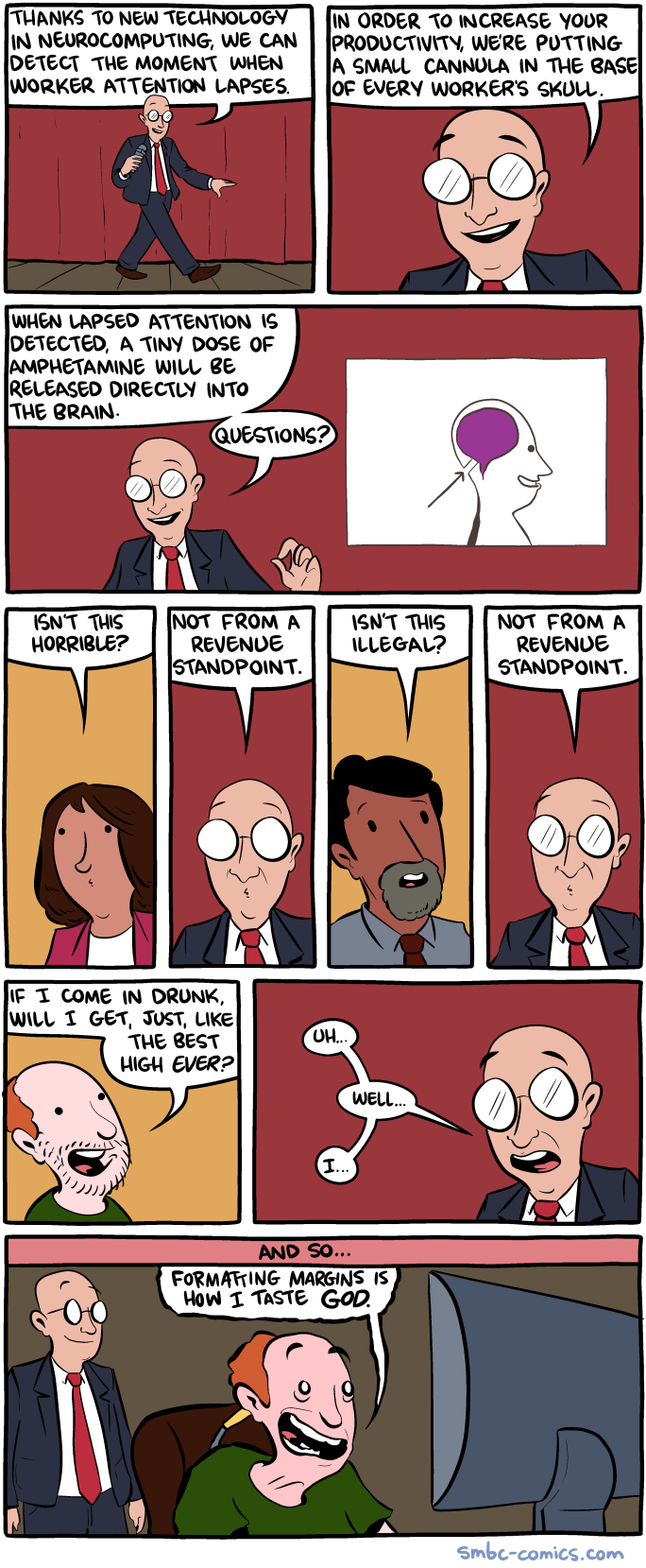
A corporate presenter announces that thanks to new technology in neurocomputing, they can detect the moment when a worker's attention lapses. To increase productivity, they will be putting a small cannula in the base of every worker's skull. When lapsed attention is detected, a tiny dose of amphetamine is released directly into the brain. The audience asks questions: "Isn't this horrible?" -- "Not from a revenue standpoint." "Isn't this illegal?" -- "Not from a revenue standpoint." Then someone asks, "If I come in drunk, will I get, put like, the nice drugs?" followed by "Everything works if you taste God." The final panel shows two men sitting together, one saying to the other in a resigned tone, suggesting this dystopian workplace is now reality.
The Humor
The comic satirizes corporate culture's relentless pursuit of productivity at the expense of worker wellbeing. The presenter's responses to ethical and legal concerns -- dismissing both with "not from a revenue standpoint" -- is a darkly funny commentary on how corporations often evaluate decisions purely through the lens of profit, ignoring morality and legality. The additional joke about an employee wanting to come in drunk to get better drugs flips the dystopia on its head, showing how workers might try to game even the most oppressive systems. The comic takes the real trend of workplace surveillance and productivity optimization to its logical, horrifying extreme.
References
The comic references real-world trends in workplace monitoring and productivity optimization, including the growing use of biometric data, attention-tracking software, and neurotechnology. Amphetamines have a long history of being used to boost worker and military productivity, most notably during World War II.