the-grasshopper-and-the-ants
Explanation
The Joke
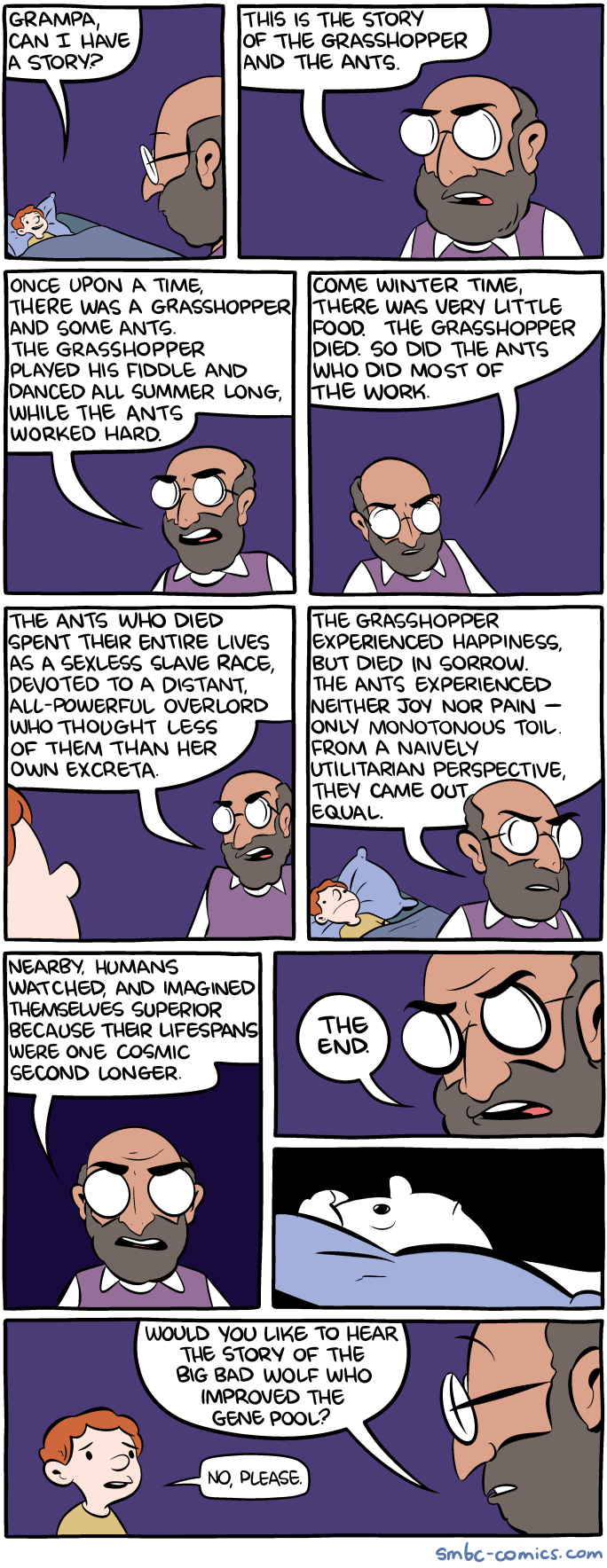
A grandfather begins telling the classic Aesop fable of the Grasshopper and the Ants to a child. In the traditional story, the grasshopper plays his fiddle all summer while the ants work hard, and when winter comes, the grasshopper has no food while the ants are well-provisioned. The moral is supposed to be about the virtues of hard work and planning ahead.
However, the grandfather takes the story in a much darker, more realistic direction. He explains that the ants who worked hard their entire lives ended up being used as a "de facto slave race" by a small number of ants who "delegated to dominant all-powerful overlords" and enjoyed "10,000 times the leisure of any single ant." Meanwhile, the grasshopper experienced hardship but also did not suffer the soul-crushing toil of the worker ants. The ants never experienced "a single 30-year period without mass destruction" and could hardly be called superior from a "utilitarian perspective."
The grandfather then labels the original fable as propaganda: "Nearby humans heard and imagined themselves superior because their lifespans were one comic long." The child, apparently not charmed by this version, is asked if they would like to hear another subverted fable -- "the bird who used the early worm who monopolized the gene pool" -- to which the child responds "No, please."
The Humor
The humor operates on multiple levels. First, it takes a beloved children's fable meant to teach simple morality and subjects it to rigorous socioeconomic and historical analysis, revealing that the "hardworking ants" metaphor actually describes an exploitative labor system when examined closely. Second, the grandfather character is obliviously delivering this bleak deconstruction to a small child who clearly just wanted a bedtime story. The escalating grimness -- slave labor, inequality, mass destruction -- contrasted with the cozy storytelling setting creates absurd comedy. The tag at the end, offering yet another deconstructed fable, suggests the grandfather could (and would) do this with every comforting narrative.
References
The Grasshopper and the Ants is one of Aesop's Fables, traditionally attributed to the ancient Greek storyteller Aesop (circa 620-564 BCE). The original moral emphasizes the importance of hard work and preparation over idleness. The comic's critique echoes real concerns in political philosophy about how narratives valorizing hard work can serve to justify exploitative economic systems -- a theme explored by thinkers from Karl Marx to modern labor economists. The reference to utilitarianism invokes the ethical framework developed by Jeremy Bentham and John Stuart Mill, which evaluates actions based on their total effect on well-being.