tolkien-2
Explanation
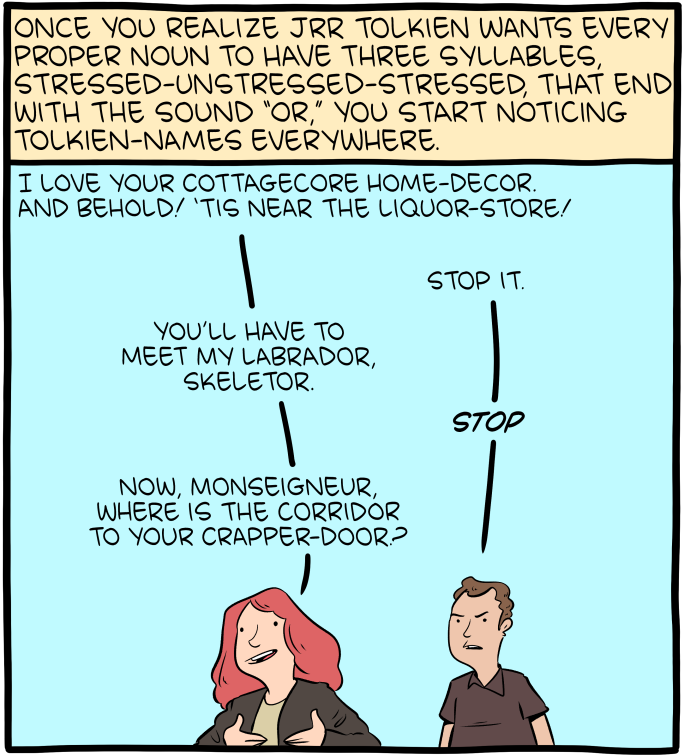
In this comic, one character tells another: "Once you realize too much Tolkien wants every compound word to have three parts, it is all stressed-unstressed-stressed, stressed that end with the -ing sound, and you start noticing Tolkien-esque names everywhere."
The character then demonstrates with examples from everyday life, finding Tolkien-sounding names in mundane places: "I love your Cottagecore home decor and Brandy, near the liquor store!" The other person says "Stop it." The first continues: "You'll have to meet my Labrador, Galadriel!" The second person says "STOP." Finally: "Now, Monseigneur, where is the corridor to your crisped cod?"
The joke is about the distinctive phonetic qualities of Tolkien's invented names and languages. J.R.R. Tolkien, as a professional philologist, created names for his Middle-earth legendarium with very specific phonetic patterns -- particularly names with three syllables featuring alternating stressed and unstressed syllables and often ending in sounds like "-iel," "-or," "-dor," "-rin," etc. (Galadriel, Gondolin, Lothlorien, Isildur, etc.)
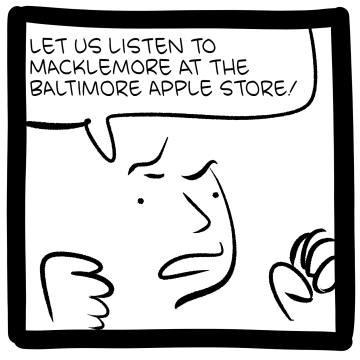
The comic suggests that once you become aware of these patterns, you start "hearing" Tolkien names in ordinary English words and phrases. The examples demonstrate this by stringing together everyday words that, when said in sequence, happen to mimic the cadence and sound of Tolkien's Elvish or Sindarin names. "Cottagecore," "Labrador," "Monseigneur," and "corridor" all have the multi-syllabic, slightly archaic or exotic quality that could pass for Middle-earth place names or character names.
The other character's increasingly desperate "Stop it" / "STOP" reactions mirror the frustration of someone who, once this pattern has been pointed out to them, can never un-hear it -- a common experience with linguistic pattern recognition.