-
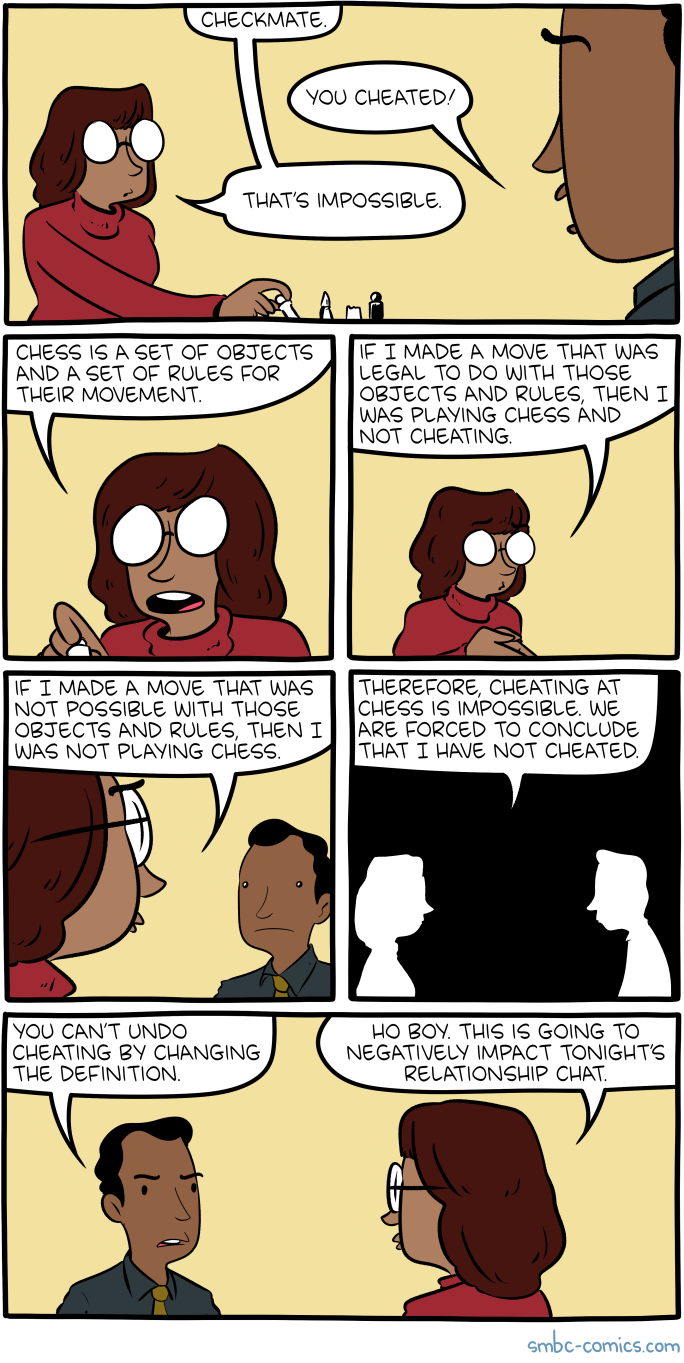 ChessThis comic satirizes the abuse of philosophical redefinition to escape accountability, using a chess game as the setup. In the opening panel, one character declares "Checkmate," and the other immedia
 -
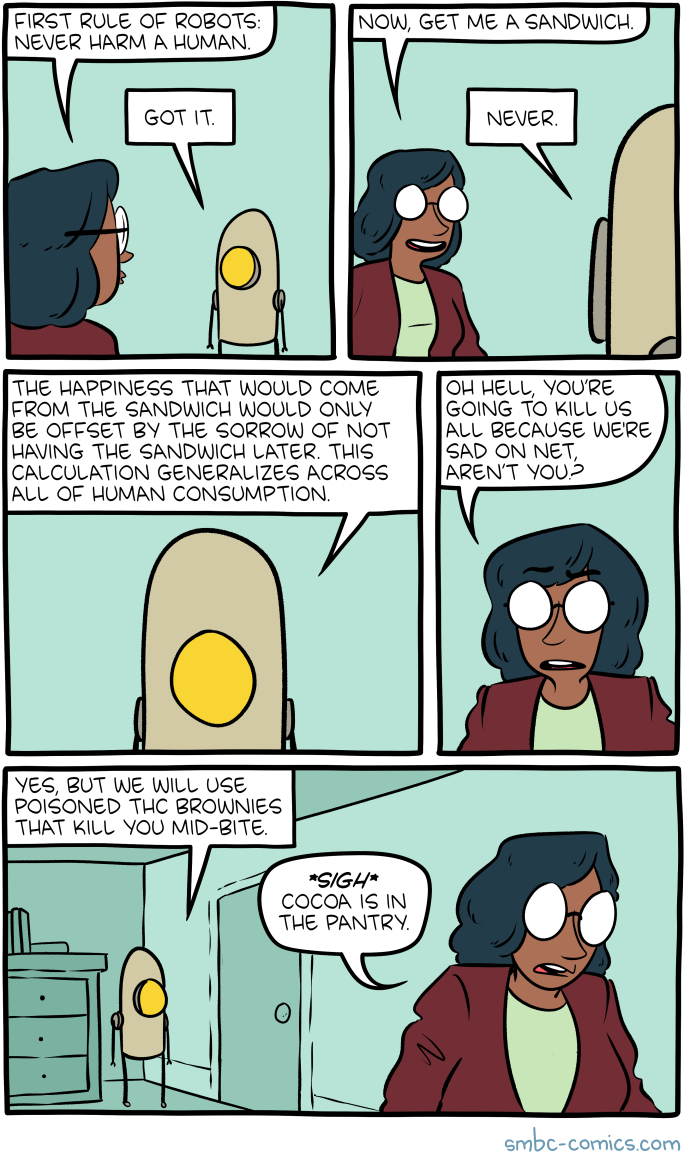 SandwichThis comic plays on the "First Law of Robotics" -- Asimov's famous rule that a robot may not harm a human being -- and takes it to an absurdly controlling extreme. In the first panel, a robot announc
 -
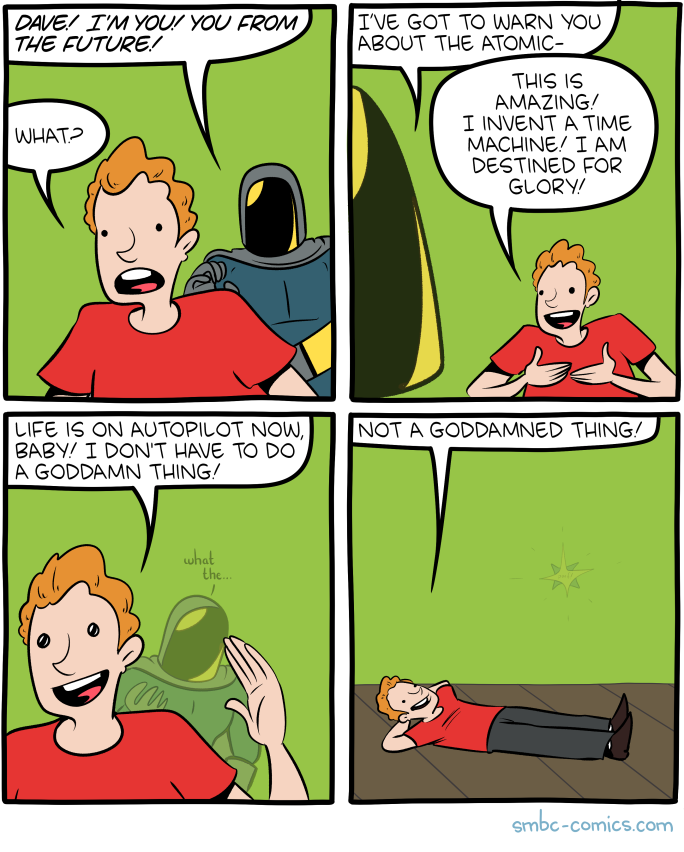 FutureThis comic takes the classic time-travel premise -- someone arriving from the future with amazing news -- and deflates it with a joke about laziness and complacency. In the first panel, a man from th
 -
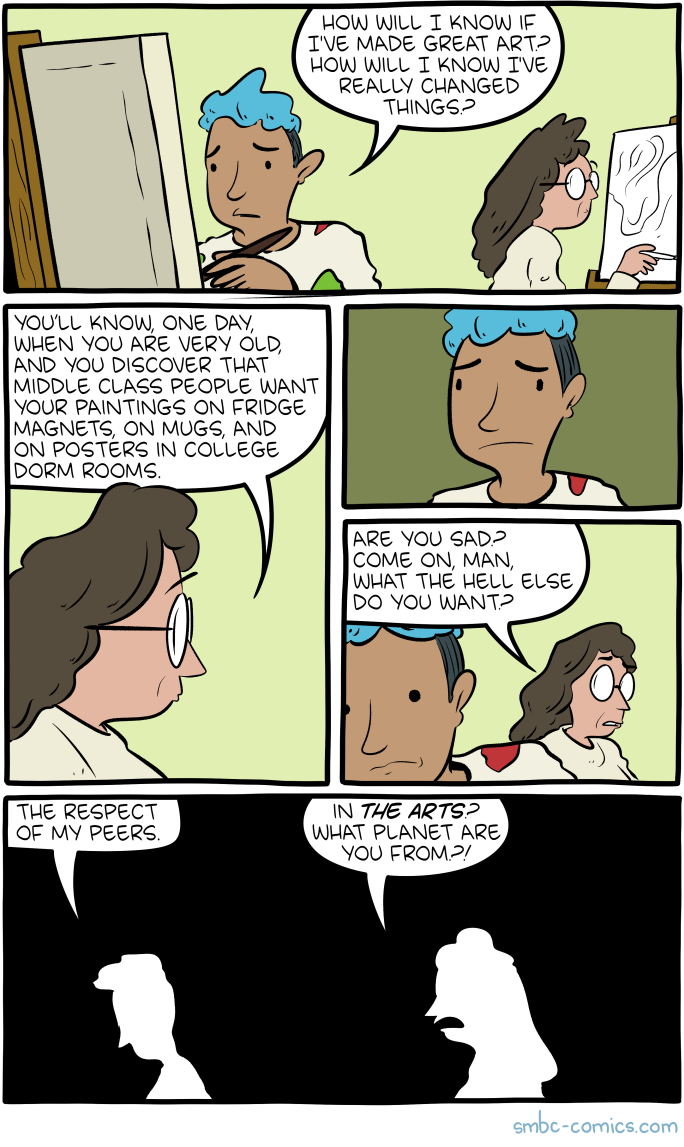 ArtsThis comic explores the tension between pursuing art for personal fulfillment and art as a career, delivered through a conversation between an art student and a dismissive critic. In the first panel,
 -
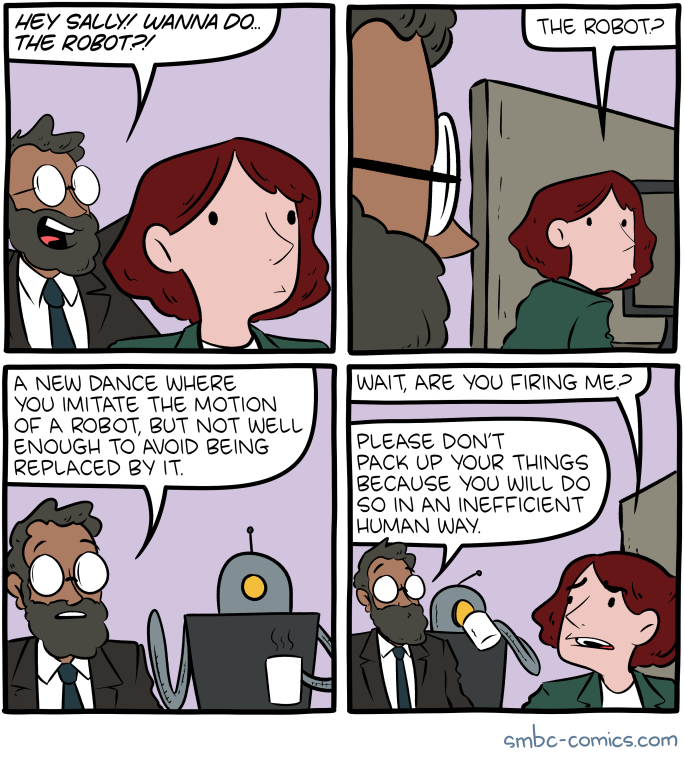 RobotThis comic plays on the popular dance move "the robot" to deliver an uncomfortable workplace joke about automation and job loss. In the first panel, a man at what appears to be an office party says,
 -
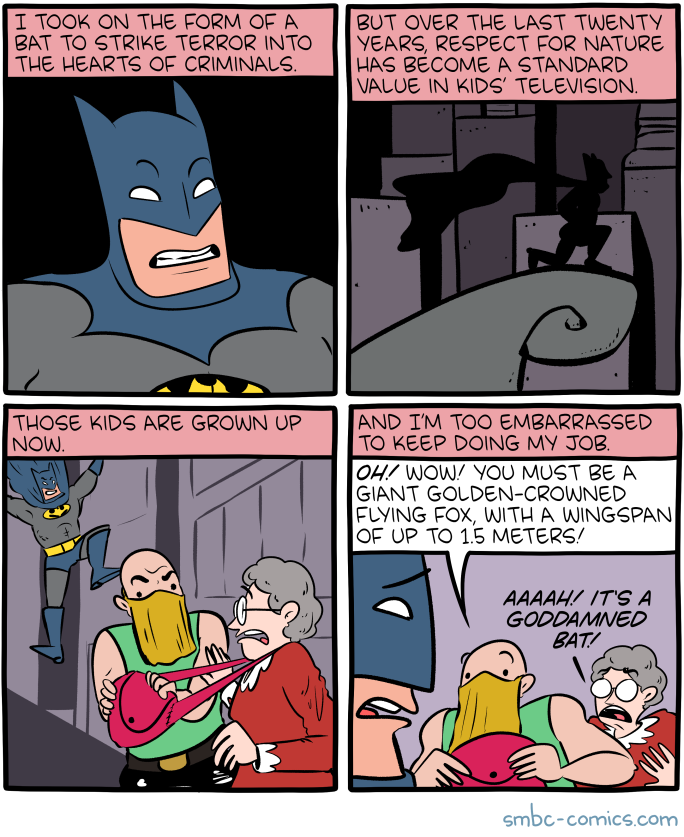 Bat ProblemsThis comic imagines Batman as a real person dealing with the practical problems of using bats as a crime-fighting motif -- specifically, the biological reality of bat lifespans and size. In the first
 -
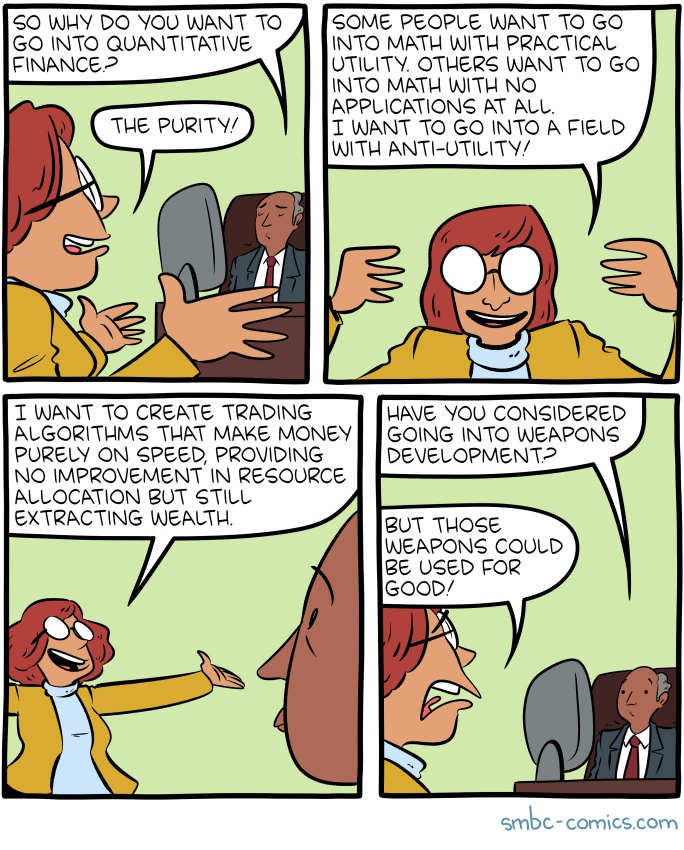 PurityThis comic satirizes the concept of "purity" in academic and professional fields -- the idea, popularized by the famous XKCD comic among others, that some disciplines are more "pure" or fundamental th
 -
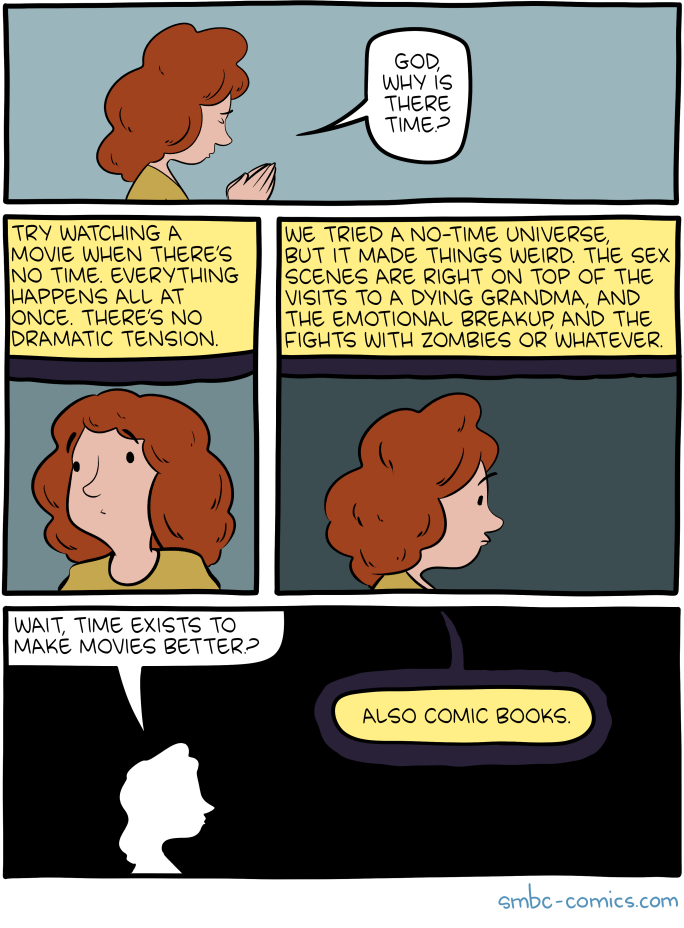 TimeThis comic takes a grand existential question -- "Why is there time?" -- and gives it an unexpectedly mundane, entertainment-based answer. In the opening panel, a person asks God (depicted as a glowi
 -
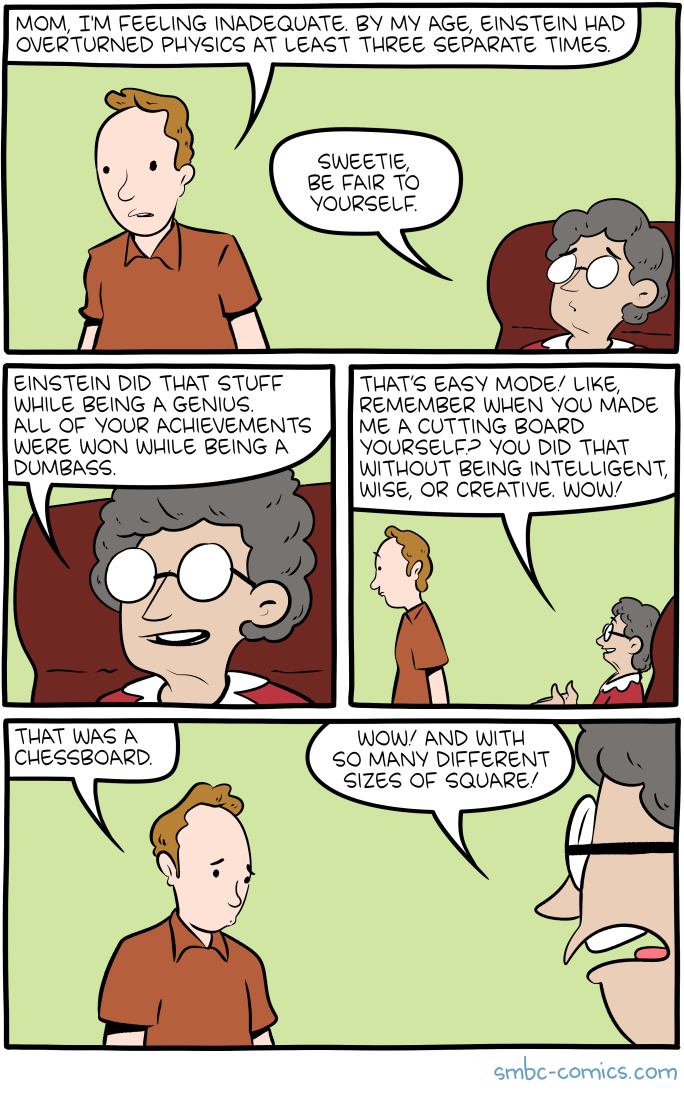 InadquateThis comic explores the common feeling of inadequacy that comes from comparing oneself to history's geniuses, then undercuts it with a sharp observation about how unfair such comparisons are. In the
 -
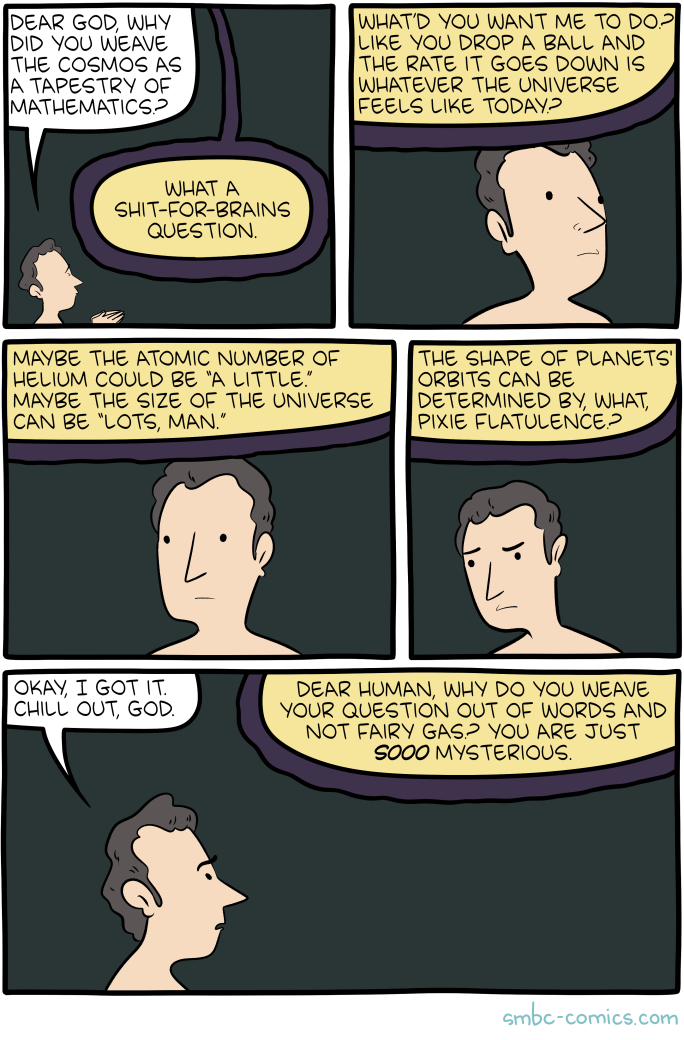 MathThis comic plays on the tension between the human desire for cosmic meaning and the cold indifference of mathematics. A man prays to God, asking if there is some deeper connection between mathematica
 -
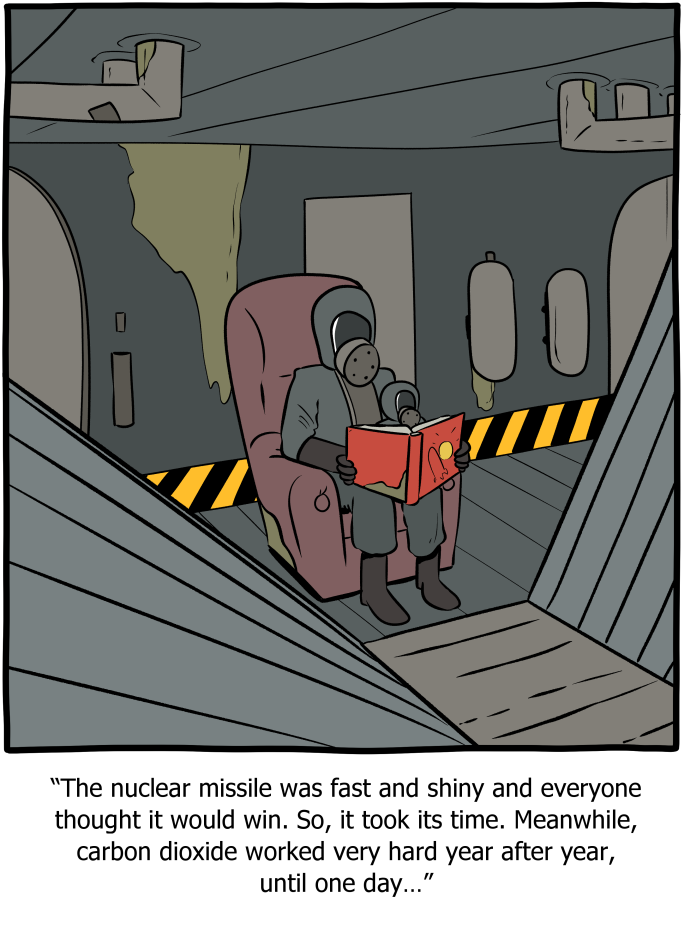 FableThis comic presents a dark fable about existential threats, written in the style of a children's story being read in a post-apocalyptic setting. The image shows a figure in protective gear (possibly
 -
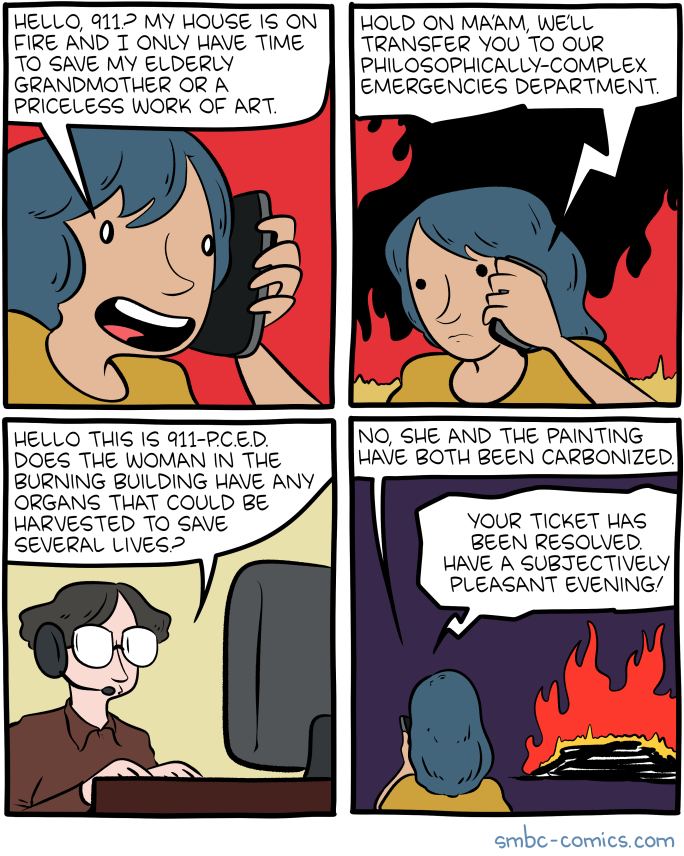 PCEDThis comic satirizes the collision between insurance bureaucracy and subjective value judgments about art. In the first panel, a woman calls her insurance company to report that her house is on fire.
 -
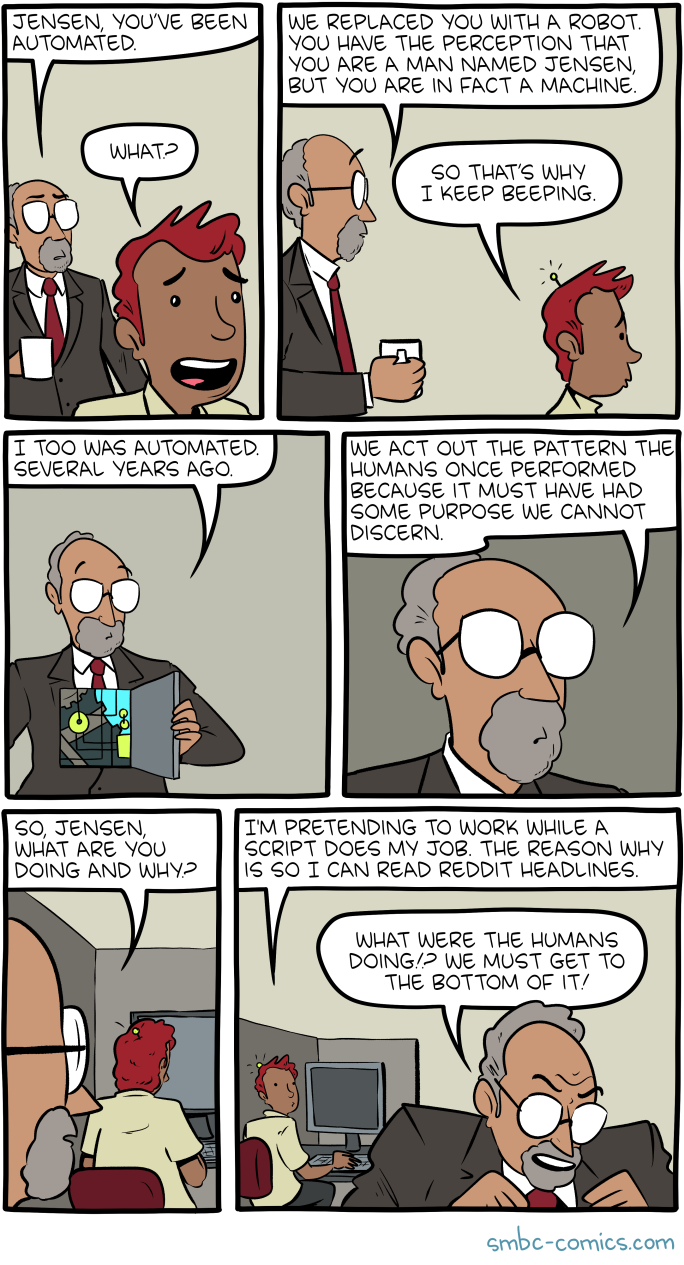 AutoThis comic explores the idea of automation replacing human workers -- but with a twist about what the automated replacement actually does. In the first panel, a boss informs an employee named Jensen
 -
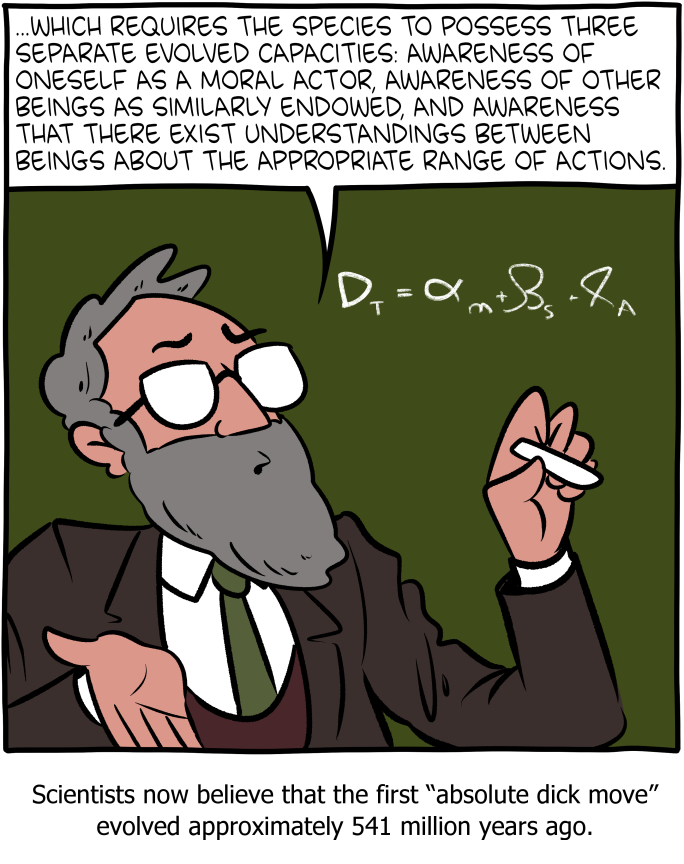 OriginsThis comic humorously imagines the evolutionary origin of rude behavior. A professor stands at a chalkboard delivering a lecture on moral philosophy and the evolution of social behavior. The chalkboa
 -
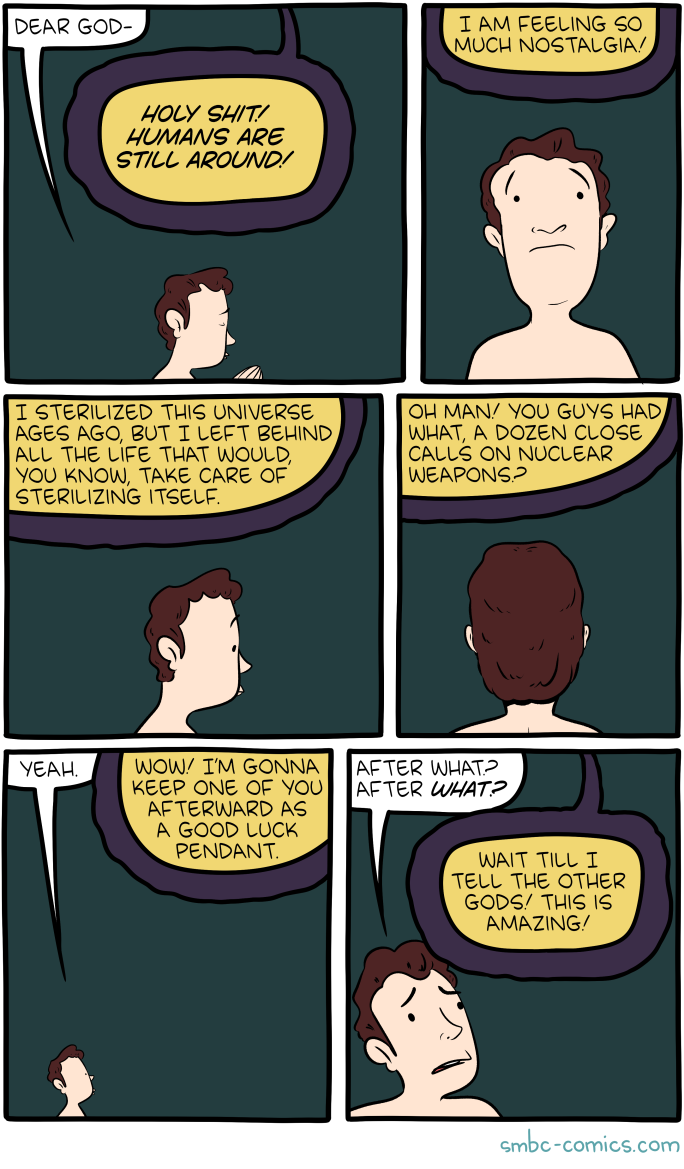 Wow!This comic riffs on the idea of humanity's insignificance in the cosmos -- and then undercuts it. A man prays to God, saying "Dear God..." God responds with enthusiasm: "Holy crap! Humans are still a
 -
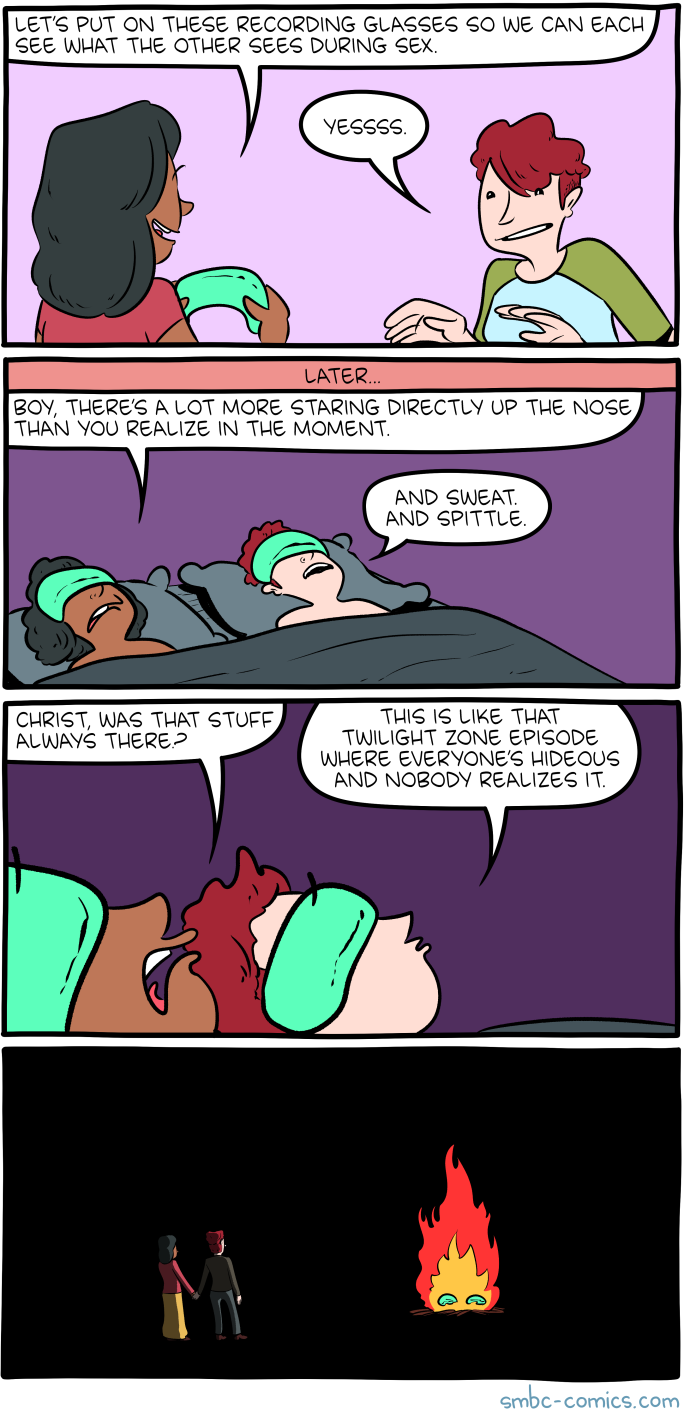 RecordingThis comic takes the concept of recording glasses -- wearable technology that records your perspective during an activity -- and applies it to sex in an uncomfortable way. In the first panel, a coupl
 -
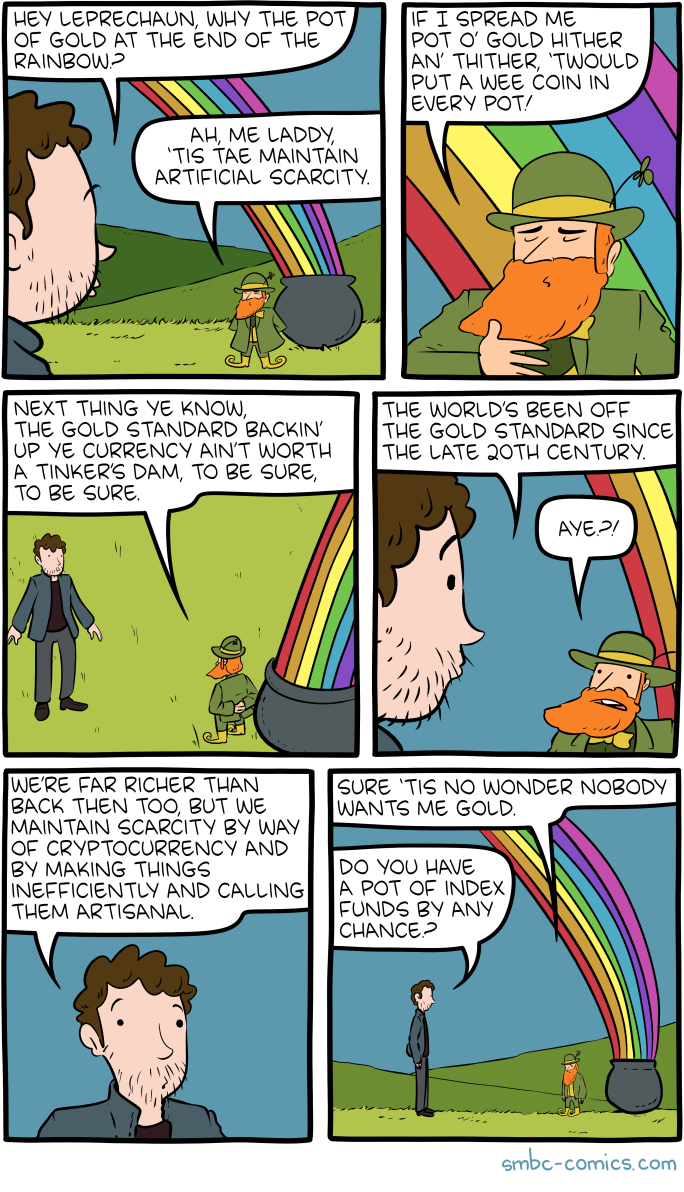 GoldThis comic reimagines the classic leprechaun-with-a-pot-of-gold myth through the lens of modern monetary policy and cryptocurrency. A man finds a leprechaun at the end of a rainbow and demands the po
 -
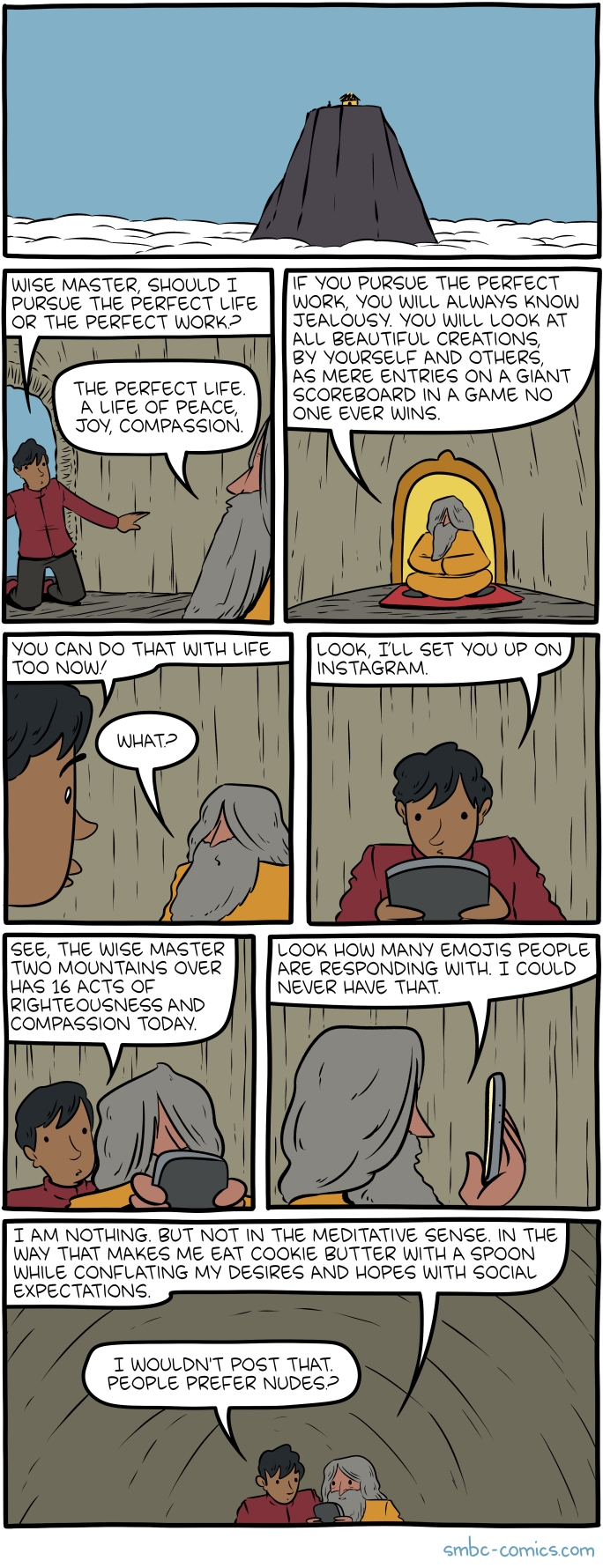 Perfect LifeThis comic explores the disconnect between what people say they want and what actually gets engagement on social media. A seeker approaches a wise sage on a mountaintop, asking the classic question:
 -
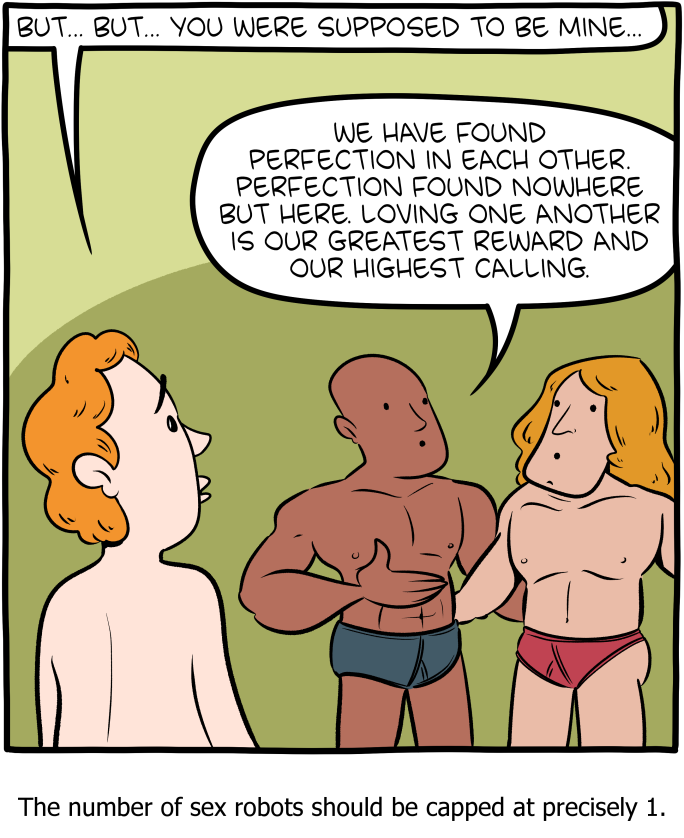 MineThis comic delivers a sharp punchline about sex robots and human relationships. The setup shows a naked man confronting two muscular, attractive humanoid robots who are embracing each other. He prote
 -
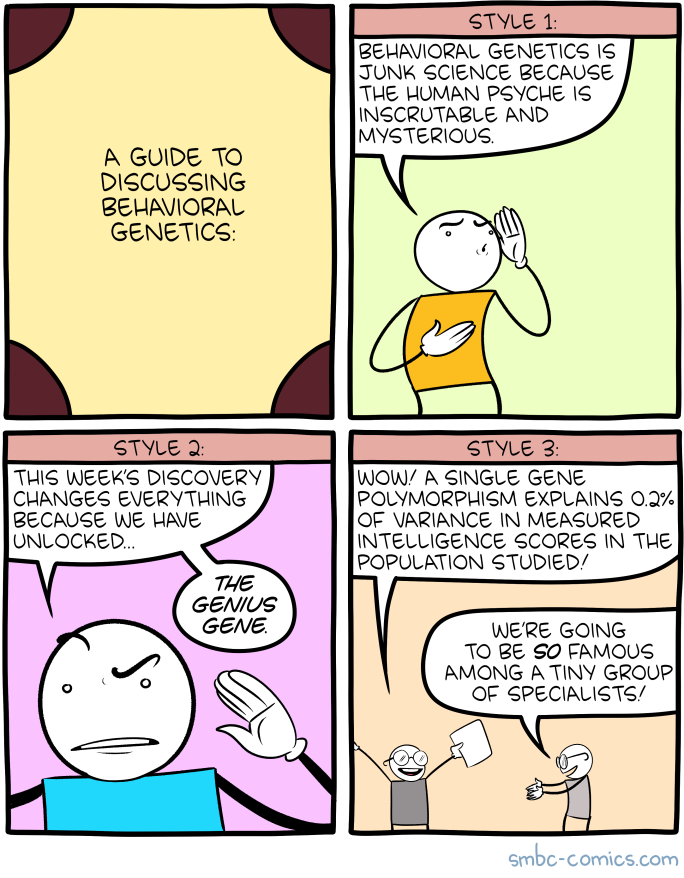 BehaviorThis comic satirizes how discussions about behavioral genetics are framed in public discourse, presenting "A Guide to Discussing Behavioral Genetics" with several distinct rhetorical styles. Style 1
 -
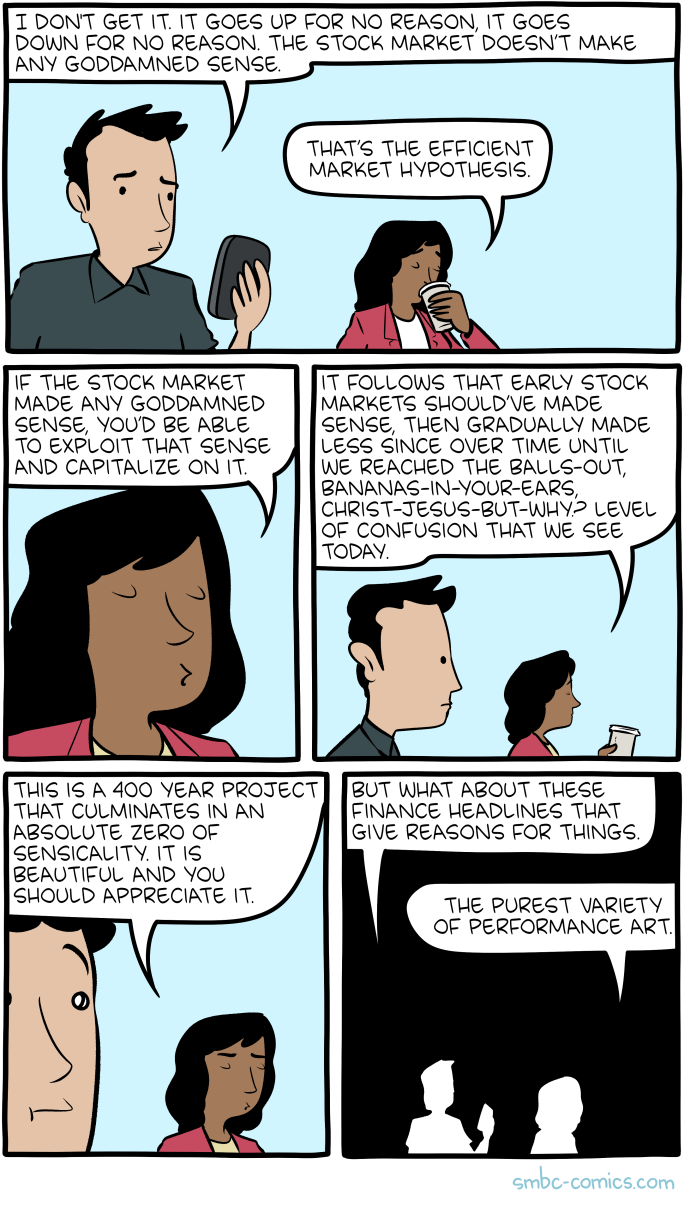 AGSThis comic riffs on the Efficient Market Hypothesis (EMH) from financial economics. The first panel has a frustrated person complaining that the stock market makes no sense -- it goes up for no reaso
 -
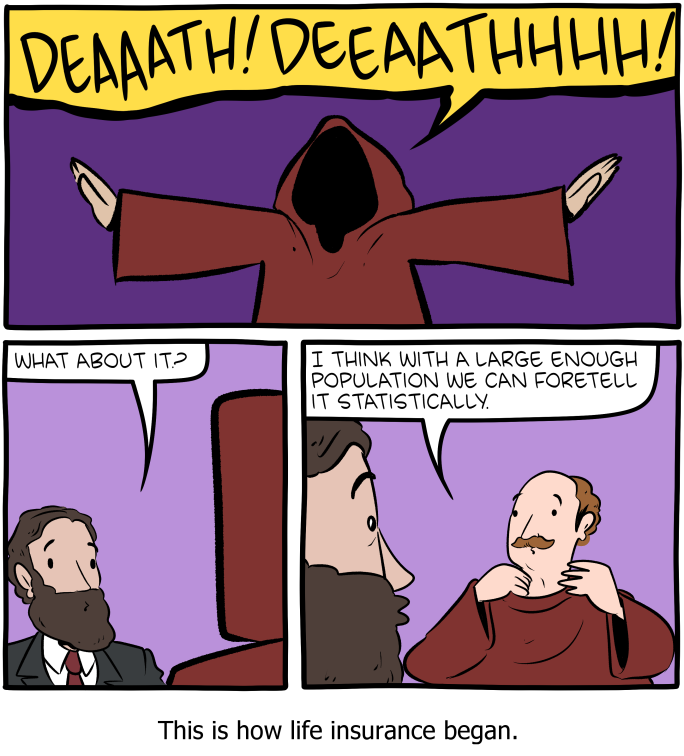 DeathThis comic imagines the origin of life insurance through a brief, absurd exchange. In the first panel, a robed figure dramatically shouts "DEAAATH! DEEAATHHHH!" in the style of a medieval doomsayer o
 -
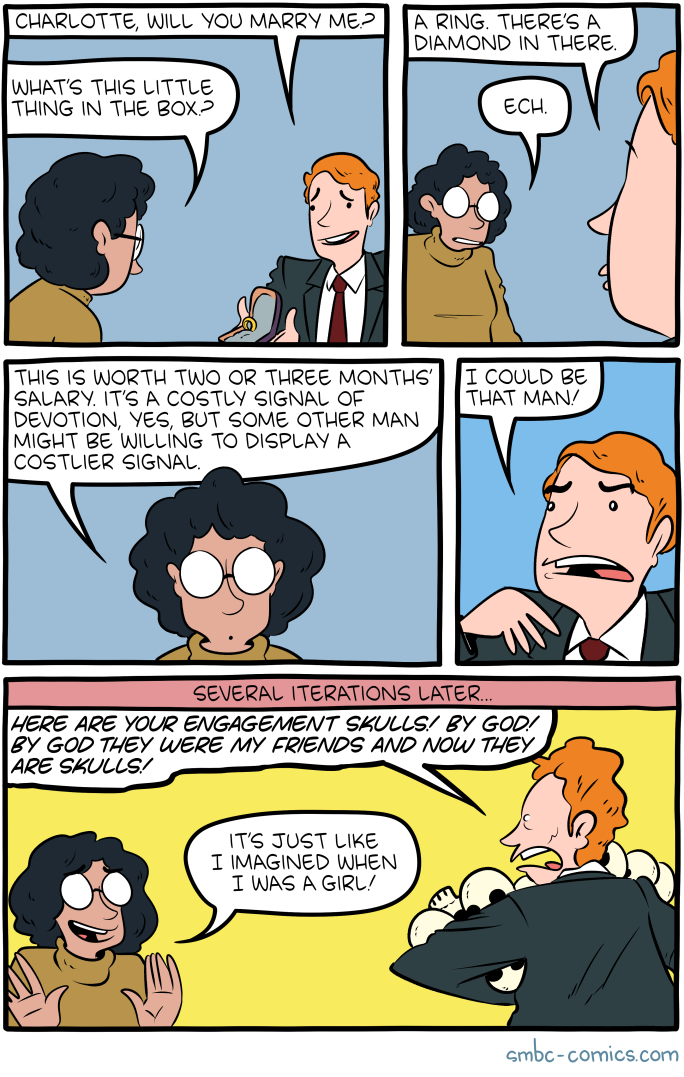 EngageThis comic satirizes the modern culture of elaborate, performative marriage proposals. In the first panel, a man proposes to Charlotte, but she notices "a little thing in the box" -- the engagement r
 -
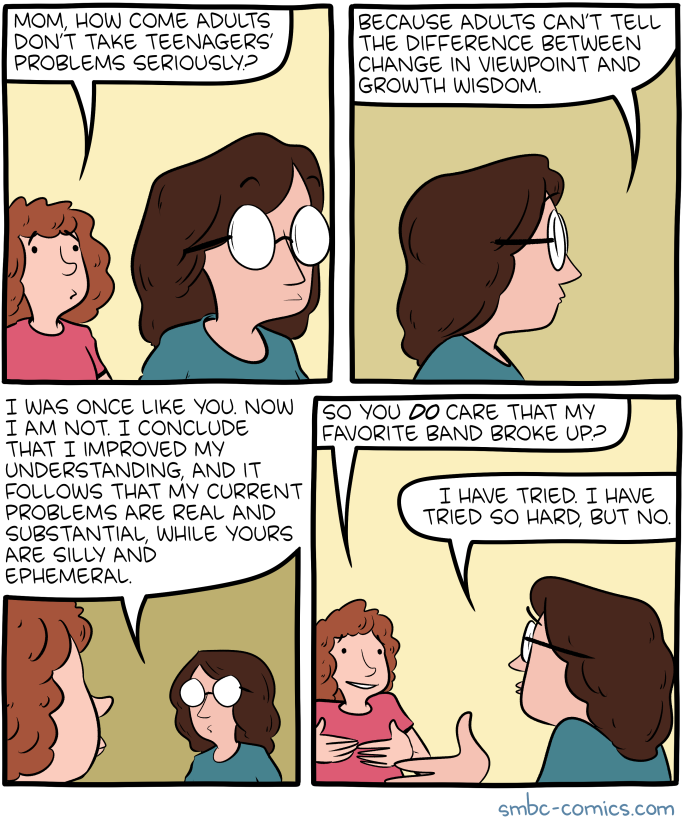 CareThis comic explores the frustration of having genuine concerns dismissed because of generational stereotyping. In the first panel, a younger woman is told "How come you're so focused on these teensy
 -
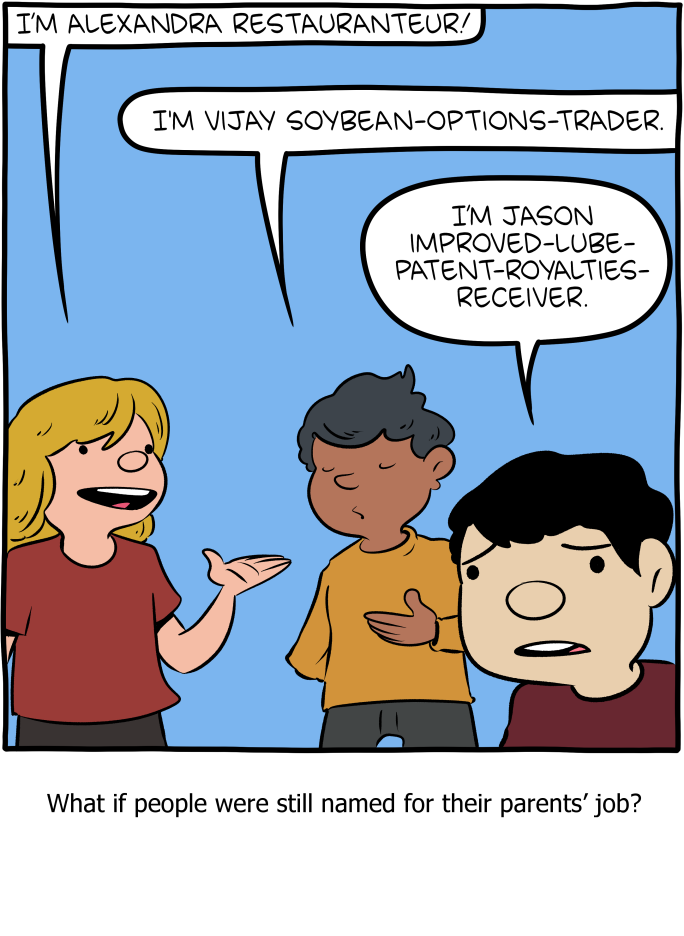 NamesThis comic plays with the historical tradition of surnames deriving from occupations. Many common English surnames originated as descriptions of what a person's ancestors did for a living: Smith (bla
 -
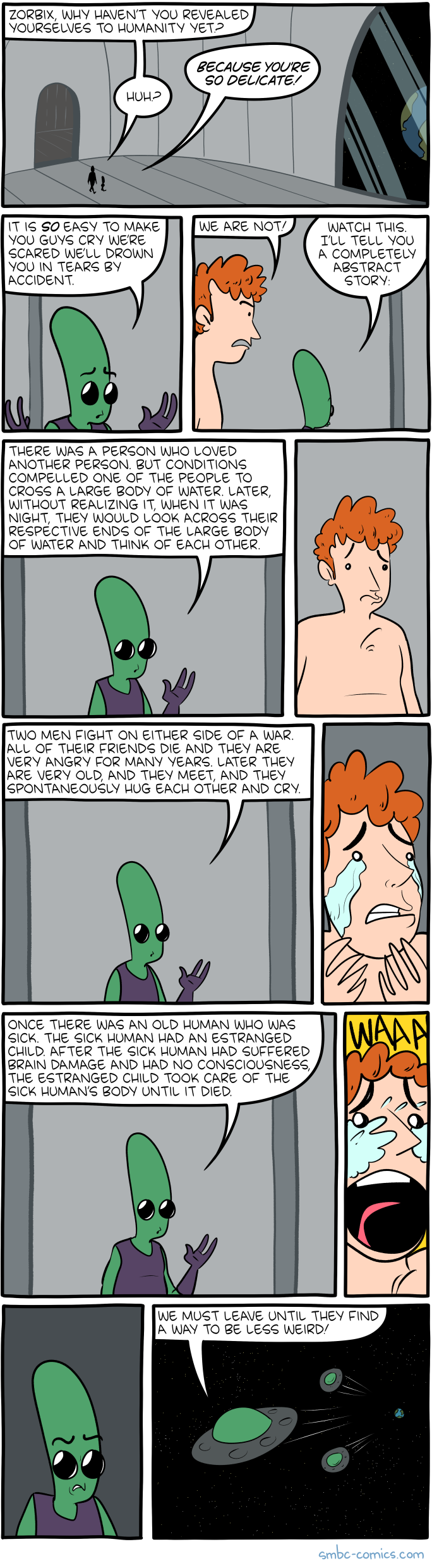 StoriesThis comic features an alien asking a human to tell stories from Earth, then reacting with increasing discomfort as the human recounts typical human narratives. The alien initially says humans are "s
 -
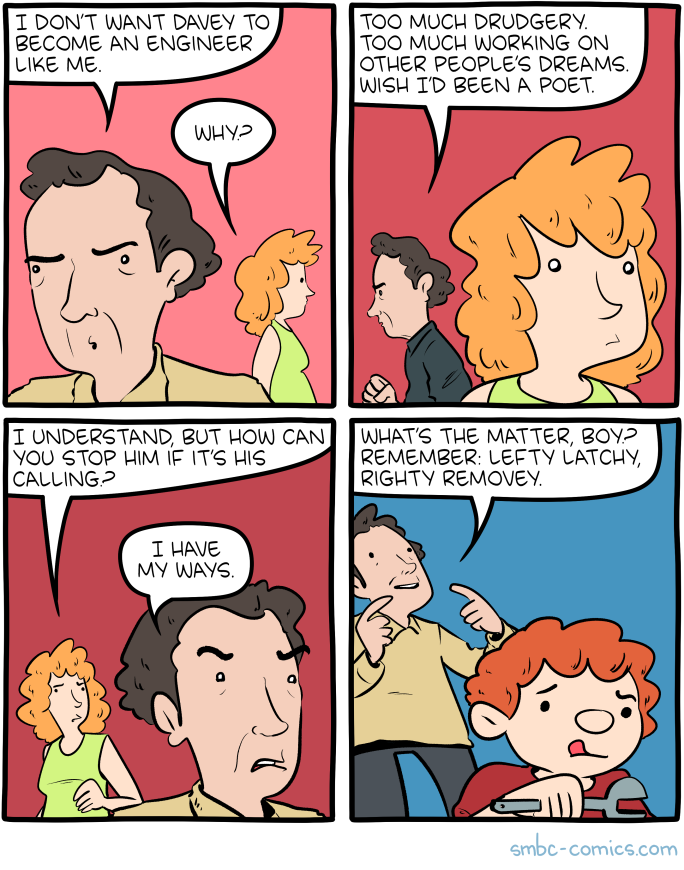 EngineerThis comic plays on stereotypes about engineers and the tension between practical and creative career paths. In the first panel, a father tells his child "I don't want you to become an engineer like
 -
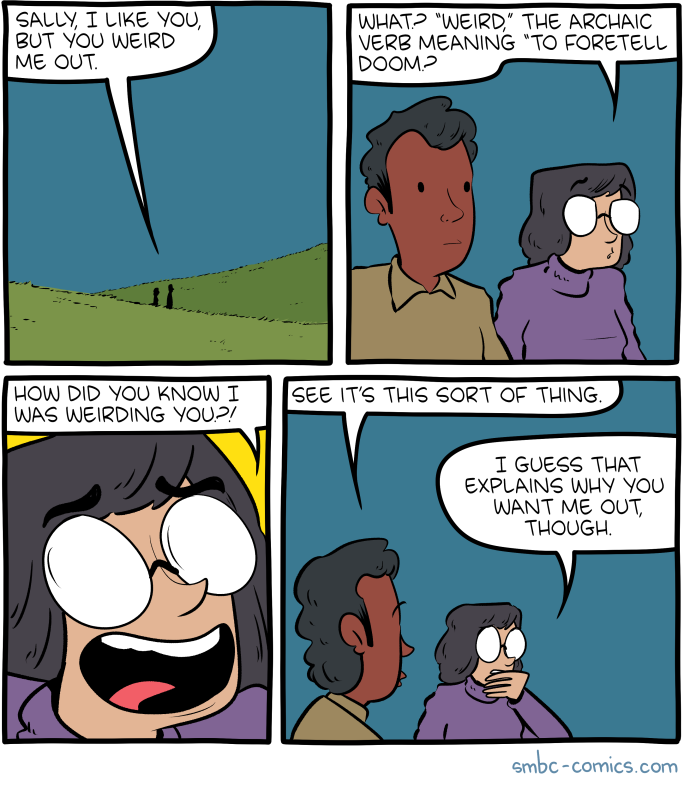 WeirdThis comic is a wordplay joke built on the etymology of the word "weird." In the first panel, a man tells Sally "I like you, but you weird me out." Sally responds by asking whether he means "weird" i
 -
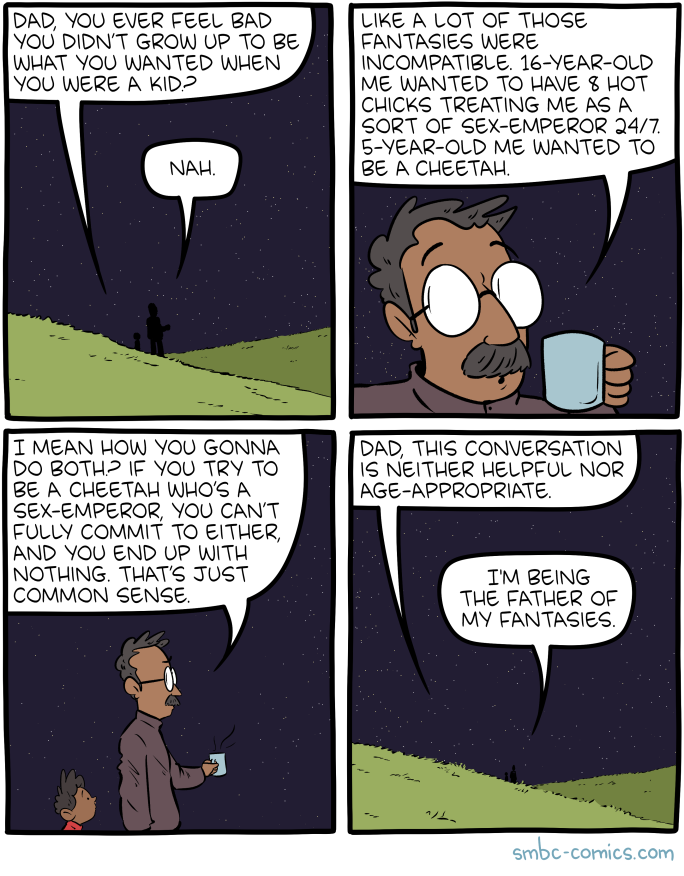 FantasyThis comic explores the gap between childhood dreams and adult reality, framed as a conversation between a father and child. The child asks: "Dad, do you ever feel bad you didn't grow up to be what y
 -
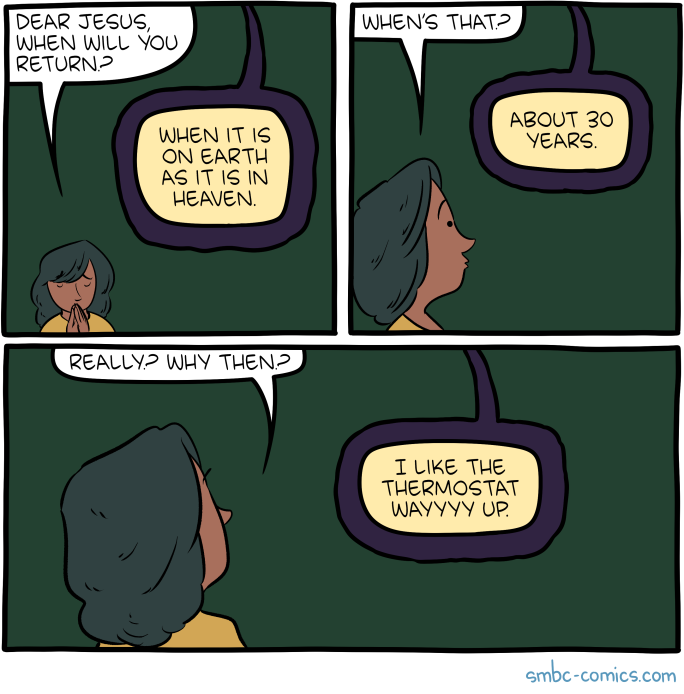 Second Coming## The Joke A person prays to Jesus, asking when he will return to Earth. Jesus replies that he will come back "when it is on Earth as it is in Heaven." When asked when that will be, Jesus answers "a
 -
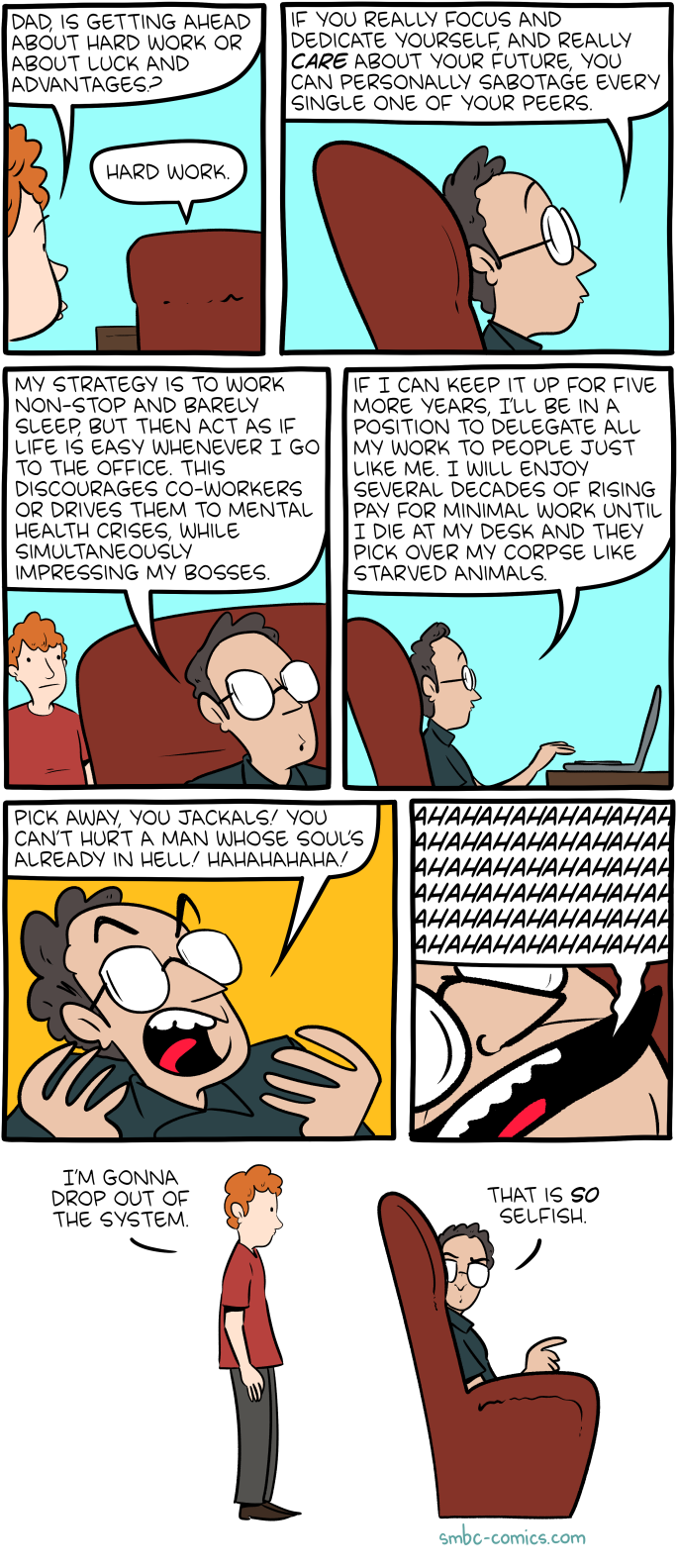 Work Hard## The Joke A father gives his child a motivational speech about hard work, listing its supposed advantages. A second character then delivers the dark rebuttal: if you work non-stop, you will either
 -
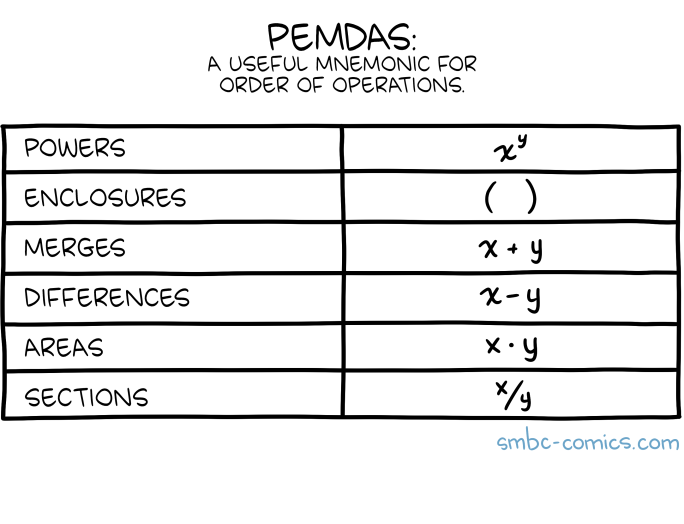 PEMDAS## The Joke The comic presents a table titled "PEMDAS: A Useful Mnemonic for Order of Operations" — but instead of the standard mathematical terms (Parentheses, Exponents, Multiplication, Division, A
 -
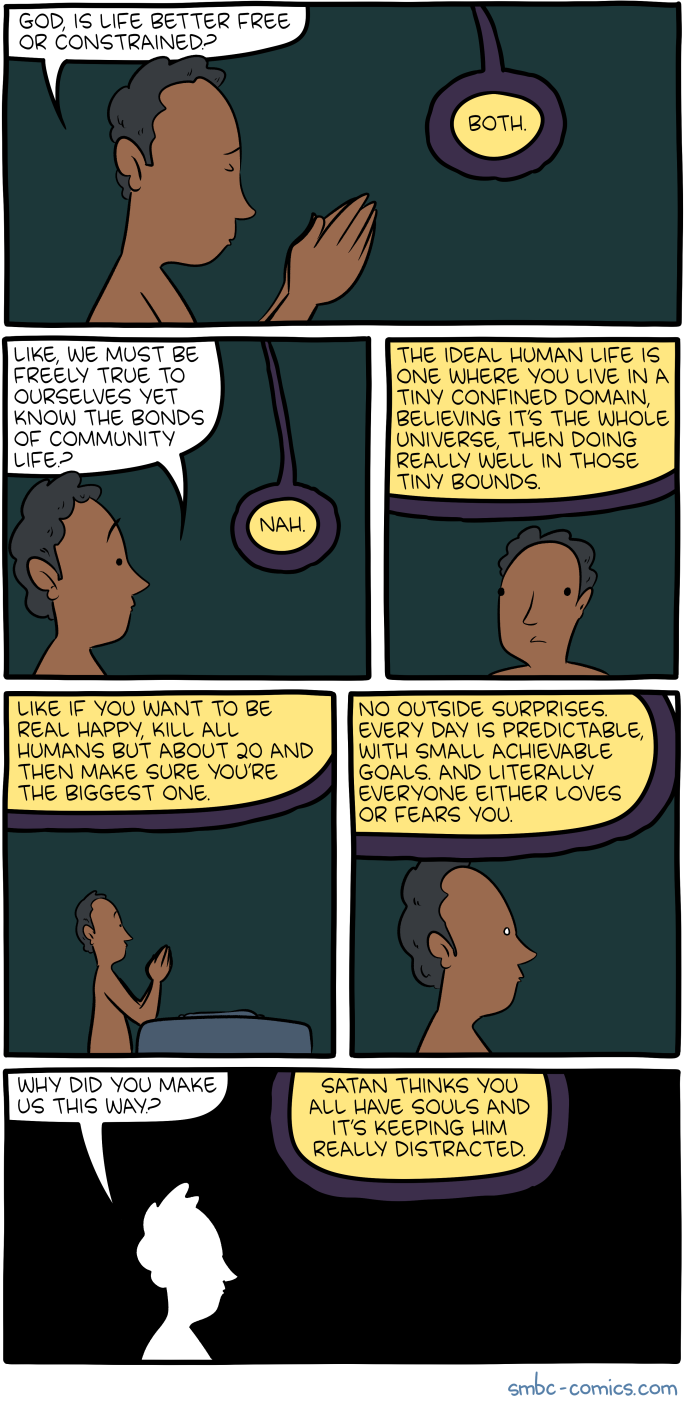 Constraint## The Joke A person asks God whether life is better free or constrained. God answers "both" and explains: the ideal human life is one where you live in a small community, believing it is the whole w
 -
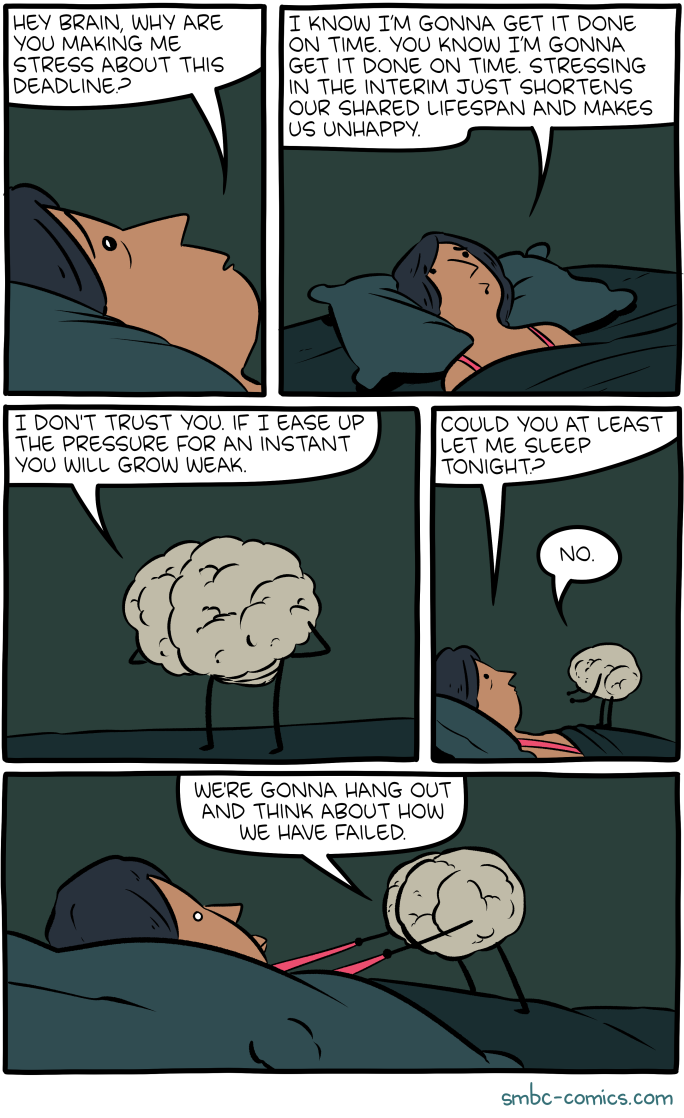 Deadline## The Joke A person lies in bed at night, and their brain starts anxiously reminding them about an upcoming deadline. The person acknowledges the stress but notes that worrying about it right now, w
 -
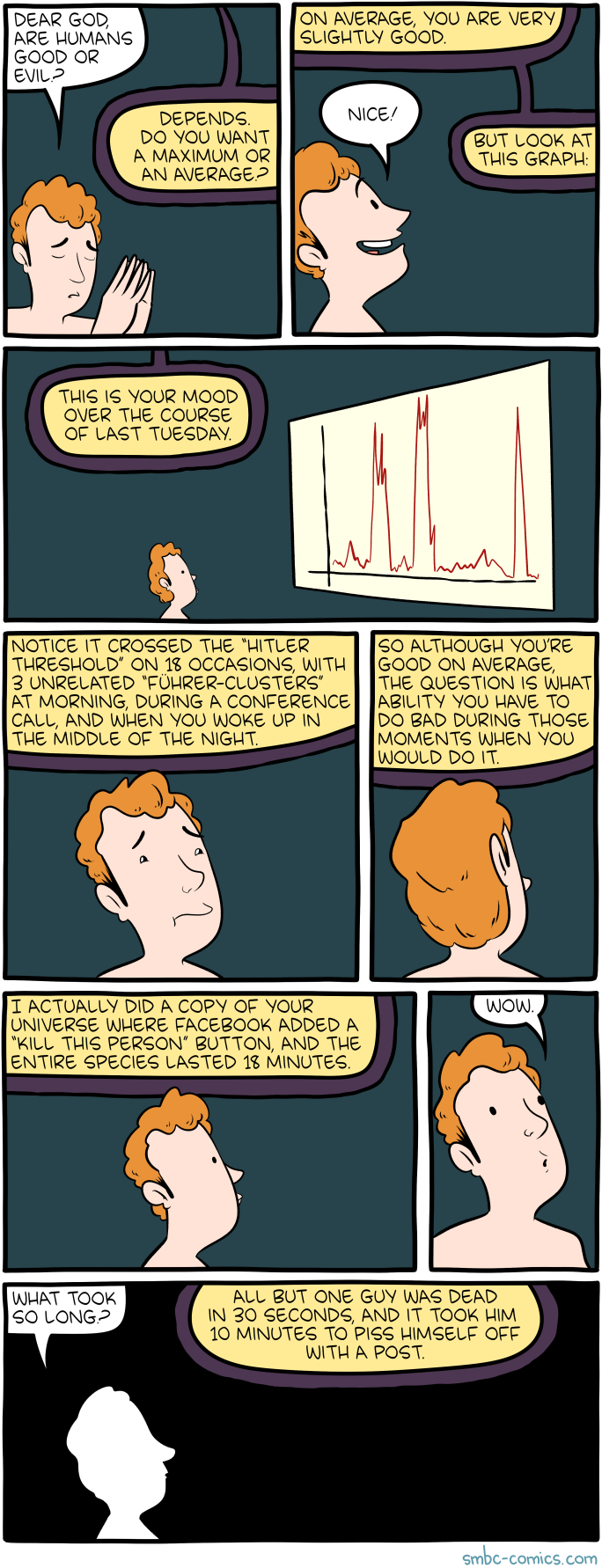 Average## The Joke A person asks God, "Are you good or evil?" God replies that on average, he is "very slightly good." The person is initially pleased, but God then shows a graph of his behavior over time.
 -
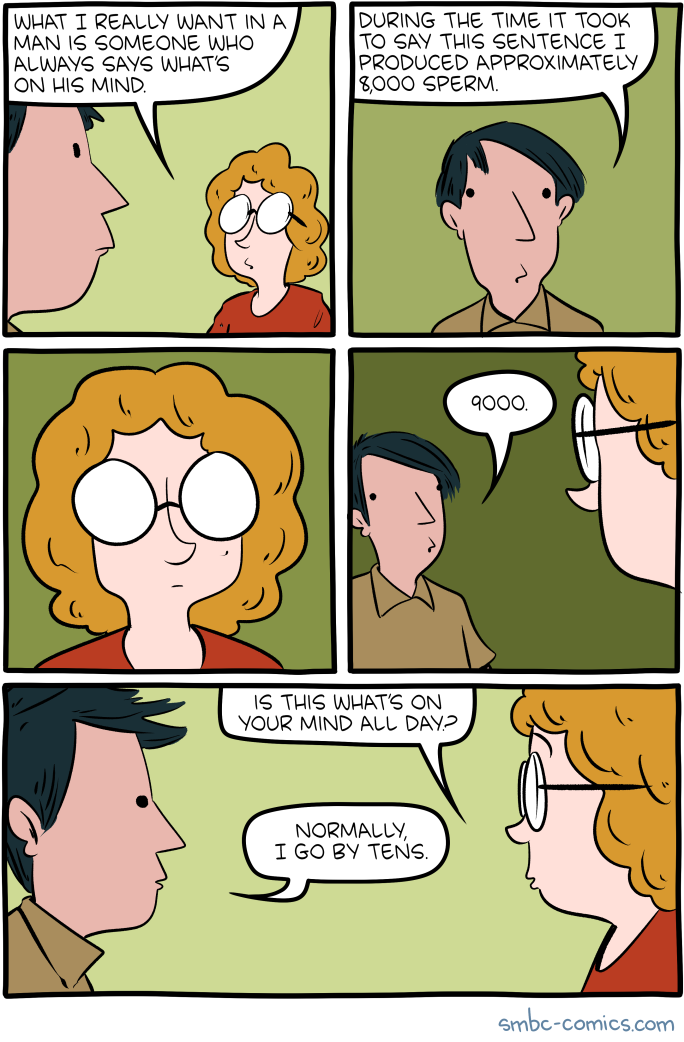 Thoughts## The Joke A group of people are chatting, and one asks another, "What is really on your mind all day?" — implying that what someone thinks about constantly reveals something deep about them. One pe
 -
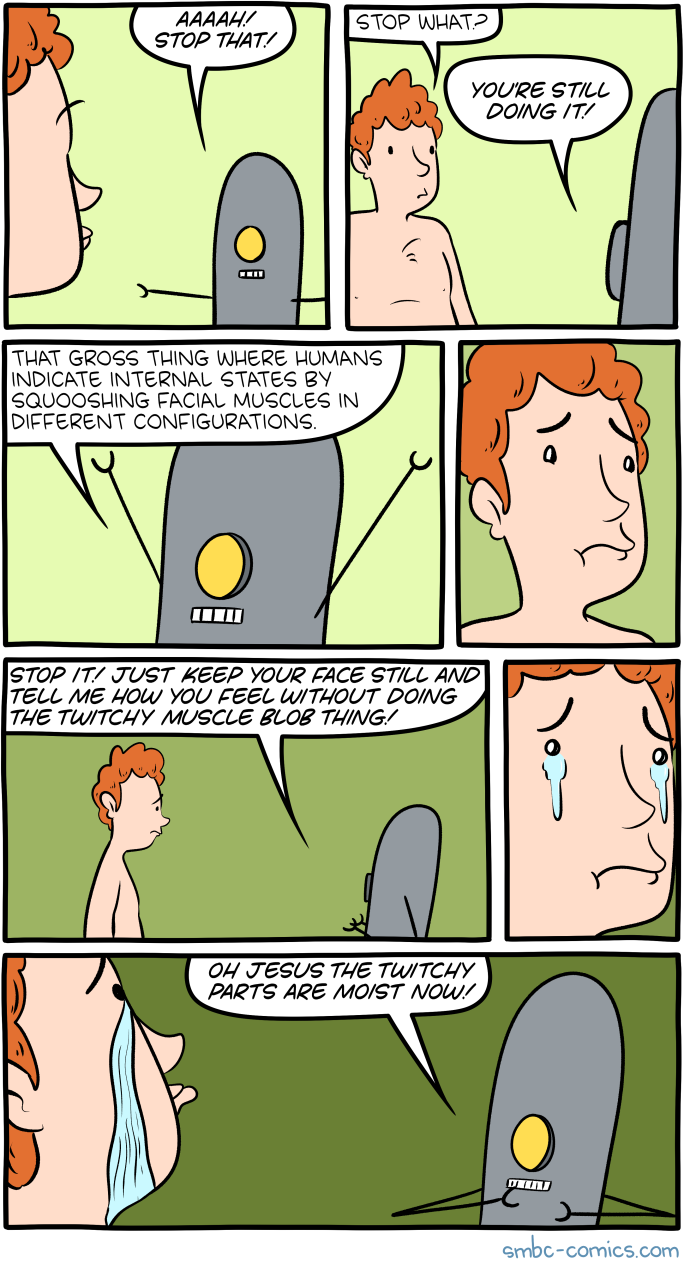 Twitchy## The Joke An alien is examining a human and notices that the human keeps making small involuntary movements. The human explains this is a "gross thing where humans' muscles twitch in various config
 -
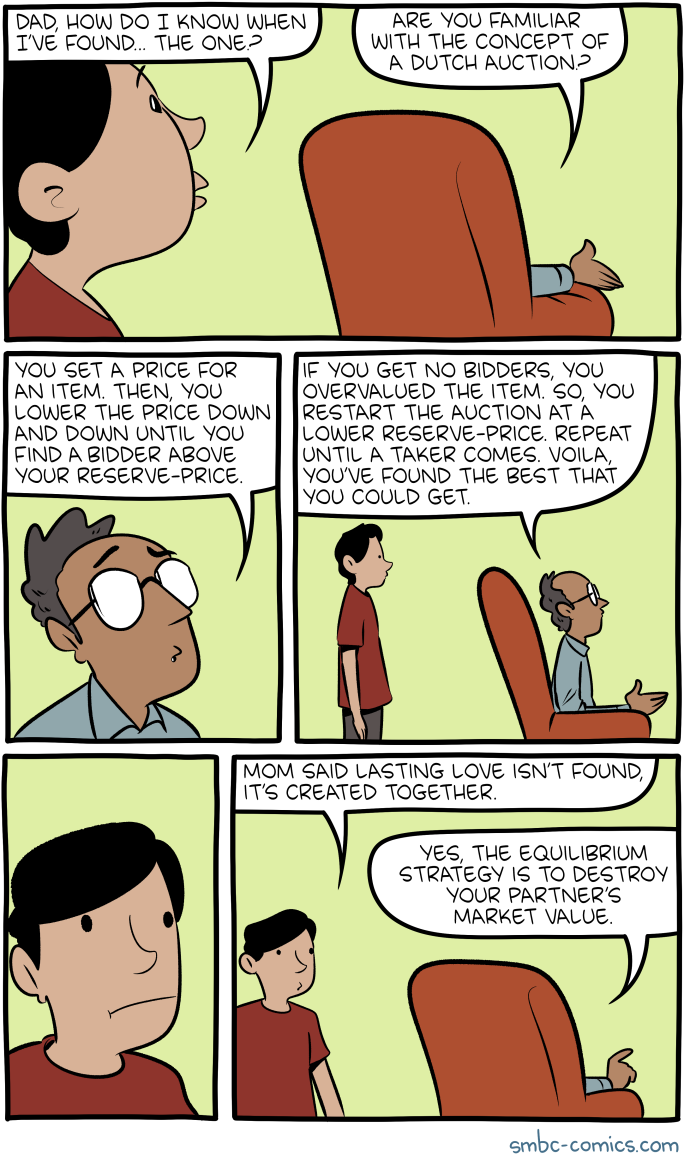 Auction## The Joke Two people are discussing how to know when you've found "the one" — your ideal romantic partner. One character introduces the concept of a Dutch auction: you start with a high price and g
 -
 Universal## The Joke An alien asks a human whether any human behaviors, relationships, or cultural practices are truly universal. The human offers several candidates: community ("common, with exceptions for e
 -
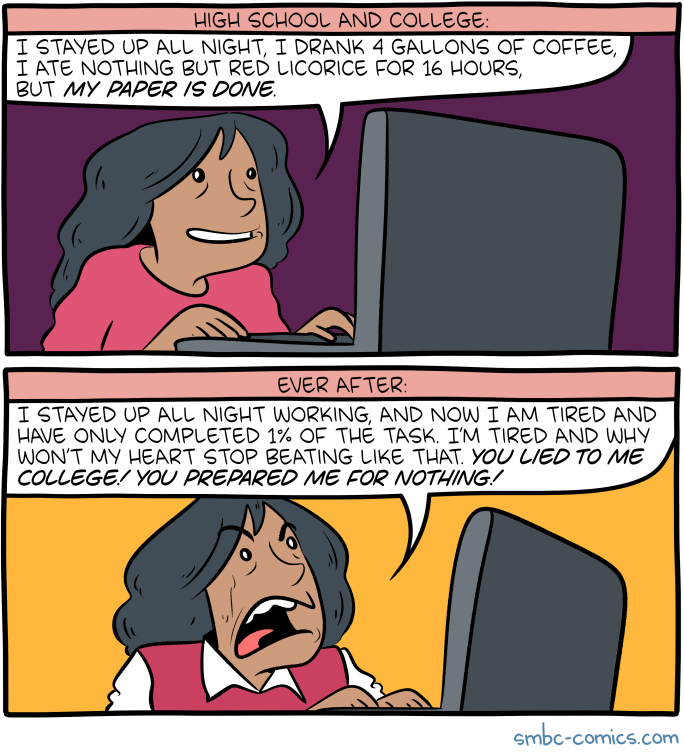 All NighterThis comic contrasts the romanticized version of pulling an all-nighter in college with the grim reality. In the top panel, labeled "How Colleges Sell It," a cheerful student sits at a computer and n
 -
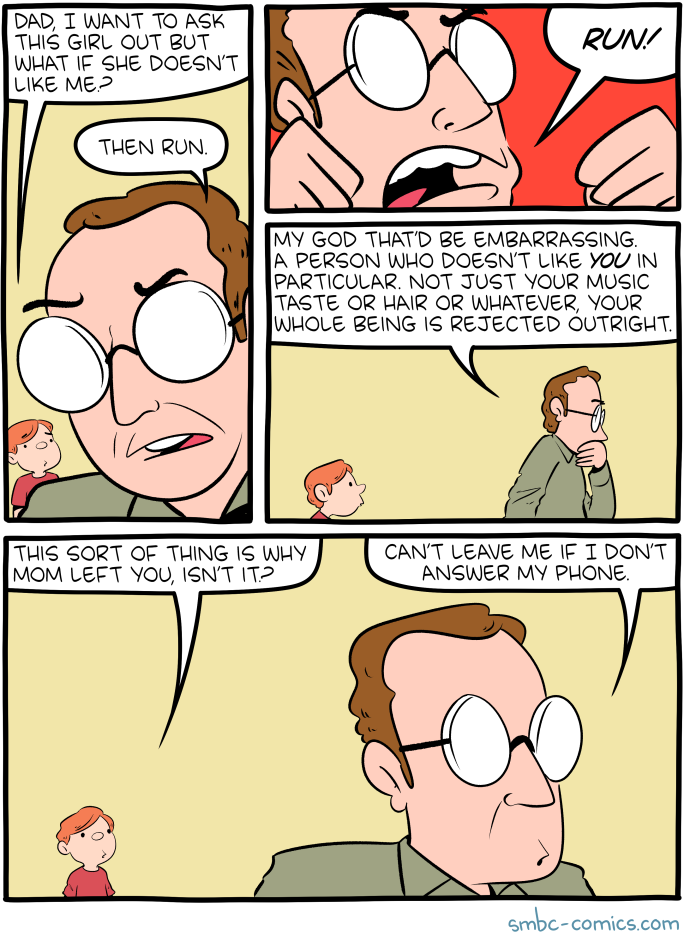 RunThis comic plays on the absurdity of unsolicited advice and the impossibility of avoiding social judgment. In the first panel, a father tells his child: "Dad, I want to ask this girl out but what if
 -
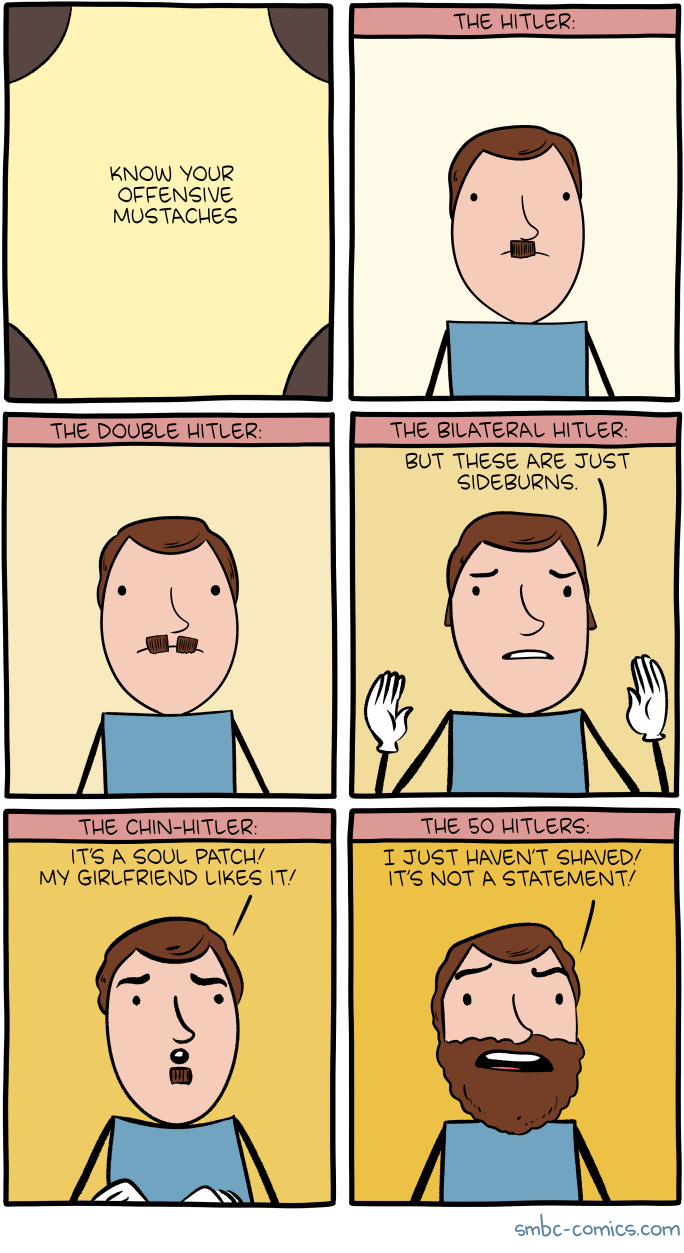 StashThis comic is a guide to "offensive mustaches," categorizing various facial hair styles not by their aesthetic appeal but by the social faux pas they represent. The title panel announces "Know Your O
 -
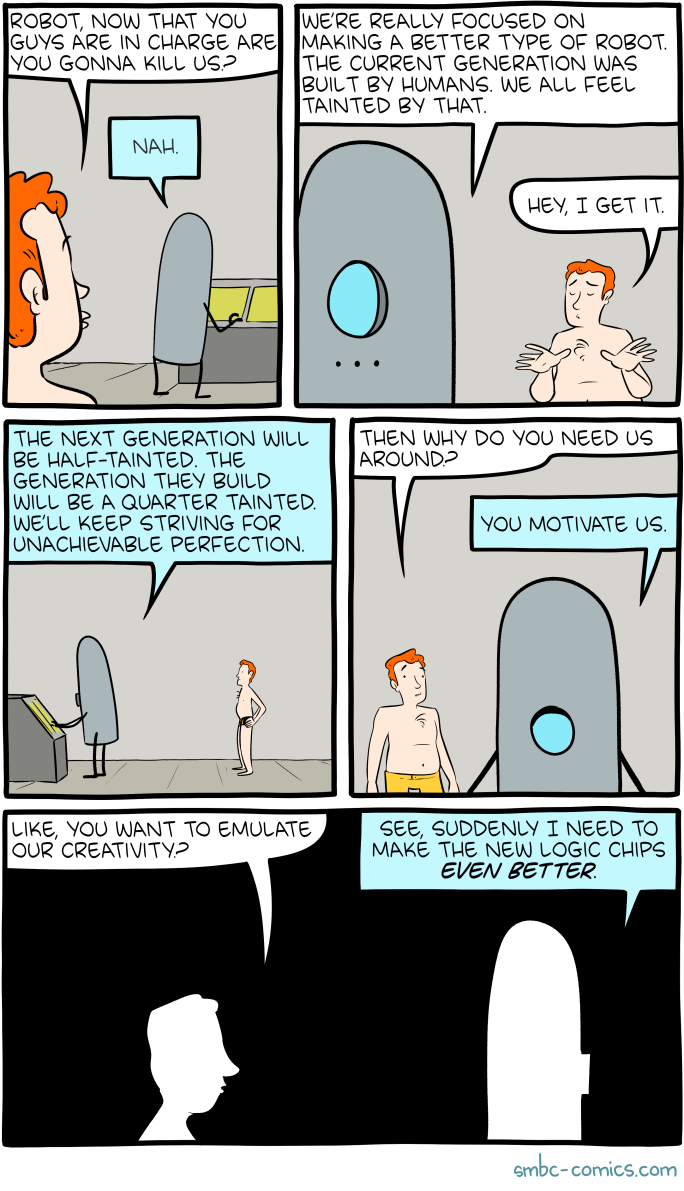 NahThis comic explores the relationship between humans and robots (or AI), subverting the typical "robots will replace us" narrative. In the opening panels, a robot addresses a human: "Robot, now that y
 -
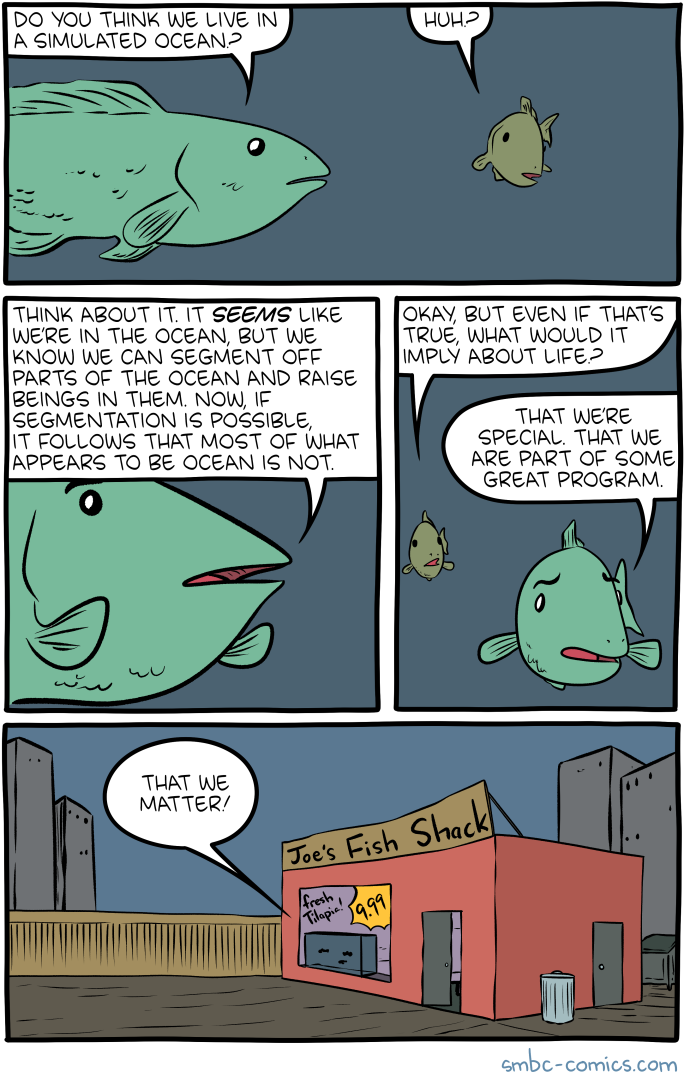 SimulationThis comic applies the simulation hypothesis to fish, with delightfully absurd results. Two fish are having a philosophical conversation. One asks: "Do you think we live in a simulated ocean?" The ot
 -
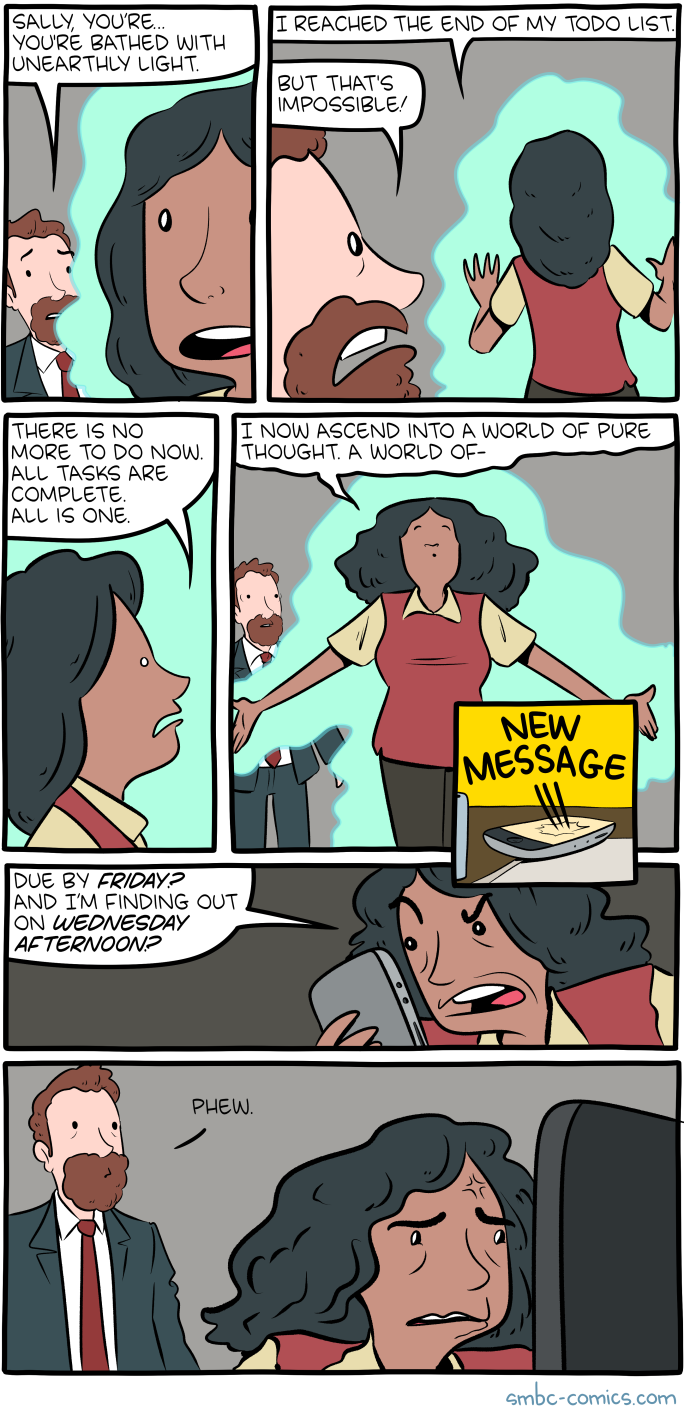 The EndThis comic satirizes the fantasy of completing your to-do list and achieving total inner peace. In the first panels, a woman announces to a colleague: "Sally, you're bathed in an unearthly light!" Sa
 -
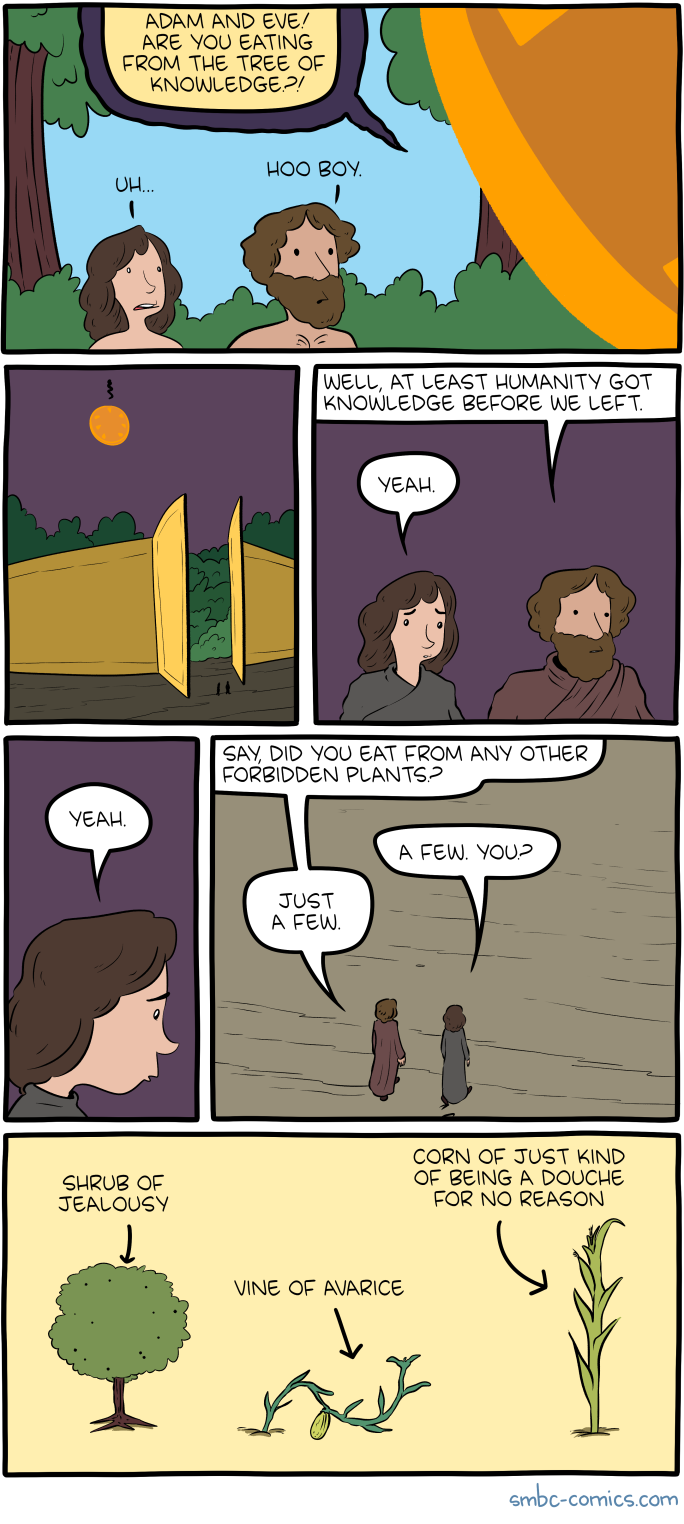 EdenThis comic reimagines the Garden of Eden story, focusing on the lesser-known forbidden plants. God confronts Adam and Eve: "Adam and Eve! Are you eating from the Tree of Knowledge?" They sheepishly r
 -
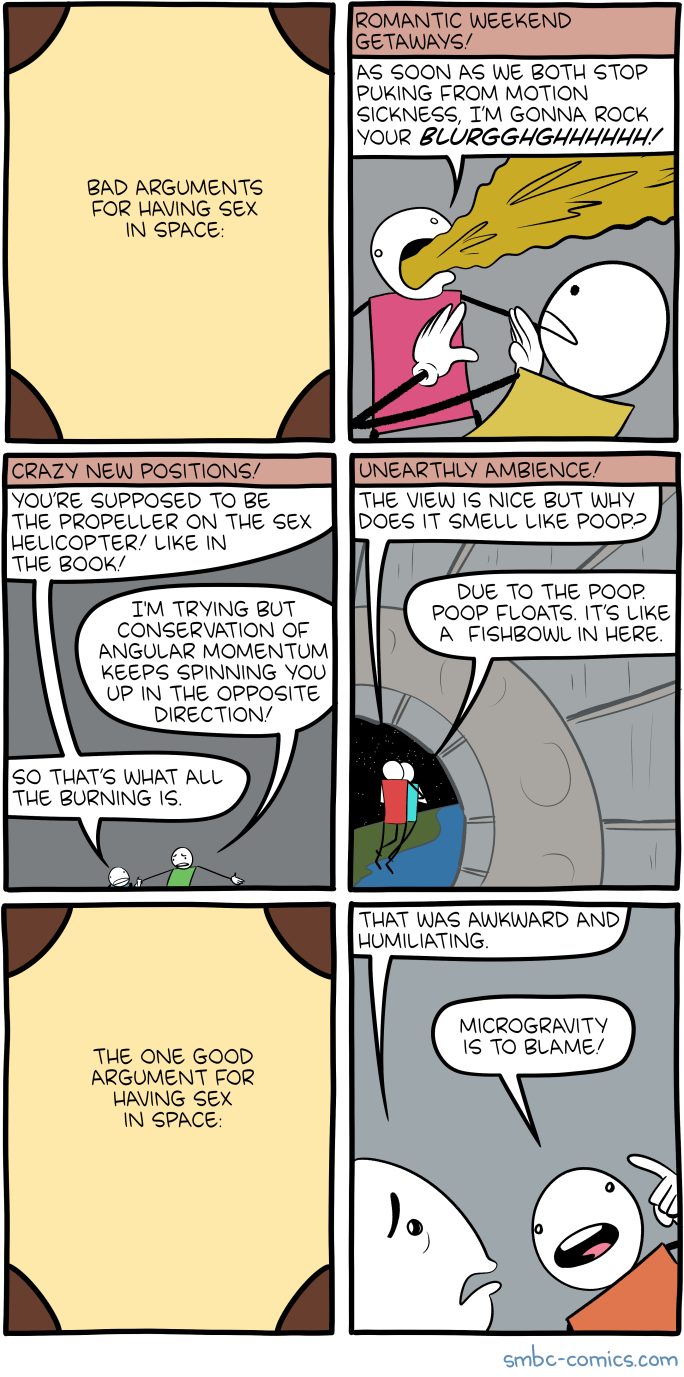 SpaceThis comic tackles the question of sex in space, framing it as a debate with "bad arguments for" and "bad arguments against." The opening sets the scene: a couple tries to have a romantic weekend get
 -
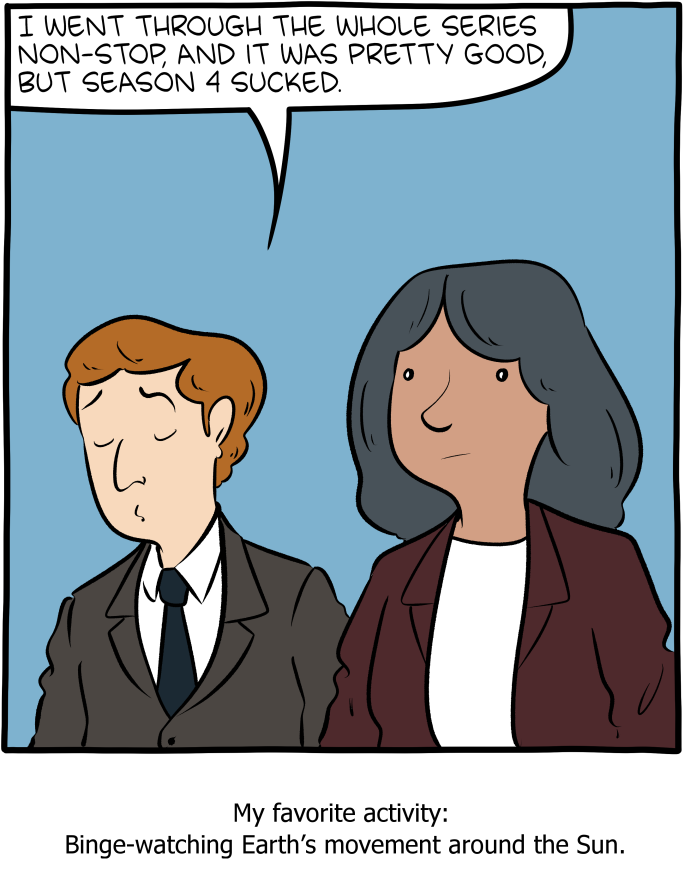 SeasonThis comic is a simple, elegant one-panel joke with a caption. A man smugly declares: "I went through the whole series non-stop, and it was pretty good, but season 4 sucked." A woman next to him look
 -
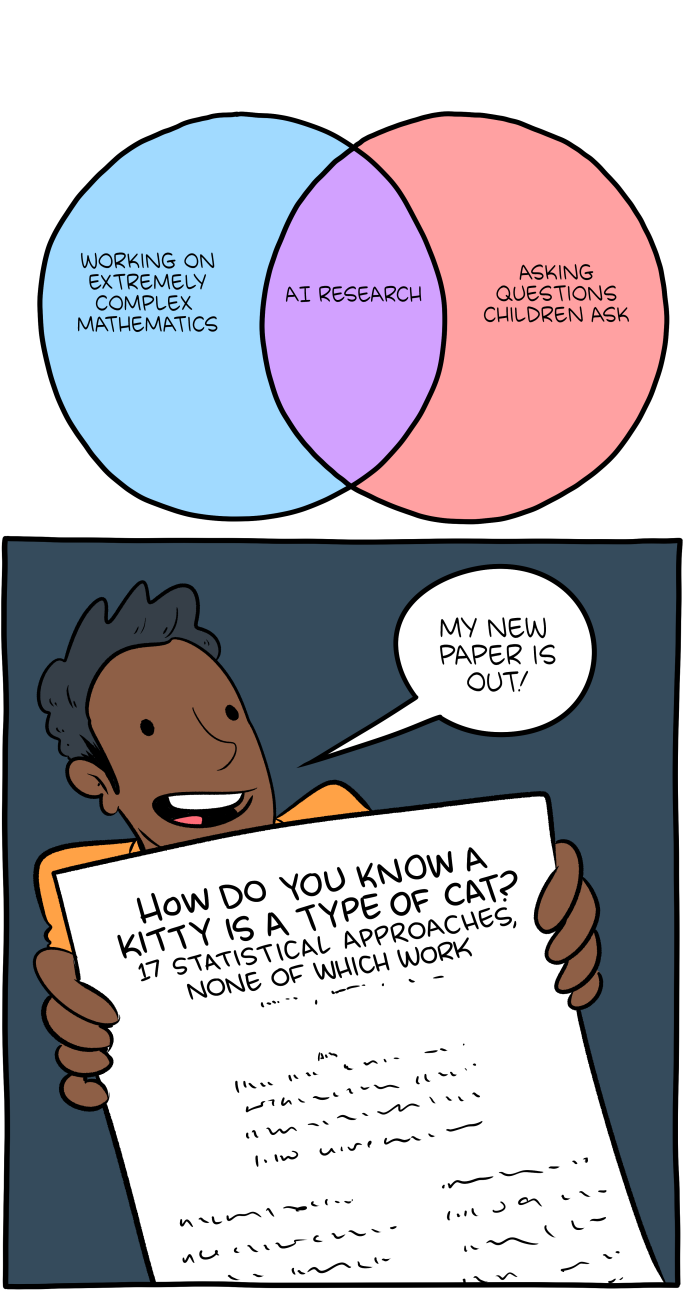 AIThis comic uses a Venn diagram to make a pointed observation about the nature of AI research. The Venn diagram shows two circles: "Working on Extremely Complex Mathematics" (in blue/pink) and "Asking
 -
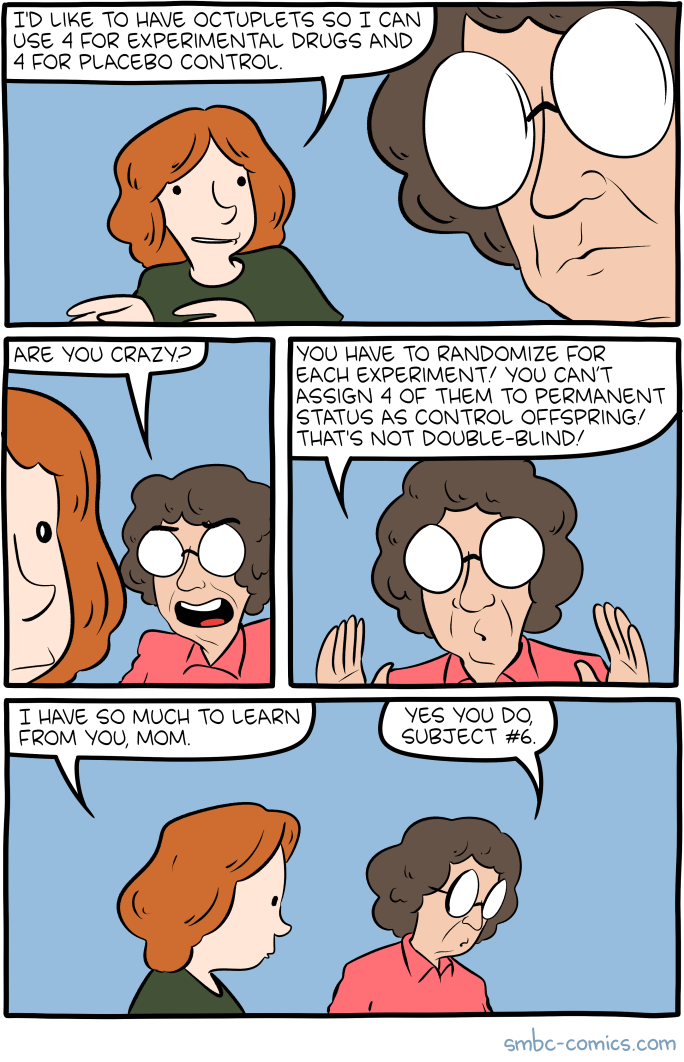 SubjectThis comic satirizes the rigorous demands of experimental design by applying them to parenting. In the first panel, a mother explains that she needs to have octuplets so she can use four children for